

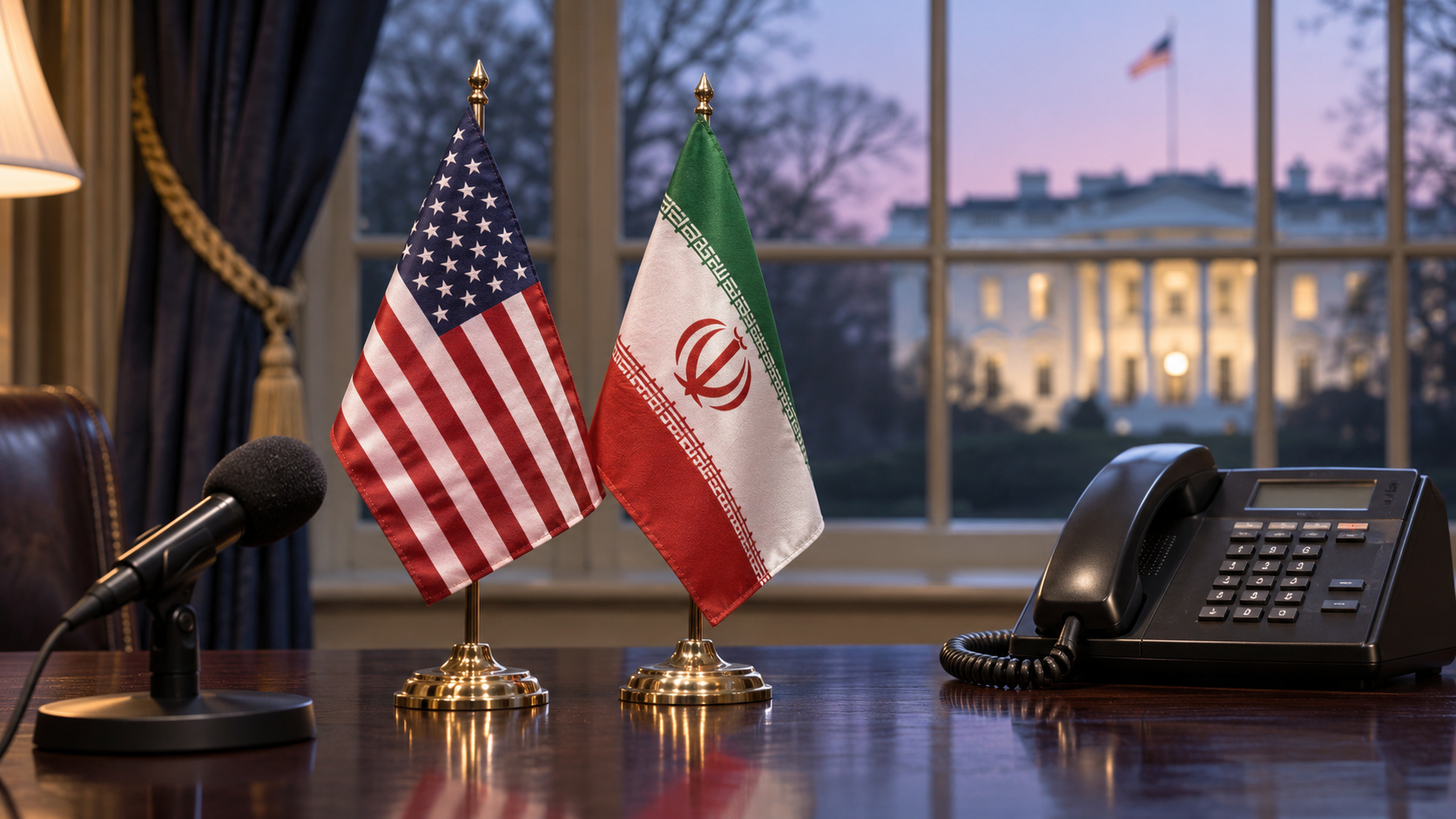
Donald Trump said the United States had no immediate plans to strike Iran in a November 3 interview with the Financial Times, playing down speculation that he would escalate the conflict after the U.S. midterm elections.
The president said negotiations were continuing and suggested Washington was already getting what it wanted from the stand-off. He nevertheless kept military action available and said he wouldn't disclose attack plans in advance. His remarks were a step back from his recent threats, rather than an unconditional pledge against further strikes.
No immediate attack, but forces remain ready
In the six-minute telephone interview, Trump sounded satisfied with the pressure on Tehran:
"We seem to be getting everything we want."
Asked about Israeli Prime Minister Benjamin Netanyahu's strong hints that an attack could come later that week, he described readiness without announcing a decision to strike:
"I'm ready, we're ready. We're locked and loaded if we need to go, but there may be no reason for it."
That qualification matters. The president was leaving room for a diplomatic outcome while keeping the threat of force behind it. He didn't provide a timetable for another offensive or describe an agreement that had resolved the confrontation.
The tone contrasted with his November 1 warning that the United States would have to give Iran "the hammer" again at some point, as Apex previously reported. He had also claimed people were angry that he hadn't completely annihilated the country.
Enriched uranium remains part of the talks
Trump said indirect negotiations included the fate of Iran's roughly 1,000-pound stockpile of enriched uranium, described in the FT account. He referred to the material as "nuclear dust" and said its location beneath rock didn't remove his concern.
"Even though it's under hundreds of tons of rock, I would say that I'm not happy that it will be there."
He said the stockpile was among the issues Washington was discussing with Tehran and left the outcome open. His account identified a specific unresolved subject behind the broader talk of a deal, without announcing how the material would be handled.
Trump plays down the war while defending the blockade
Trump argued that the U.S. blockade of Iranian ports was stifling Tehran's economy and called the situation brilliant. He also claimed more oil was passing through the Strait of Hormuz than before the war. That comparison has not been independently verified.
He described the United States as not really fighting Iran, credited earlier American bombing campaigns with destroying its nuclear capability and argued that substantial fighting had not occurred for months. Those were Trump's characterizations, rather than an independently established assessment of Iran's nuclear facilities.
"I don't consider that we're in war like Ukraine, wars like World War I, World War II."
American forces had nevertheless carried out another attack on November 2. As Apex previously reported, the operation targeted an Iranian air-defense installation on Qeshm Island near the Strait of Hormuz. Washington described the action as defensive protection for U.S. military assets.
Fuel costs hung over the election-day interview
Trump had predicted energy prices would fall sharply after the midterms. The FT reported that hopes of progress toward peace had helped pull Brent crude down by more than $10 a barrel in recent days to around $104. That was the newspaper's reported price snapshot, rather than a current quote.
The interview took place hours before polls closed in elections shaped by concerns about inflation and fuel costs. AAA's November 3 figures put the U.S. regular-gasoline average at $4.1493 a gallon, below its recorded high of $5.0165 on June 14, 2022.
Trump also wanted to talk about his campaign, predicting a Republican victory and describing his rallies as packed, with thousands unable to get inside. The FT noted that polling before the vote instead pointed toward Democratic gains, potentially in both chambers of Congress. His confidence about the election accompanied an Iran position that still combined negotiations, economic pressure and military readiness.
Correction: An earlier version led with Trump's November 2 remarks rather than his November 3 Financial Times interview. This version incorporates the interview's discussion of uranium, the blockade, oil flows, military plans and the election.