

Britain’s room to absorb the Iran war’s economic fallout has shrunk sharply, with a new estimate putting the erosion of its fiscal buffer at nearly £12 billion. Higher borrowing costs and inflation are squeezing the government’s flexibility just as it faces pressure to help households with living costs.
The warning comes as Washington considers another escalation. The White House has requested options for strikes on Iranian targets before the November 3 U.S. midterm elections. No final decision has been made, and the size, targets and timing of any operation remain under debate.
The Financial Times estimates that Chancellor John Healey’s fiscal headroom has fallen from the £23.6 billion forecast by the Office for Budget Responsibility in March to about £12 billion. That would leave roughly half the original cushion ahead of the October 28 Budget.
A smaller buffer, not a military spending bill
Headroom measures the projected margin for meeting Britain’s fiscal rule, which requires day-to-day spending to be covered by revenues by 2029–30. It is not a bank account or a tally of military expenditure. A reduction means less flexibility to absorb adverse forecasts, cut taxes or increase spending while meeting that rule.
Higher government-bond yields can raise the government’s financing burden, while inflation can increase spending pressures. Changes in revenue forecasts can also alter the balance. The estimate captures the fiscal consequences of the economic shock, rather than establishing a direct cash payment for the war.
Government figures described the buffer as a contingency for exceptional circumstances. Investors interviewed for the report suggested headroom of around £14 billion, after Budget measures, could be acceptable without provoking a gilt selloff. That is a market assessment, not a guaranteed threshold for stability.
Healey could therefore face difficult choices over tax rises and spending cuts to fund household support. The eventual official forecast will depend on economic assumptions, policy decisions and the cutoff date for market prices. The estimated £12 billion remaining buffer should not be presented as an already finalized OBR judgment.
Trump weighs another round of strikes
The Atlantic reported on October 7 that U.S. Central Command is developing options for action before the election, citing administration officials. Advocates hope an operation could demonstrate progress and strengthen Republicans’ political position, but planning does not establish an approved attack.
Even supporters acknowledged that limited strikes alone would not bring Iran to negotiations, restore safe passage through Hormuz or reduce gasoline prices before voters cast their ballots. A White House official told the publication that:
“Trump has all options available at any time”
Further action could expose U.S. forces and Gulf partners to retaliation and intensify uncertainty over energy shipments. As previously reported by Apex, maritime alerts documented tanker strikes and a separate Iranian threat that forced a vessel to turn back from Hormuz. Those alerts did not establish who fired the projectiles.
Fuel prices keep the political pressure alive
Original AAA data put U.S. regular gasoline at $4.3667 per gallon on October 7, up 5.2% from its month-ago average of $4.1505. Diesel averaged $6.3015, up 6.8% from $5.9015. Both changes are calculated from unrounded observations.
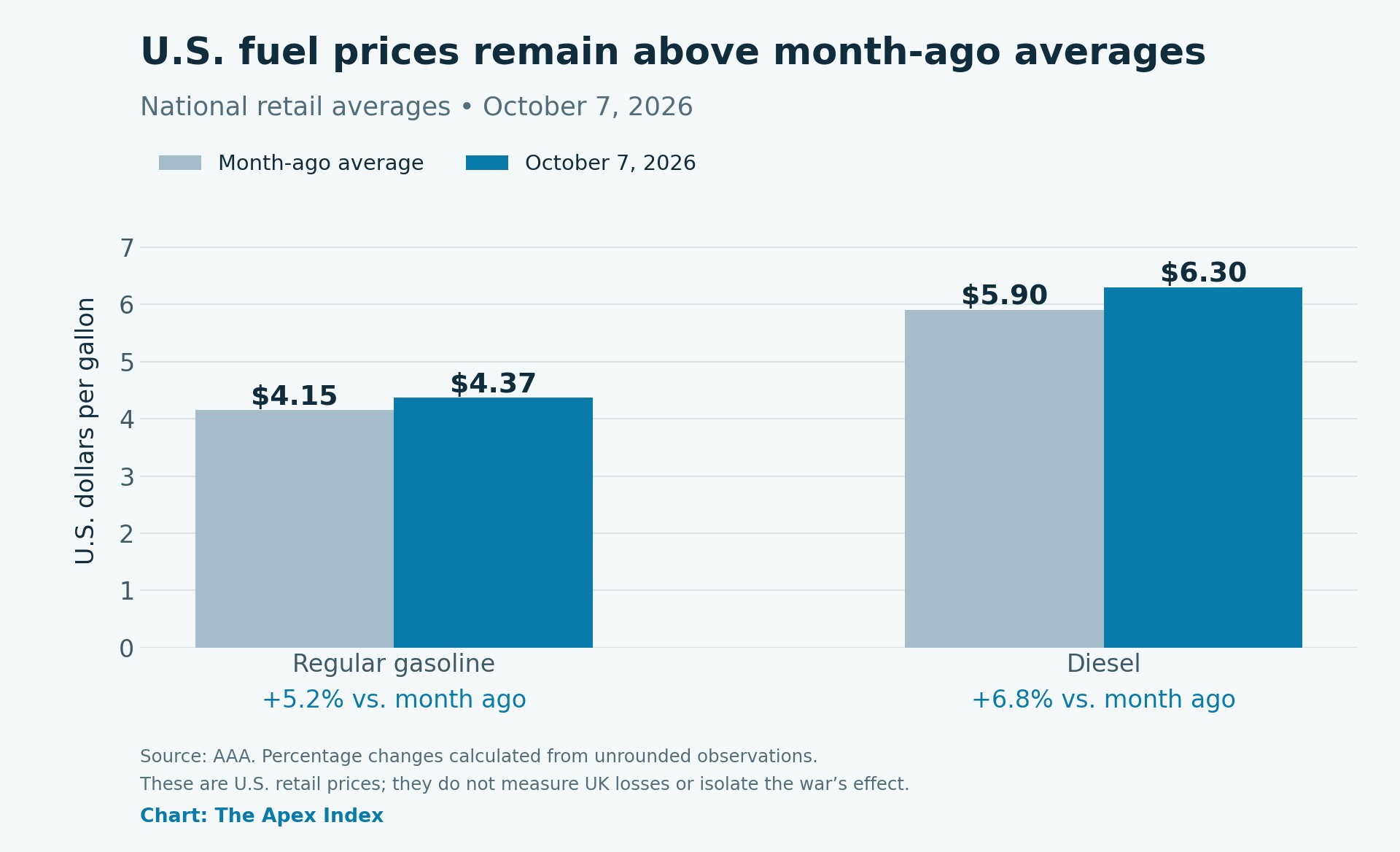
These figures illustrate the fuel-price backdrop to the election debate. They measure U.S. retail prices, not Britain’s losses, and do not isolate the war’s contribution from other influences such as refining, distribution and seasonal demand.
Apex had earlier reported that Iran said Washington was sending proposals through intermediaries while maintaining public threats. That earlier diplomacy coverage underscores the parallel military and negotiating tracks. For Britain, the near-term fiscal question is whether energy and borrowing pressures ease before new forecasts lock in the Budget’s difficult tradeoffs.