
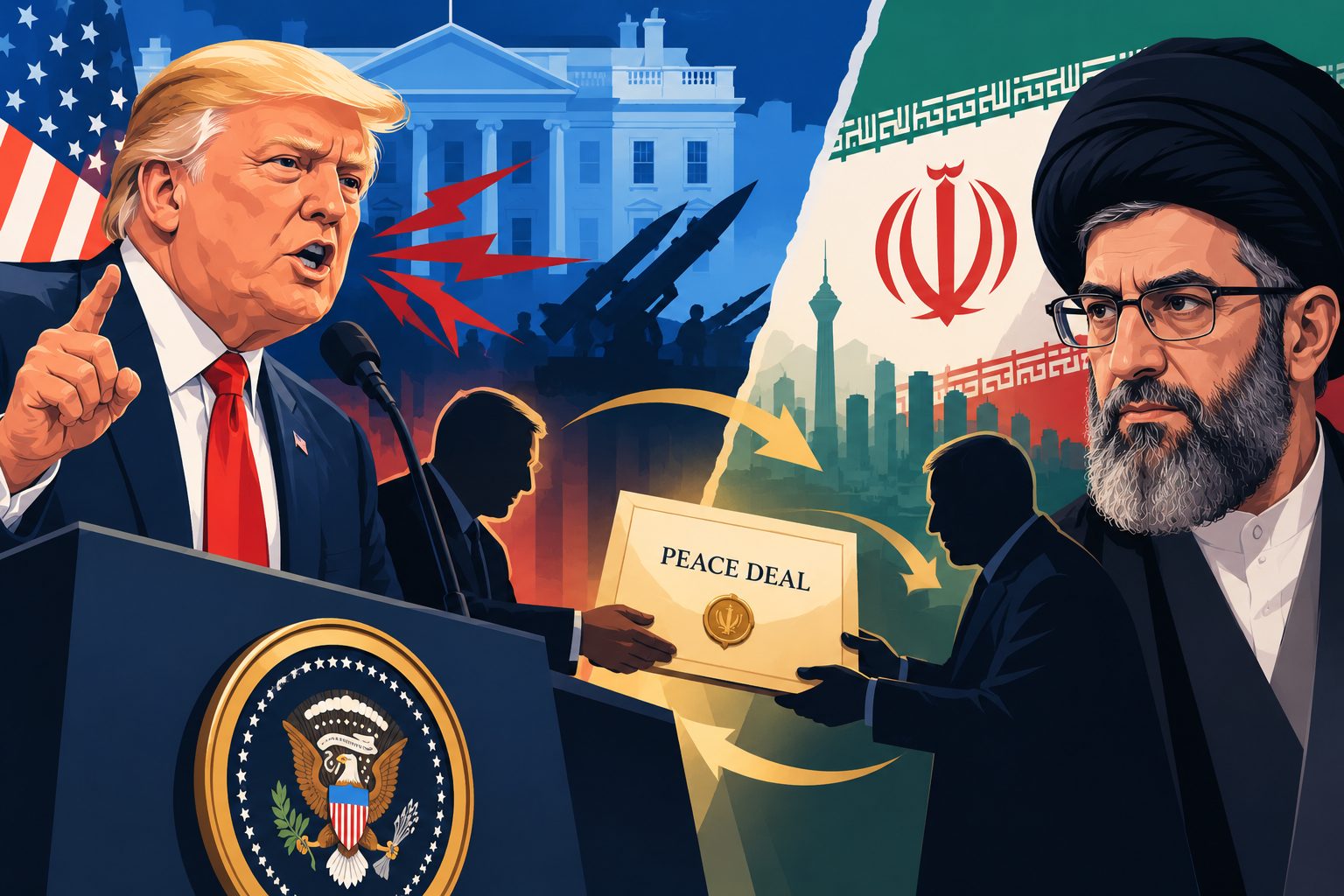
Iran says President Donald Trump’s administration is quietly sending fresh peace proposals through intermediaries while publicly threatening Tehran with tougher action.
Parliament Speaker Mohammad Bagher Ghalibaf said Washington’s private messages do not match what Americans are hearing in public. “While Americans say one thing in the media, they have recently put forward proposals through intermediaries,” Mohammad said.
According to Tehran, those ideas look much like earlier offers and has signaled that another round of the same terms is going nowhere.
Iran says Hormuz will stay closed until Washington meets its conditions
Mohammad said Iran is no longer interested in negotiations built around demands Tehran has already rejected. “The era of stalling for time and dictating unilateral demands is over,” he said. He then tied any reopening of the Strait of Hormuz directly to Iran’s conditions. “The Strait of Hormuz will not open until our seven conditions are met,” Mohammad said.
He also warned that Iran would respond to the United States and Israel with new military surprises if the conflict keeps escalating.
Trump publicly rejected Iran’s proposal on September 26 and instructed his negotiating team that returning to the previous memorandum of understanding was not an option.
Deputy Foreign Minister Kazem Gharibabadi gave a more measured account Sunday, confirming that Washington had communicated through middlemen.
“The Americans, through intermediaries, have also conveyed their views on this proposal, and these views are currently being examined inside the country through the relevant channels and procedures,” Kazem said, according to Iranian state news agency IRNA.
“Whenever the final position of the Islamic Republic of Iran is ready, appropriate steps will be taken accordingly,” he added.
Kazem also said Iran is preparing for other possible scenarios while officials review the American position.
Foreign Ministry spokesperson Esmaeil Baqaei said the latest U.S. counteroffer follows the same broad nuclear approach Washington presented before. He said Tehran’s immediate attention remains on Hormuz, where Iran wants interruptions to its commercial maritime traffic ended and sanctions removed before it agrees to reopen the waterway.
Trump keeps military options open while Americans feel the energy shock
Before traveling to Vandalia, Ohio, for a midterm campaign rally Saturday, Trump told reporters at the White House that another decision on Iran was coming.
“We have a decision that I’ll make about Iran,” Trump said. “Iran’s been decimated, so the only question is, it’ll either be the easy way or the hard way, or we’ll have it the easy way, or the hard way.”
His comments followed a Friday meeting at Camp David, where senior administration officials discussed the Iran war and the escalating fighting involving the Houthis and Saudi Arabia.
Defense Secretary Pete Hegseth, who attended the meeting, later said the U.S. blockade of Hormuz remained firm. Pete also said Trump still had every available option if Iran continued challenging Washington over the waterway.
Energy Secretary Chris Wright said Sunday that Trump understood before the war began that energy prices could jump.
“He knew it was going to elevate energy prices in the short run, he said, ‘I’m going to take a hit there, but I got to do the right thing,’” Chris said on Face the Nation with Margaret Brennan.
Americans have already been hit by higher gasoline and diesel prices in recent months. The administration argues that a nuclear-armed Iran would create a much larger long-term security and energy problem.
Chris said he expects that pressure to ease as more supplies move through Hormuz, U.S. gasoline production increases and summer driving demand fades.
Asked whether prices could fall during the next four weeks, with Republicans heading into a difficult midterm environment, Chris gave a one-word answer: “Absolutely.”