
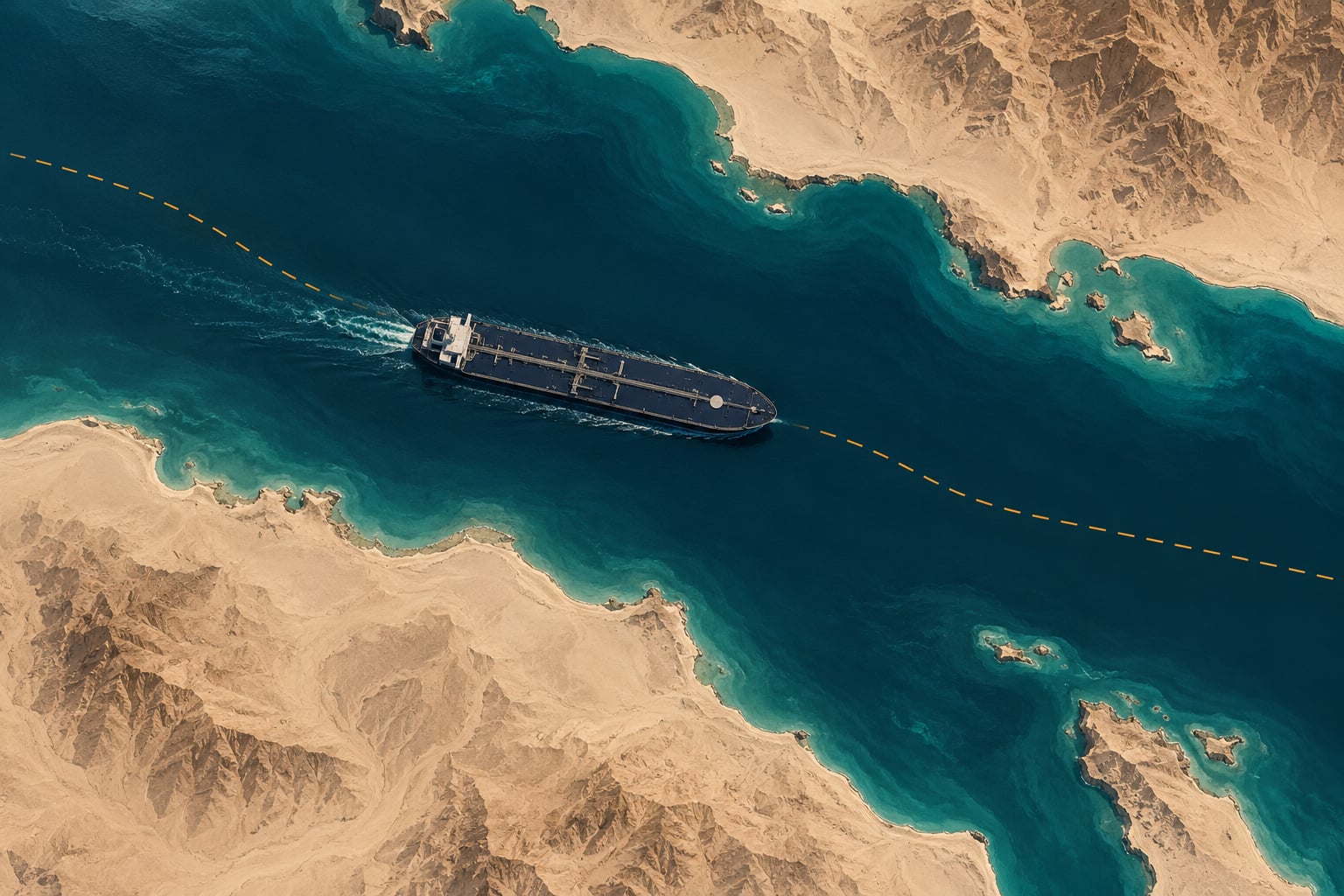
A fresh wave of tanker strikes has deepened the danger in the Strait of Hormuz, while Iran's Islamic Revolutionary Guard Corps has threatened a vessel into turning back from the passage that normally carries roughly a fifth of the world's oil supply.
The United Kingdom Maritime Trade Operations incident register records an outbound oil tanker struck by an unknown projectile on October 5, in a report issued October 6. A separate strike on October 5 started an engine-room fire aboard another tanker; its crew were fighting the blaze when the warning was issued. That initial alert reported no casualties or environmental impact.
Another tanker attempting to enter the strait on October 5 was hailed by the Iranian force and instructed to turn back or be targeted. Its master confirmed complying. The reported incident occurred 11 nautical miles north of Khasab, Oman.
The strike alerts do not identify who fired the projectiles. The documented Iranian threat to shipping is separate from attribution for those attacks.
Repeated strikes on a critical oil route
The register also records projectile strikes involving two crude-oil tankers and a liquefied-petroleum-gas tanker on October 3–4, plus another tanker whose engine room was damaged on October 4. Crew aboard that last vessel were reported safe, with no environmental impact reported at the time.
The warnings repeatedly advise:
Vessels are advised to transit with caution and report any suspicious activity to UKMTO.
The U.S. Energy Information Administration estimated that about 20 million barrels a day passed through the strait in 2024, equivalent to roughly 20% of global petroleum-liquids consumption. That figure describes the route's normal importance, rather than the volume currently prevented from reaching buyers.
The narrow waterway connects the Persian Gulf with the Gulf of Oman and Arabian Sea. Some Saudi and Emirati pipeline routes bypass it, but alternatives are limited.
Oil keeps moving through a more dangerous passage
Kpler's October 1 flow tracker put the late-September seven-day average of confirmed oil clearance through Hormuz at approximately 12.65 million barrels a day, about 74% of its pre-war baseline. The latest days were preliminary; the figures excluded Iranian-origin transits, natural-gas liquids and liquefied natural gas.
Adding Gulf of Oman terminals and Red Sea flows raised the tracked regional average to about 20.32 million barrels a day. Regional exports therefore cannot be treated as a measure of traffic through Hormuz itself.
A separate Kpler shipping analysis describes a shift toward longer direct voyages as offshore ship-to-ship transfer capacity becomes constrained. Longer journeys require more tankers to navigate the risky passage, increasing fleet exposure and freight premiums even as cargoes continue reaching buyers.