

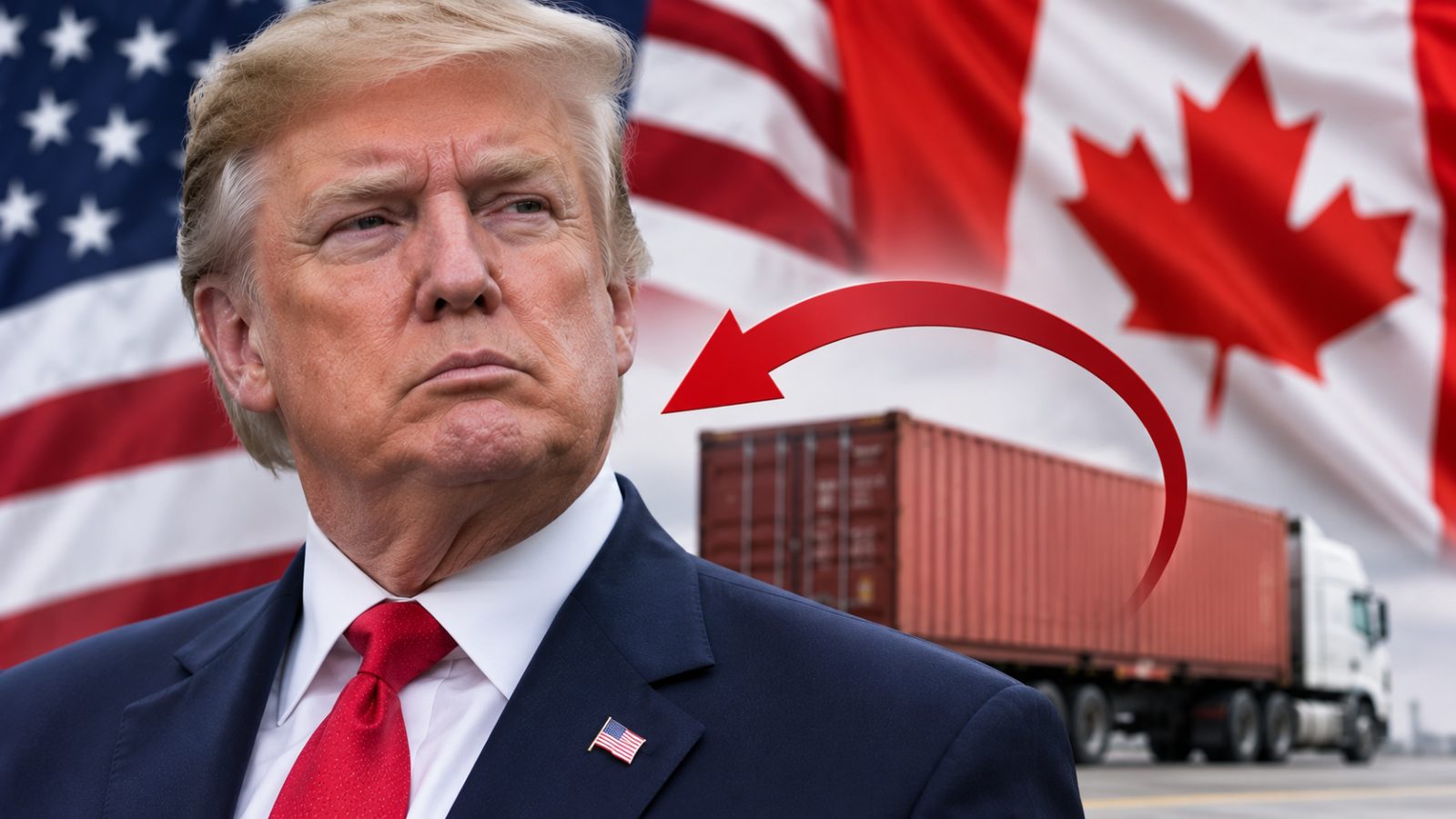
Trump’s tariffs of up to 50% on certain goods from Canada are hurting American businesses too, Canada’s ambassador warned Wednesday.
Mark Wiseman said companies are thinking twice about expensive projects because nobody knows what Washington’s trade rules will look like next. His warning at the B20 business summit came as new Federal Reserve research suggested US shoppers could face another round of tariff-driven price increases in 2027.
Canada warns that uncertainty is costing American companies money
Wiseman, who became ambassador in February, spoke at the Washington event hosted by the US Chamber of Commerce. He said uncertainty makes borrowing and investment more expensive. Businesses planning factories, ships or research projects need predictable costs before committing millions of dollars.
And this is hardly a small trading relationship. The countries exchanged roughly $570 billion in goods during the first nine months of 2026, according to Census Bureau figures. That exceeded the same period last year but fell short of comparable totals in each of the three previous years under Joe Biden.
The tariff bill has ballooned. Congressional Research Service figures show US customs duties assessed on Canadian imports rose from $400 million in 2024 to $10 billion in 2025.
Trump says his measures defend American jobs and factories against what he considers unfair Canadian treatment of US exporters. Ottawa has responded with duties affecting billions in American shipments.
Meanwhile, New York Fed researchers found in October that US importers absorbed nearly 90% of tariff costs. Roughly one-quarter of tariff increases eventually reached retail goods prices, with more increases expected next year.
Separate Labor Department figures showed consumer prices climbed a higher-than-forecast 0.4% in October, an unwelcome development after Republicans’ heavy midterm defeats.
Trade talks resume as Democrats prepare a challenge
Washington and Ottawa are negotiating again after discussions fell apart in August. Their immediate focus is relief for Canadian steel and automobiles, two industries caught in the dispute.
Wiseman wants Washington to scrap duties imposed using Sections 232 and 338 of US trade law. One law concerns national security while the other targets discriminatory practices, showing how many routes Washington has used to put duties in place.
He argued that faster agreement would let companies plan investments without constantly recalculating their exposure. Canada, he added, has traded freely with the United States since 1988 and wants to get as close to that arrangement as possible.
Wiseman’s timetable was straightforward: “The sooner, the better.”
Politics may complicate the timetable. Democrats, set to take control of Congress in January, are preparing to challenge Trump’s tariffs. Still, Canadian Prime Minister Mark Carney said Tuesday that Trump’s administration remains Ottawa’s main negotiating counterpart.
Other diplomats sounded equally tired of trade uncertainty at the B20. Germany’s ambassador, Jens Hanefeld, said businesses can work around tariffs more easily than rules that keep changing, forcing them to spend extra money on legal advice.
France’s ambassador, Aurélien Lechevallier, urged governments to spend less energy fighting over trade barriers and more on joint work in artificial intelligence and energy. Companies, he said, are ready to make deals rather than keep paying to decode regulations.