
Live updates
The Bank of Canada has raised its policy rate by a quarter percentage point to 2.5%, moving ahead of today's Federal Reserve announcement. The increase takes the overnight target up from 2.25%, with the Bank Rate at 2.75% and the deposit rate at 2.45%.
Its concern is that expensive energy will keep pushing up the prices of other goods and services. Officials said the inflation outlook had become higher and more persistent than they expected in July, while economic growth had picked up.
In its statement, the bank left the door open to further increases:
"There could be a need to increase the policy rate further, but given uncertainties, Governing Council agreed to proceed carefully."
The new forecast puts Canadian CPI inflation at about 3.5% by the end of this year. It is expected to average 3% in 2027, a full percentage point above July's projection, before returning to 2% around the middle of 2028. Those are forecasts, not readings already recorded.
The detail beneath the headline helps explain the decision. Inflation excluding gasoline was 2.2% in September, and the bank said its core measures remained close to 2%. But fuel costs are raising production and transportation expenses, while imported industrial and electronics inputs have also become more expensive.
Businesses have absorbed much of those increases so far. Bank surveys suggest they will pass more of the costs on over the next year. Short-term inflation expectations have risen among households and businesses, although longer-term expectations remain well anchored, according to the release.
The bank now expects Canada's economy to grow 1% in 2026 and 2% in 2027, while warning that trade relations with the United States remain a major uncertainty. It described U.S. growth as robust, supported by consumer spending and AI-related investment.
Canada's next scheduled rate decision is December 9, the same day the Fed's final scheduled meeting of the year concludes. For both, the energy-price outlook remains a central part of the inflation debate.
The Federal Reserve is expected to leave interest rates unchanged today, with investors watching for signs that another increase could follow in December. A hold would keep the federal funds target range at 3.75%-4.00%, after September's quarter-point hike.
The decision is due at 18:00 UTC on October 28, followed by Chair Kevin Warsh's press conference at 18:30 UTC. The Associated Press reported today that a pause is expected even as higher energy costs complicate the inflation outlook. The decision has not yet been announced.
September's annual consumer inflation rate reached 3.7%, up from 3.4% in August. Core CPI, which excludes food and energy, also accelerated, to 2.6% from 2.4%. The Bureau of Labor Statistics' October 14 release showed gasoline prices rose 9.1% in September and accounted for more than half of the overall monthly increase.
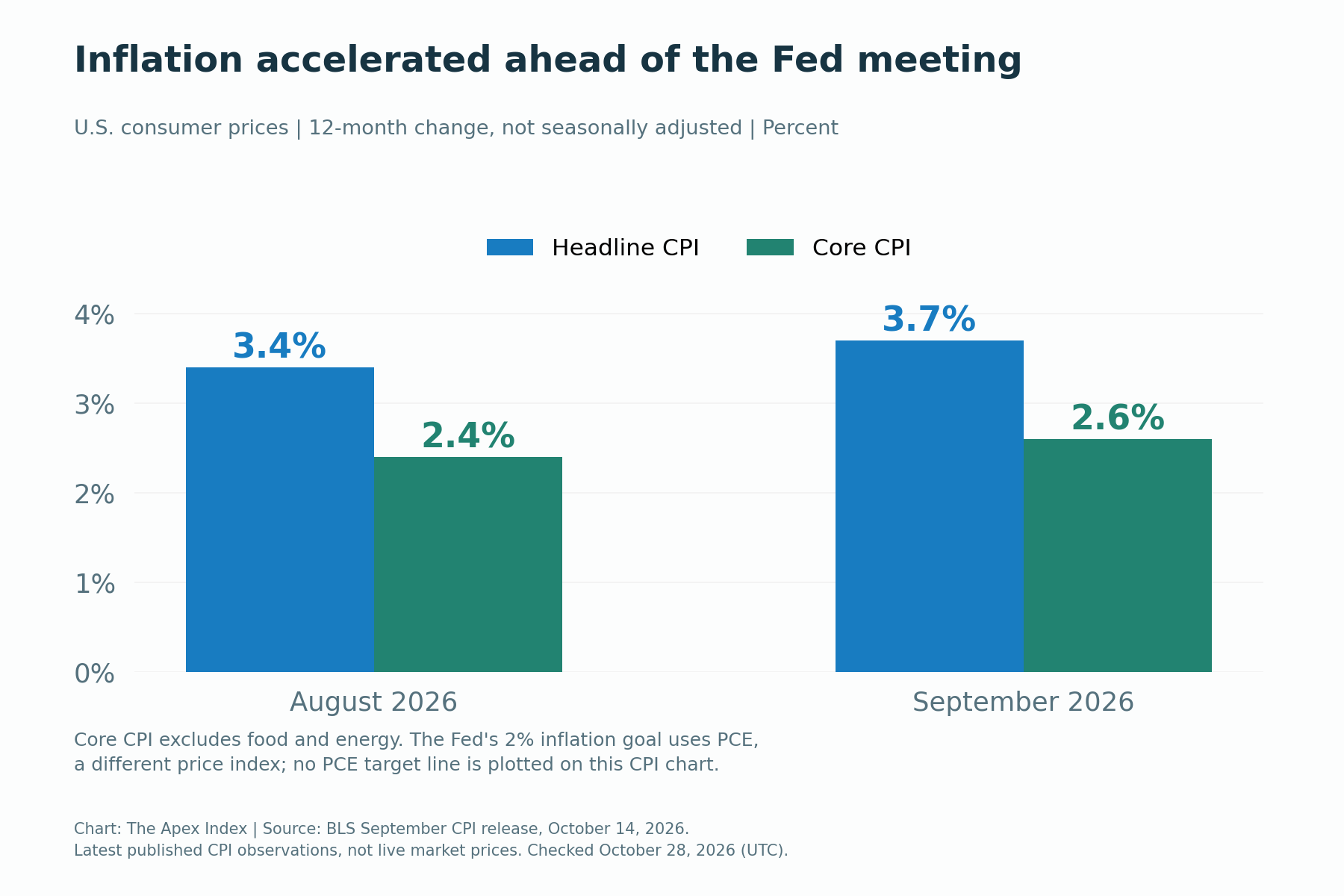
The distinction between inflation measures matters here. The Fed's 2% goal applies to the personal consumption expenditures price index, rather than CPI. Its calendar also shows that today's meeting does not include a scheduled Summary of Economic Projections. The statement and Warsh's answers will therefore carry the main policy signals.
First, watch whether officials repeat September's promise of a "timelier" return to their inflation goal. That wording accompanied the last increase and could help explain how urgently they think rates need to rise again. Any indication about December would remain guidance, not a decision already taken.
Second, check the voting split. September's statement passed 12-0. Today's votes will show whether members agree on pausing or whether anyone wants a different move.
Third, listen for how Warsh weighs energy prices against the costs of tighter credit. Higher rates can restrain demand, but cannot directly restore disrupted oil supplies. His explanation of that trade-off will matter for households and businesses trying to judge where borrowing costs go next.