
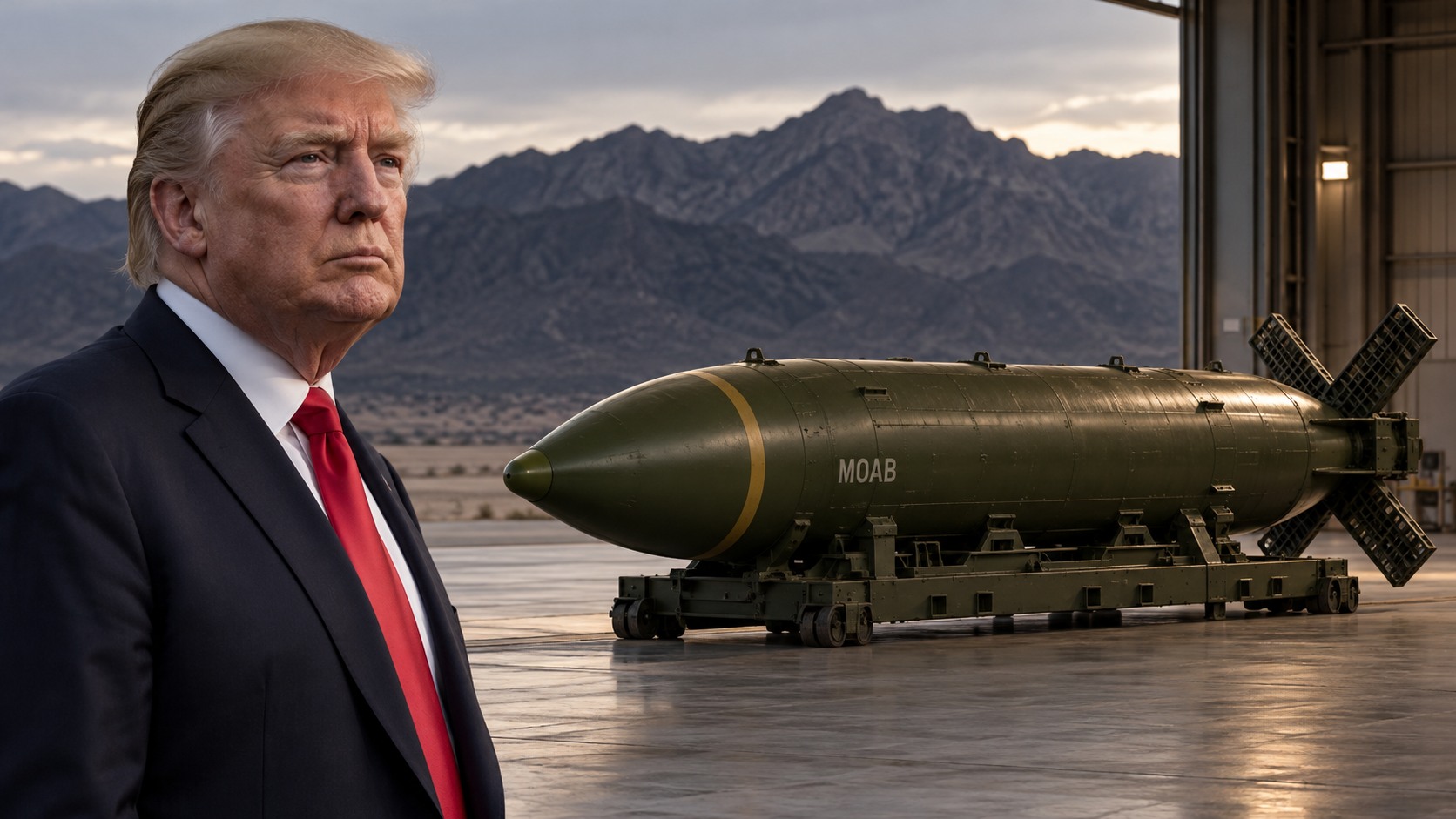
The U.S. military has drawn up options to attack Iran with a 21,600-pound bomb. But some officials involved in the planning are questioning whether its enormous blast would solve the problem Donald Trump wants solved: destroying nuclear facilities buried deep inside a mountain.
The weapon is the GBU-43/B Massive Ordnance Air Blast bomb, better known as MOAB or the “mother of all bombs.” CNN reported that it appears in plans covering Iranian energy infrastructure and nuclear sites. The options still depend on Trump ordering renewed combat operations; no MOAB strike has been announced.
The October 15 exclusive, citing multiple U.S. officials, identified Pickaxe Mountain among the sites in the planning. Washington and Israel believe Iran has stored nuclear-program components there. Sources familiar with the discussions questioned whether the weapon could reach facilities protected by layers of granite.
One source put the limitation plainly:
The MOAB is a massive information operation type weapon that is great for huge area clearance but not much else. It is definitely not designed as a deep penetration warhead.
The problem is below ground
A huge explosion and deep penetration are different jobs. The Defense Department's own 2017 explanation describes the weapon's construction:
It has a relatively thin aluminum casing designed to burst on a surface, not penetrate it. That creates a large blast with lesser fragmentation.
For exposed structures, that blast can be devastating. Against a heavily fortified installation under mountain rock, the same design presents a very different challenge. Officials cited in the new report said the bomb likely could not penetrate deeply enough to destroy the suspected facilities at Pickaxe.
The United States first used MOAB in combat in Afghanistan on April 13, 2017, against Islamic State positions. That attack involved a cave-and-tunnel network, a different setting from the deeply buried Iranian sites now under discussion.
There is also a risk above ground. Sources warned that using such a large blast against infrastructure near populated areas could endanger civilians and nearby non-military sites.
A military option with a political deadline
The planning reaches beyond which bomb to use. One source described additional attacks being considered before a possible U.S. withdrawal from the region, potentially giving Trump a chance to declare victory and pull forces out. Another said some options would amount to a “fireworks show.”
That is the tension running through the discussions: an attack could look decisive without ending the dispute over Iran's nuclear program or securing a diplomatic agreement. Advisers have been looking for a symbolic win while the president faces the November 3 midterms.
As previously reported by Apex, Iranian threats against American warships have continued alongside the argument over who controls shipping through Hormuz. The waterway remains part of the confrontation a new bombing campaign would inherit.
Trump, meanwhile, keeps predicting a quick ending. Speaking to reporters in Montana on October 14, he said the war would end “very soon” and predicted falling oil prices, according to Anadolu's original report. That promise came as military planners continued preparing possible further attacks.
Asked about the strike plans, the White House declined to discuss sensitive military options and said Trump keeps all options available to prevent Iran from obtaining a nuclear weapon. The Pentagon said it plans for a wide range of operational scenarios. Neither response announced authorization to use MOAB.
What would the blast actually achieve?
Military analyst Elijah Magnier raised that question in an October 15 interview with Al Jazeera:
The question I would put to any commander advocating its use is straightforward: What will this weapon accomplish that another available weapon cannot, and how will that result advance an achievable political settlement?
He warned that destroying infrastructure might still fail to produce Iranian concessions. A strike's military effects and its political outcome would have to be judged separately.
Iran has also threatened consequences beyond the immediate battlefield. Apex had earlier reported that security official Mohsen Rezaei warned of attacks on Gulf communications cables, data centers and AI infrastructure if Washington strikes again. That puts the risk of retaliation across the region alongside the unresolved question of what the bomb could reach underground.