
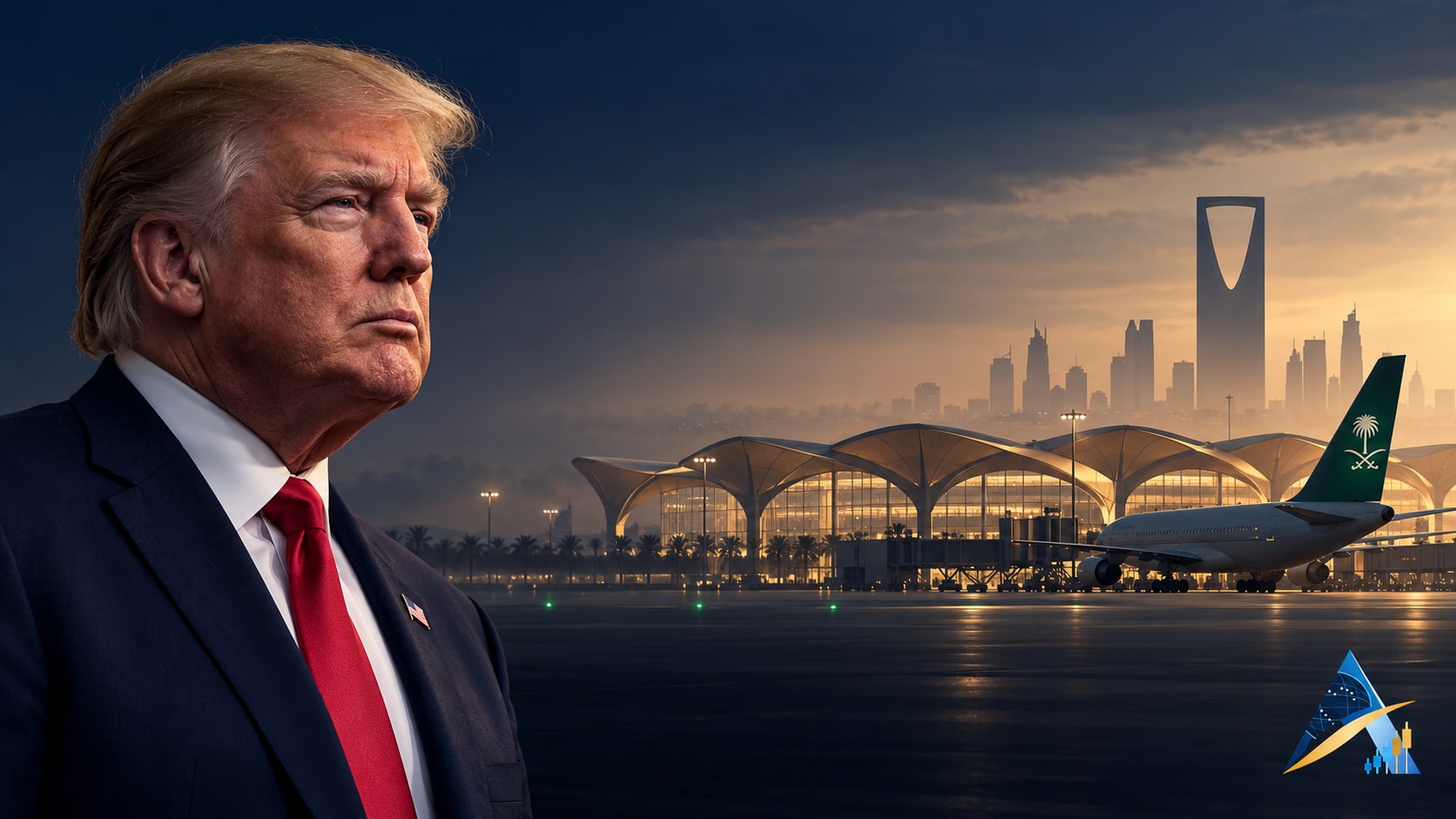
Donald Trump said the United States may join Saudi strikes against Yemen’s Houthis after another attack on Riyadh’s international airport, as a reported death toll of 12 raised the stakes for Washington’s response. The president said a decision would follow quickly, without announcing that American forces had been ordered into action.
The death toll remains provisional. Reuters reported that three people familiar with the incident, including two Western officials, said 12 people had died and dozens were wounded. Saudi authorities had not issued an official casualty count, and the Houthis had not immediately claimed responsibility for Saturday’s attack.
Trump considers joining Saudi strikes
Asked outside the White House on October 10 whether the United States planned to join Saudi attacks on the Houthis, Trump said, in remarks reported by AFP:
We may. We’re going to look at it. We just found out about the recent attack, so we’ll make a decision. We move very quickly.
His answer leaves the scale, targets and timing of any American operation open. It nevertheless brings the possibility of direct U.S. intervention into Saudi Arabia’s renewed fighting with the Iran-aligned movement, following repeated attacks on civilian aviation facilities.
The Houthis claimed two earlier attacks on Riyadh’s airport this week. Saturday’s incident was still unclaimed in the latest reporting, a distinction that matters even as officials examine it against that pattern of strikes.
Riyadh’s airport shuts down
Saudi Arabia’s General Authority of Civil Aviation confirmed in an October 10 statement that King Khalid International Airport had been attacked and that injuries were being assessed. It described continued attacks on civil aviation facilities in the kingdom.
The authority set out the conditions for resuming services:
Operations at the airport have been temporarily suspended pending a full damage assessment and verification of the safety of its facilities, in coordination with the relevant authorities. Further updates will be announced.
Two regional officials told the Associated Press that a missile struck the complex housing domestic terminals 3 and 4. Ambulances rushed to the airport as passengers were evacuated. Witnesses interviewed by AFP described an explosion near departure gates and people running through the terminal.
The disruption reaches beyond the immediate casualties. An airport closure forces carriers to divert aircraft, rearrange crews and leave passengers facing cancellations and uncertain departure dates. For Riyadh, repeated interruptions also threaten the reliability of an international gateway ahead of major investment and energy gatherings.
A reported toll, not a final official count
The latest Reuters dispatch said those briefed on the incident warned that the numbers of dead and wounded were not final. Some casualties were in critical condition, and patients were evacuated by ambulance and helicopter. The Saudi government’s media office did not immediately answer questions about the toll.
The Houthi military spokesperson reposted an earlier warning that only pre-approved humanitarian flights could land at Riyadh airport, adding “a reminder,” according to the dispatch. That message did not explicitly claim responsibility.
The report also said Saudi Arabia’s warning system had issued no alert before the strike. That adds a security question to the operational one: how to protect travellers and airport staff while assessing damage and deciding when flights can safely resume.
The U.S. embassy urged Americans to avoid the airport and surrounding areas. British, Irish, Canadian and German diplomatic missions also warned citizens about the incident or disruptions. These warnings underline the immediate risk to civilian travel without establishing that an American strike decision has been made.
Another front in a wider conflict
As previously reported by Apex, Washington has also been weighing strike options against Iran before the November 3 midterm elections. The airport attack creates a separate question about action against the Houthis, rather than confirming that those earlier plans have been approved.
Apex had earlier reported maritime attacks and restrictions in Hormuz. The pressure on Riyadh’s airport now shows how the regional conflict is disrupting civilian movement on land as well as at sea. Trump’s next decision could widen American involvement, while the immediate priorities remain treating casualties, establishing the full toll and restoring safe airport operations.