
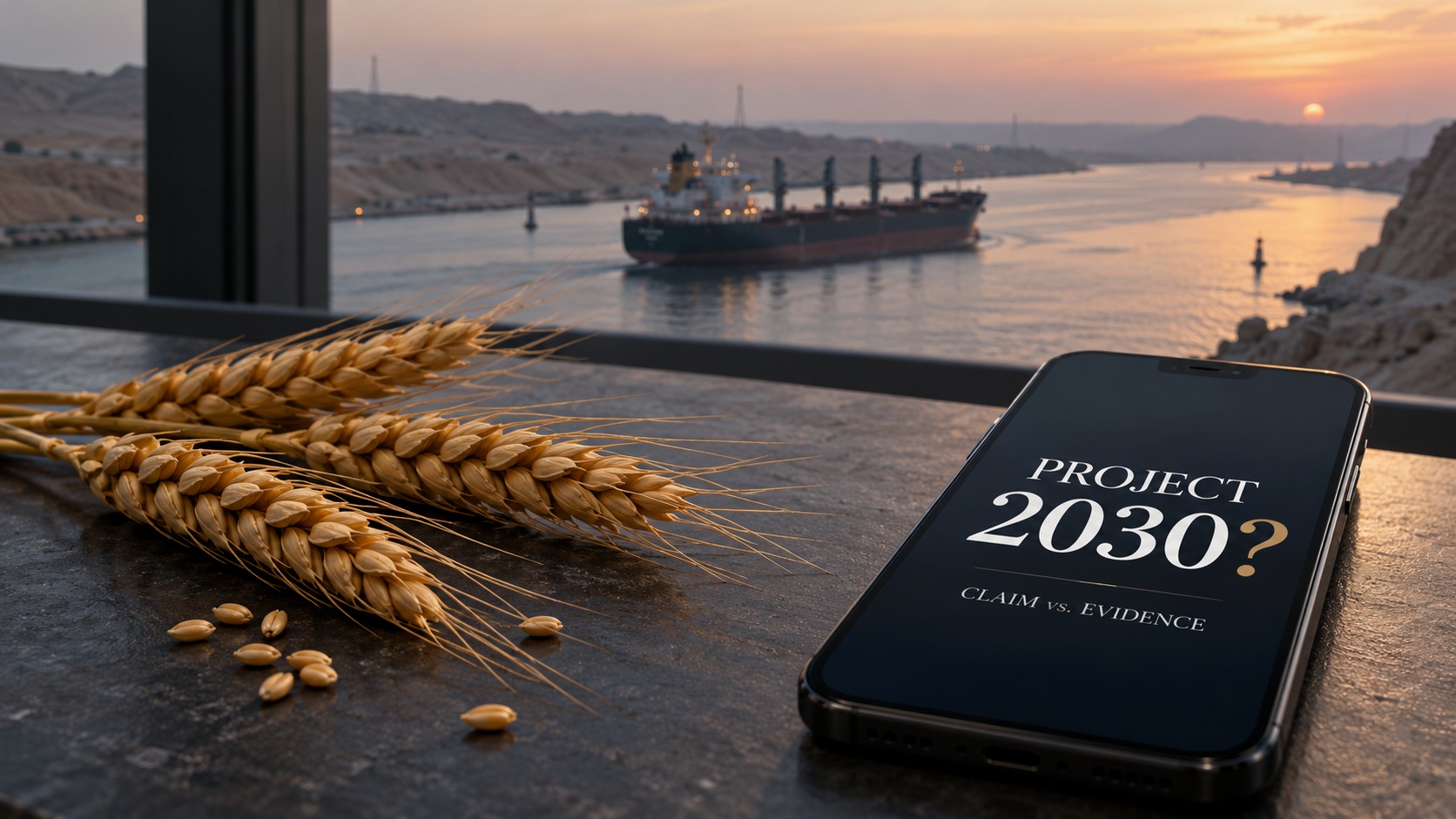
A warning about fertilizer shipments has become something much bigger on X: a claim that the war involving the United States, Iran and Israel is a coordinated effort to starve people. Old anonymous posts, predictions of mass deaths and a skull-filled magazine cover are being passed around as clues to a supposed plan.
The food-supply threat is real. The claim of a joint operation is unsubstantiated. What is being described as “Project 2030” mixes the current shipping crisis with older allegations about population control and the United Nations' Agenda 2030. Those are very different things, even when they arrive in the same thread.
What the UN actually warned about
On October 14, UN Under-Secretary-General Jorge Moreira da Silva told Reuters that parts of Asia and Africa could face a food-security crisis unless Washington and Tehran quickly approved a mechanism allowing fertilizer through the Strait of Hormuz. The deadline is practical: planting season is approaching, and farmers cannot keep putting it off.
If we miss that planting season, the productivity of agriculture would significantly drop and the impact on prices will significantly increase.
Before the war, roughly a third of global urea shipments and nearly half of seaborne sulfur passed through the strait, according to the report. Urea supplies nitrogen for crops; sulfur is another important fertilizer input. Disruptions can therefore reach well beyond the Gulf, through farmers' costs, harvests and grocery bills.
The proposed mechanism would register ships through a coordination center in Oman, verify loading and track vessels. Moreira da Silva said it could start within seven to 10 days if both countries agreed, and that five vessels a day could sustain supplies for countries in critical need. He did not explain why agreement remained elusive.
This effort is not new. The UN's announcement dates to March 27. On September 24, the same official said the mechanism was ready but needed political will.
How the warning became a conspiracy
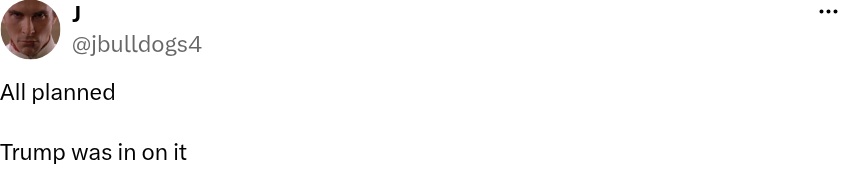
Quoting a Polymarket summary of the warning, @jbulldogs4 wrote in an October 14 post:
All planned Trump was in on it
The attached image was an anonymous message alleging that attacks on fuel and fertilizer infrastructure were a cover for manufactured shortages. It invoked “Agenda 2030” and described a mass-culling operation. Its author's identity and claimed publication history have not been authenticated.
One reply, from @tylerjobriant, asked for “the entire timeline from like 2025 on ending in 5 billion dead,” adding that it was “all coming true.” That response captures the leap being made: a real disruption is treated as confirmation of a much larger prediction.
In a September 14 post, the same account had shared a warning that people would surrender their freedom because of a “planned planned famine” or another major crisis. An October 14 reply supplied screenshots of a supposed 2025 timeline involving global war, billions of deaths and a fake alien invasion.
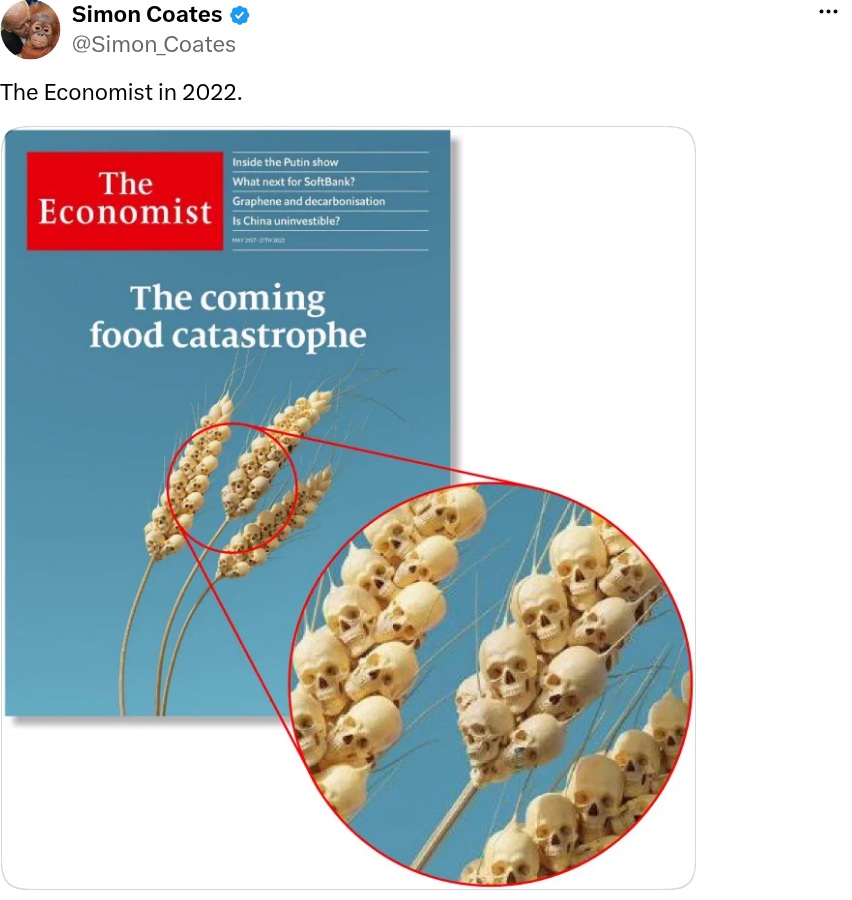
Simon Coates added another image, writing, “The Economist in 2022.” It showed the magazine's May 2022 cover, “The coming food catastrophe,” with wheat grains shaped like skulls.
The replies were not all buying it
Noah L, posting as @broescalatethis, challenged the prediction in a direct response:
What’s more likely, a global famine which kills many millions by March next year, or food getting slightly more expensive?
That question challenges the scale of the prediction, but the danger is not limited to those two outcomes. Missing fertilizer can seriously hurt vulnerable countries without producing an identical catastrophe everywhere.
As previously reported by Apex, Iranian threats against American warships have added to the confrontation around Hormuz. Ships and farmers are caught in an actual political and military dispute. That is enough to demand answers from the governments involved.
Is this conspiracy theory likely to be true?
On the evidence available, no. There is no verified evidence that Trump, Iran and Israel have agreed to engineer a global famine. The posts offer assertions, anonymous screenshots and retrospective connections, not authenticated communications or records showing such an agreement.
The official Agenda 2030 was adopted in 2015. Its second sustainable development goal calls for ending hunger, improving nutrition and supporting sustainable agriculture.
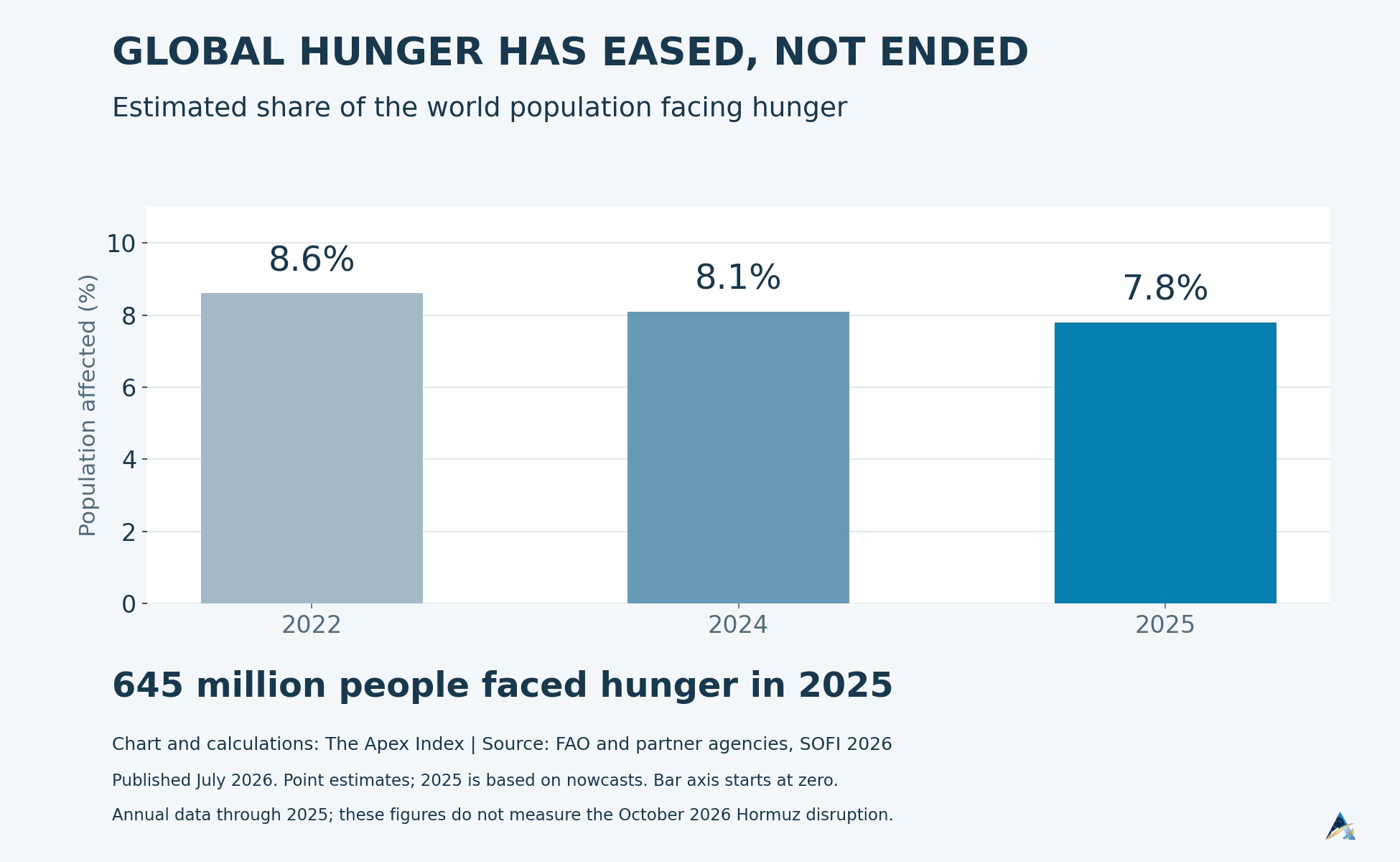
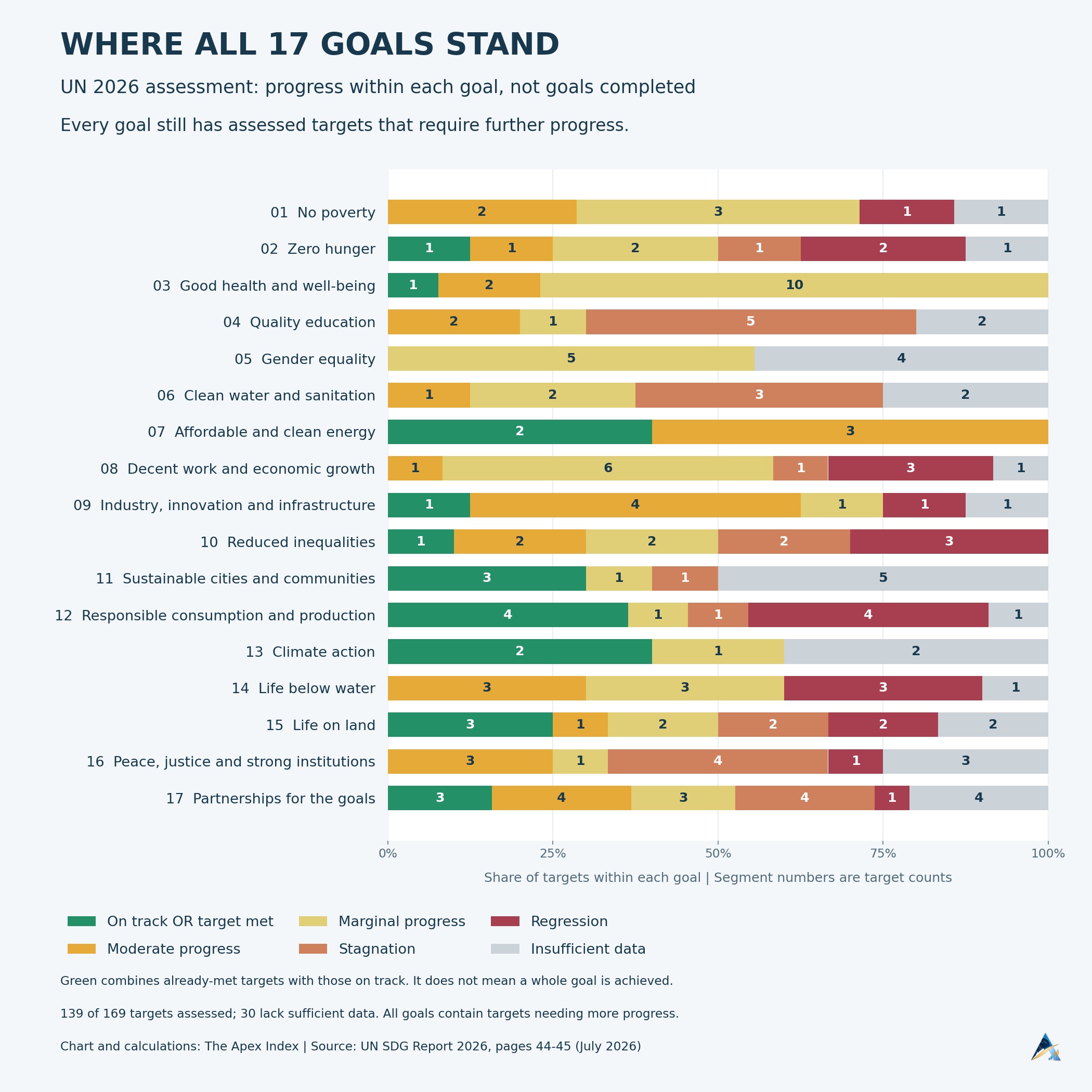
The program is still running, but it has not delivered all 17 goals worldwide. The UN's July 2026 report puts only 15% of the 139 targets with enough data in its “on track or target met” category. Another 21% show moderate progress, while 32% show marginal progress, 17% are stagnating and 15% have regressed from their 2015 baselines. Thirty of the agenda's 169 targets lack enough data for assessment. Because the best category combines targets already met with those still on track, 15% cannot be treated as a completion rate. There have been tangible gains: electricity reaches 92% of the world's population, internet use has risen from 40% to 74% since 2015, and nearly a billion additional people have gained safely managed drinking water. Those improvements have not eliminated poverty, hunger or unequal access to basic services. The more recent July FAO hunger report estimates that 645 million people faced hunger in 2025, or 7.8% of the global population. That was a third consecutive annual improvement, but Africa's hunger rate remained 20%. Its projections still leave approximately 510-520 million people facing hunger in 2030, depending on how long the Middle East conflict affects food inflation. Those are conditional forecasts, not recorded outcomes. The agenda remains a set of unfinished commitments, with progress varying sharply between regions and a deadline that is now only four years away.
Past cases of real misconduct do not establish this particular allegation. Nor does rejecting it excuse decisions that leave essential supplies stranded. The questions worth pressing are concrete: who is holding up the mechanism, what terms are they demanding, and when will the fertilizer actually reach farmers?