
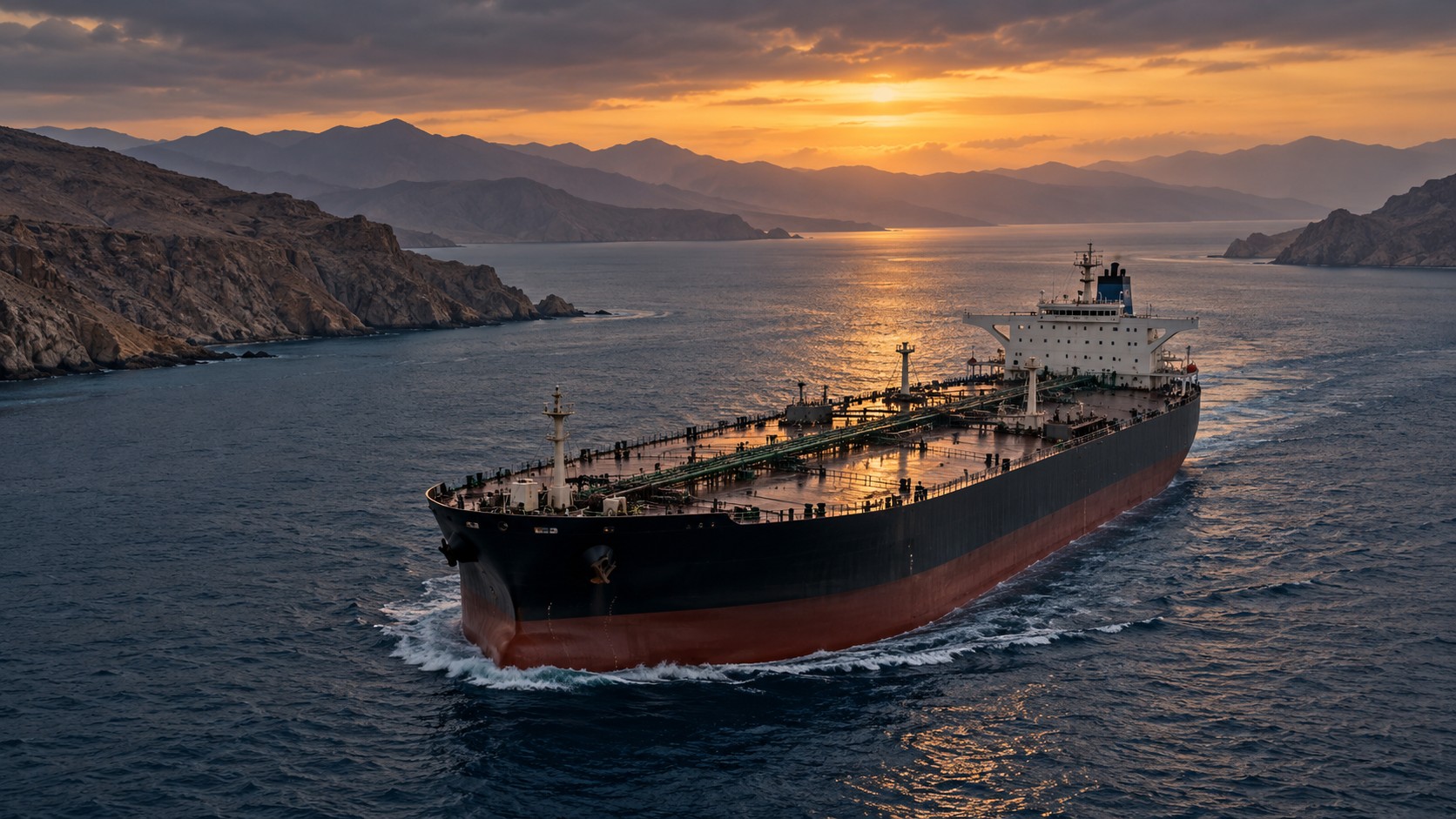
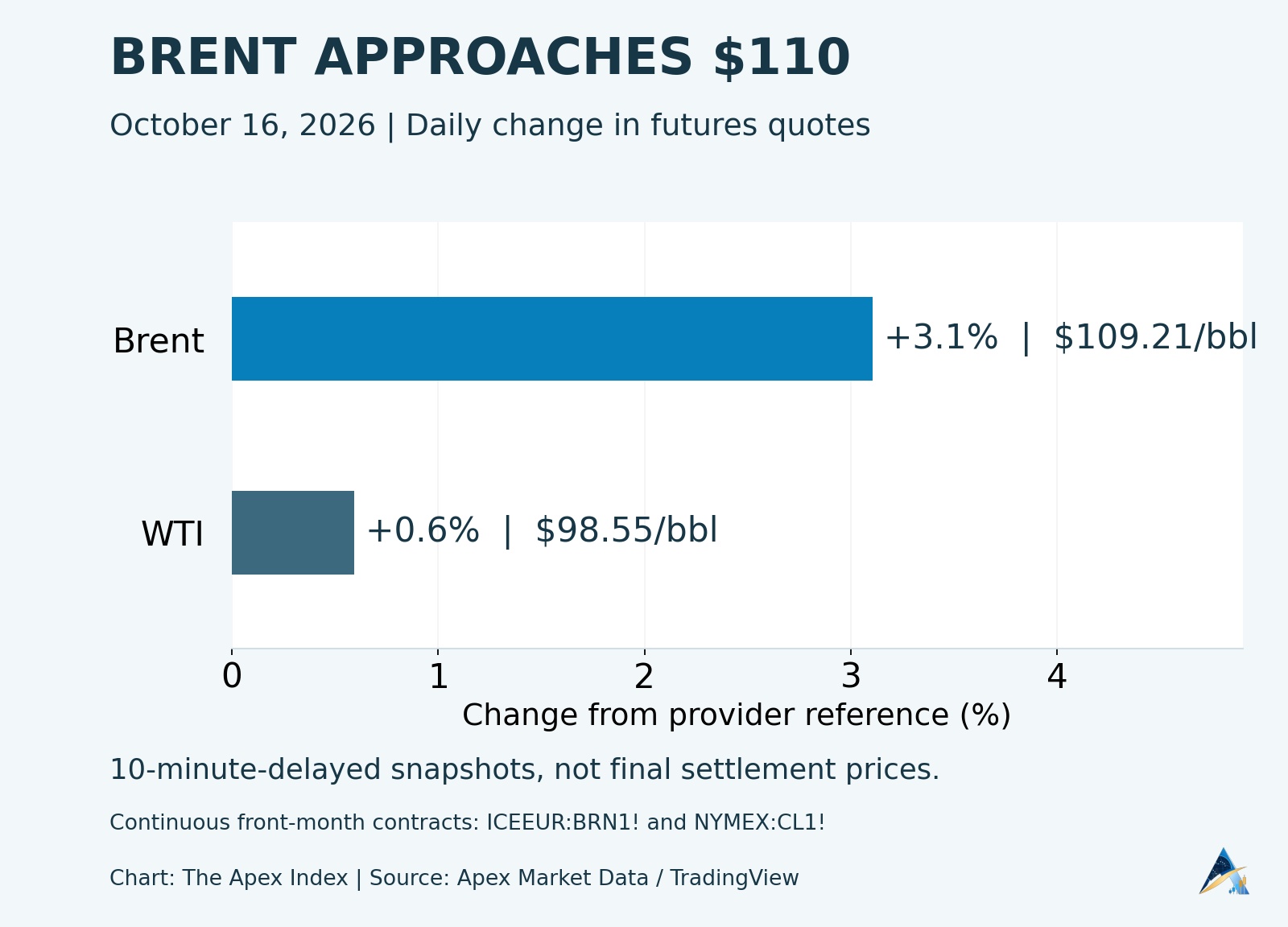
Brent crude moved toward $110 a barrel on October 16 as Iranian commanders stressed their readiness for another confrontation and Israeli authorities continued civilian protection measures. Apex's delayed futures snapshot put the international benchmark at $109.21, up 3.1%, with military warnings adding to an already tense backdrop for energy markets.
The reported 72-hour highest-alert order in Iran remains unconfirmed. The Hormuz Letter cited initial reports from Tehran, rather than publishing a military directive. In Israel, documented preparations include local shelter installations and election contingency planning; a new nationwide emergency shelter-deployment order has not been confirmed.
Iran's commanders warn against another attack
The alert claim appeared in an October 15 social-media report alleging full military mobilization and the deployment of air defenses, missiles and ground forces. National Security Journal repeated that account on October 16, linking back to The Hormuz Letter.
Israeli reporting adds more detail. N12's Ohad Hemo reported on October 16 that some Revolutionary Guard bases had been evacuated during the preceding week over fears of a U.S. attack. Hidabroot separately reported that Iran's military command had declared combat readiness, citing Iranian media without identifying a specific outlet.
Iran's state broadcaster Press TV separately quoted Major General Mostafa Izadi, the Revolutionary Guard's deputy commander-in-chief, describing forces prepared across land, sea, air and air defense. His October 15 warning was direct:
Today, too, we stand against the aggression of the criminal United States and the Zionist regime; and, just as in the Sacred Defense, through the self-sacrifice and resistance of the warriors of Islam, we will not permit any form of aggression against our beloved homeland.
The language leaves little room for reassurance as Washington weighs further military options and Tehran promises to resist them. For oil buyers, the concern reaches beyond the next possible target to the shipping lanes and energy facilities exposed to retaliation.
Oil traders price in the tension
The Kobeissi Letter flagged the market move in an October 16 post:
BREAKING: US oil prices surge to their highest level since September 17th as US-Iran tensions escalate.
Apex's synchronized futures snapshot showed WTI at $98.55, up 0.6%. Both readings were 10 minutes delayed and represented continuous front-month futures. Brent was approaching $110 in that snapshot, rather than recording a confirmed settlement at that level.
Israel adds shelters and prepares for voting under fire
Local reporting provides a concrete picture of the shelter work. Sharon Online reported on October 15 that Hod Hasharon had installed another portable shelter at Gan Ha'em the previous day, bringing the city's total to 16. The installation was part of an expansion of protection in public spaces.
The same outlet reported plans for two additional shelters at Ra'anana Park and the Neve Zemer sports park on October 14. Those projects predated the latest oil jump and show the local protection work already underway.
Newzim also documented two shelters installed in Tirat Carmel on October 13, at 8 Rambam Street and 19 Rabbi Weinrib Street. Its October 14 report described a municipal program coordinated with Home Front Command to close gaps in public protection.
There is a separate political deadline. Ynet reported on October 16 that Israel's Central Elections Committee was preparing for missile alerts during the October 27 election. Numerous polling stations were being placed inside protected spaces, with others near shelters. Plans also cover securing ballot materials and temporarily suspending voting when sirens sound.
Public broadcaster KAN reported on October 15 that Israel had raised military readiness over possible escalation involving Iran or Hezbollah, while citing no concrete intelligence of an intended attack. In a fresh October 16 report, N12's Nir Dvori said Israeli security officials saw no change in Iranian behavior requiring urgent military action over the coming two to three weeks. Their concern included miscalculation: each side could read the other's preparations as a sign that an attack was coming.
The supply problem goes beyond warnings
As previously reported by Apex, Iranian threats against American warships have accompanied the confrontation over passage through Hormuz. The dispute keeps commercial crews, Gulf exporters and their customers exposed to further disruption.
Washington is also trying to add supply. Reuters reported on October 16 that the United States had requested proposals for an exchange of up to 17 million barrels from the Strategic Petroleum Reserve, citing the Energy Department. A solicitation starts that process; it is not a tally of barrels already delivered.
The immediate pressure on buyers is straightforward: more uncertainty over cargoes arriving safely, with crude already expensive. Further attacks could make that problem worse even as governments look for additional barrels.