

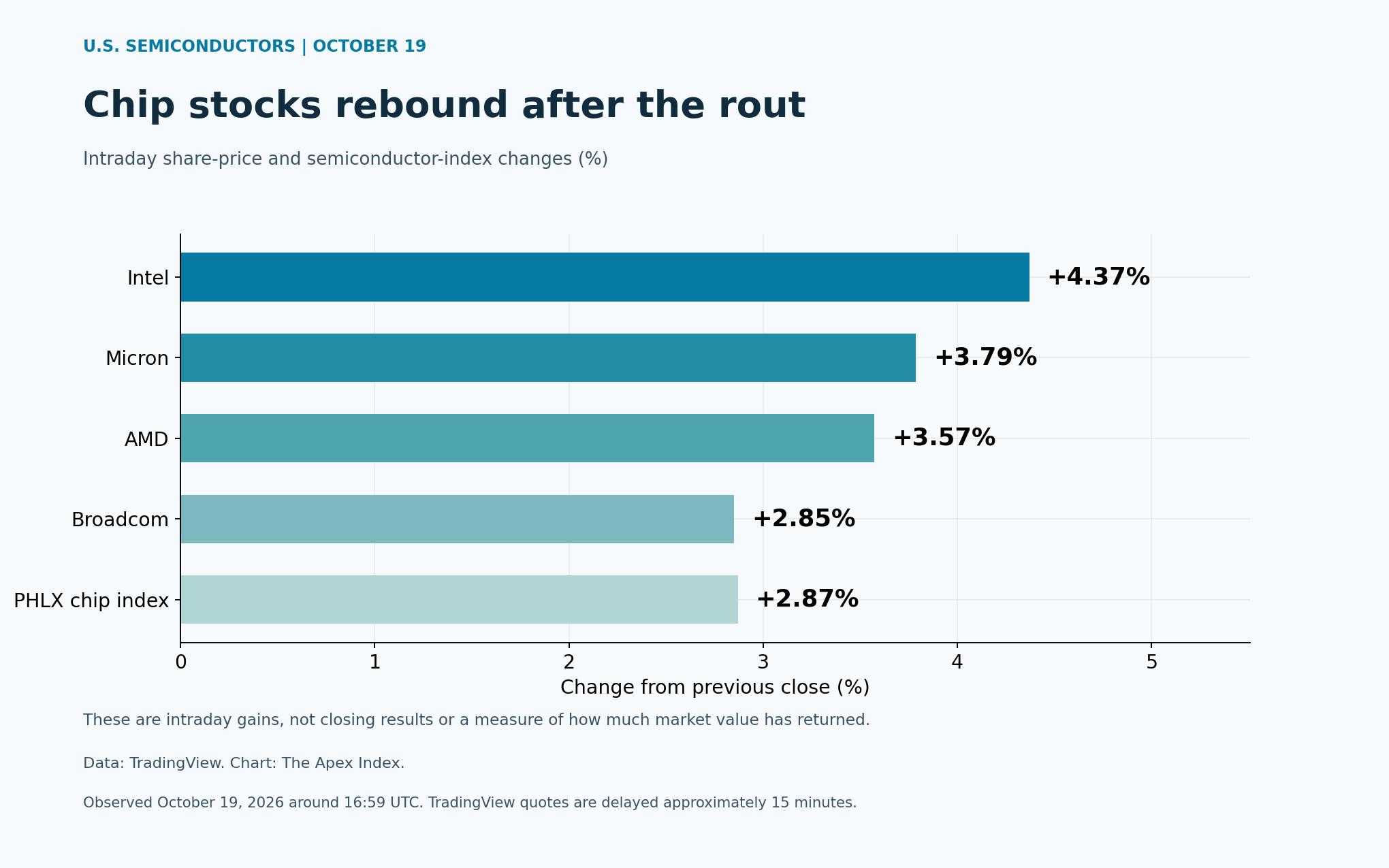
Chip stocks finally gave investors something to cheer about on October 19. Intel, Micron and AMD rallied as a battered AI trade found some buyers, helped by easing oil prices, lower government bond yields and a pair of analyst upgrades.
There was plenty of damage to work through. Companies in the PHLX Semiconductor Index had shed around $2 trillion in market value during an eight-session losing streak through Friday, according to Reuters. The index lost more than 11% last week alone. Monday's rebound gave shareholders breathing room, with a large part of that earlier decline still to recover.
Intel gets an upgrade, and chipmakers catch a bid
Intel had a company-specific reason to climb. JPMorgan raised its rating to neutral from underweight, Reuters reported. Its analysts pointed to agentic AI workloads and tight supplies of advanced chips as potential support for upward earnings revisions through 2027.
In a 15-minute-delayed TradingView snapshot captured at 16:59 UTC, Intel traded at $93.78, up 4.37%. Micron rose 3.79% to $912.13, while AMD gained 3.57% to $547.64. Broadcom added 2.85%, and the semiconductor index was up 2.87%. These were intraday readings, with the session still underway.
The upgrade gives Intel investors a more specific argument than simply buying because the stock fell. JPMorgan sees an opportunity for earnings expectations to improve as AI computing demand spreads. Whether that translates into the profits investors want will depend on how much business Intel wins and what it earns from that business.
For Micron, Monday's gain followed a particularly bruising week. Reuters reported that the memory maker had fallen nearly 15% over the previous calendar week. The rebound recovered a portion of those losses as chipmakers broadly moved higher.
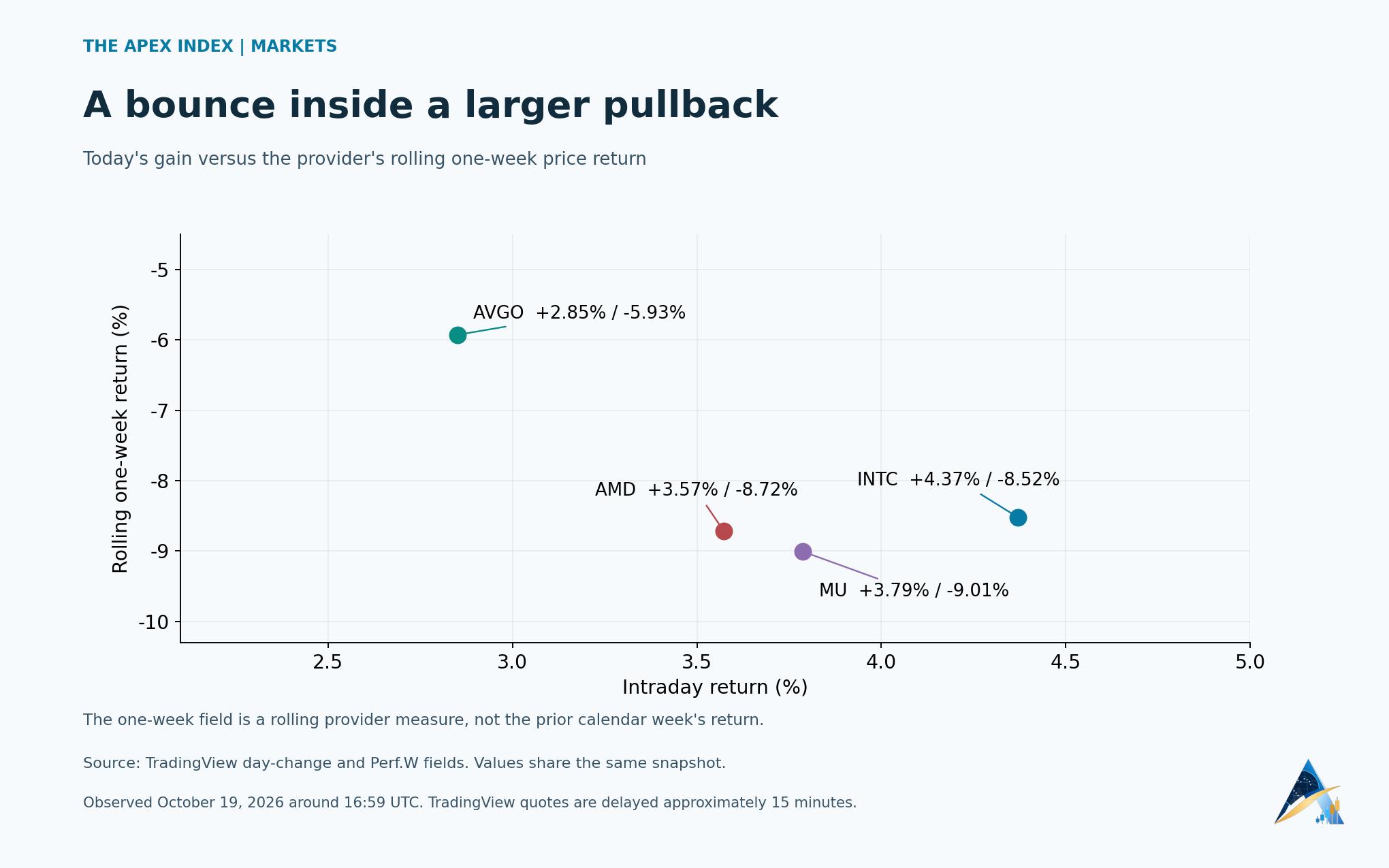
The chart compares Monday's intraday gains with TradingView's rolling one-week returns. Intel, Micron and AMD were each still down more than 8% over that rolling window. That window differs from the previous calendar week used in Reuters' account of the selloff.
The financing worry hasn't gone away
The bigger question stretches beyond chips. The companies buying and renting AI computing capacity also need money to keep building it. Last week's selling exposed how nervous investors have become about the cost of that expansion.
CoreWeave was a central part of that worry. Reuters reported that concerns about its $50 billion debt burden had helped trigger a crisis of confidence in the AI trade. Its shares lost a quarter of their value last week.
Goldman Sachs nevertheless upgraded CoreWeave to buy from neutral on Monday. The bank cited tight computing capacity and a performance advantage supporting its outlook for annual recurring revenue per megawatt over the next two years, according to Reuters.
Thomas Hayes, chairman of Great Hill Capital, told Reuters:
You could certainly see a dead cat bounce today and maybe some continuation tomorrow, but it doesn't change the fact that the bond market is very skeptical about continuing to finance this without demanding higher and higher yields.
That is the tension behind Monday's buying. Analysts can see opportunities after a steep decline while lenders still demand expensive financing. A lower share price may attract investors without making the company's next dollar of borrowing any cheaper.
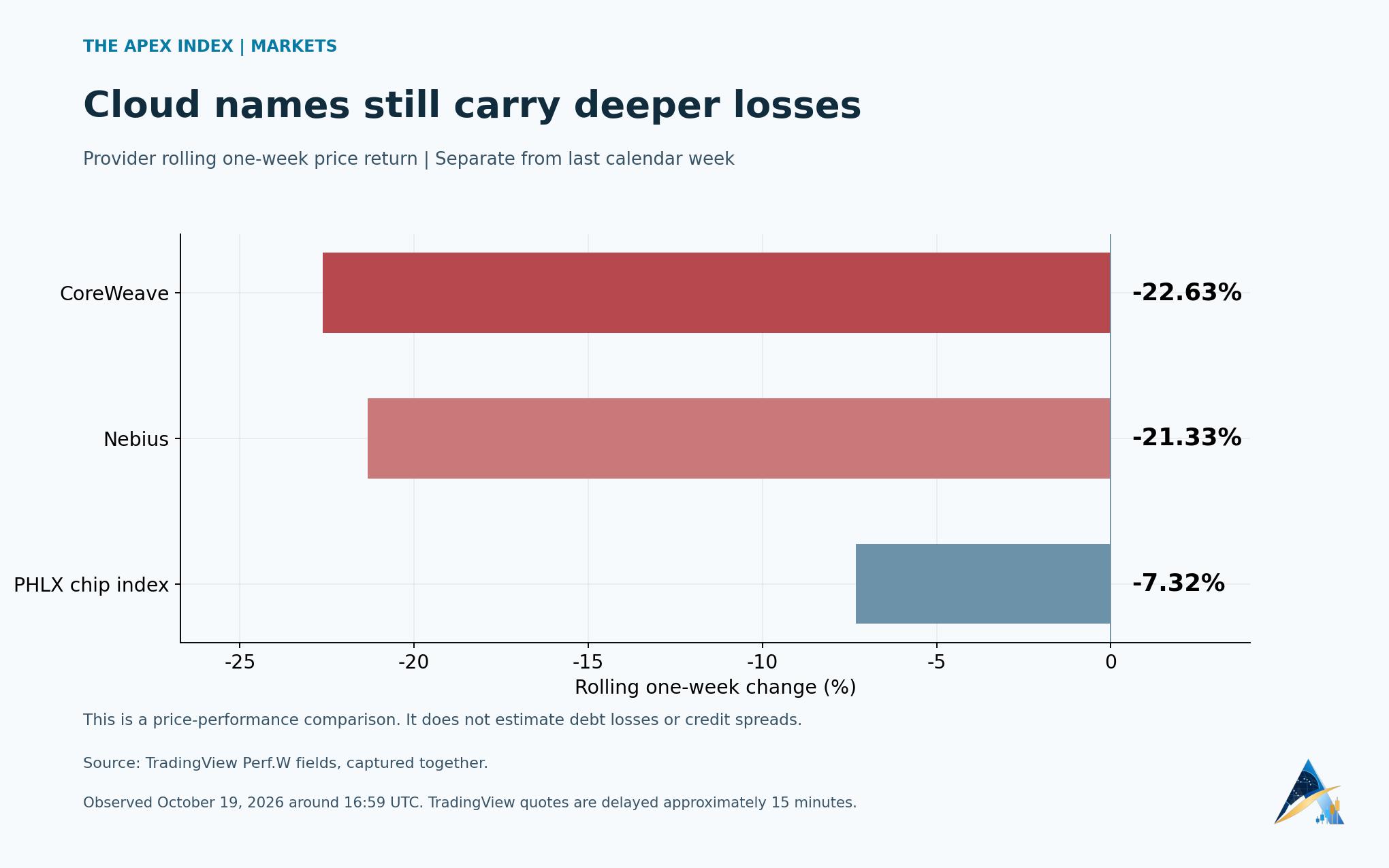
CoreWeave was up 1.24% in the same delayed snapshot, while Nebius gained 3.26%. Their rolling one-week losses remained approximately 22.63% and 21.33%, respectively. The semiconductor index's rolling decline was about 7.32%, showing how much harder these two AI infrastructure stocks had been hit over the same period.
There was some relief in credit markets, too. Reuters, citing Tradeweb, put the yield on CoreWeave's bond due in 2031 at 15.13%, down 19.5 basis points. It had traded above 16% last week. Borrowing conditions had improved at that observation, but a yield above 15% still puts a substantial price on financing risk.
The spending boom still needs to earn its keep
Demand for AI computing remains the case buyers are making. Morgan Stanley forecasts total AI investment of $1.6 trillion in 2027 and $1.8 trillion in 2028, according to the same Reuters report. That would be a 12.5% increase between those two years.
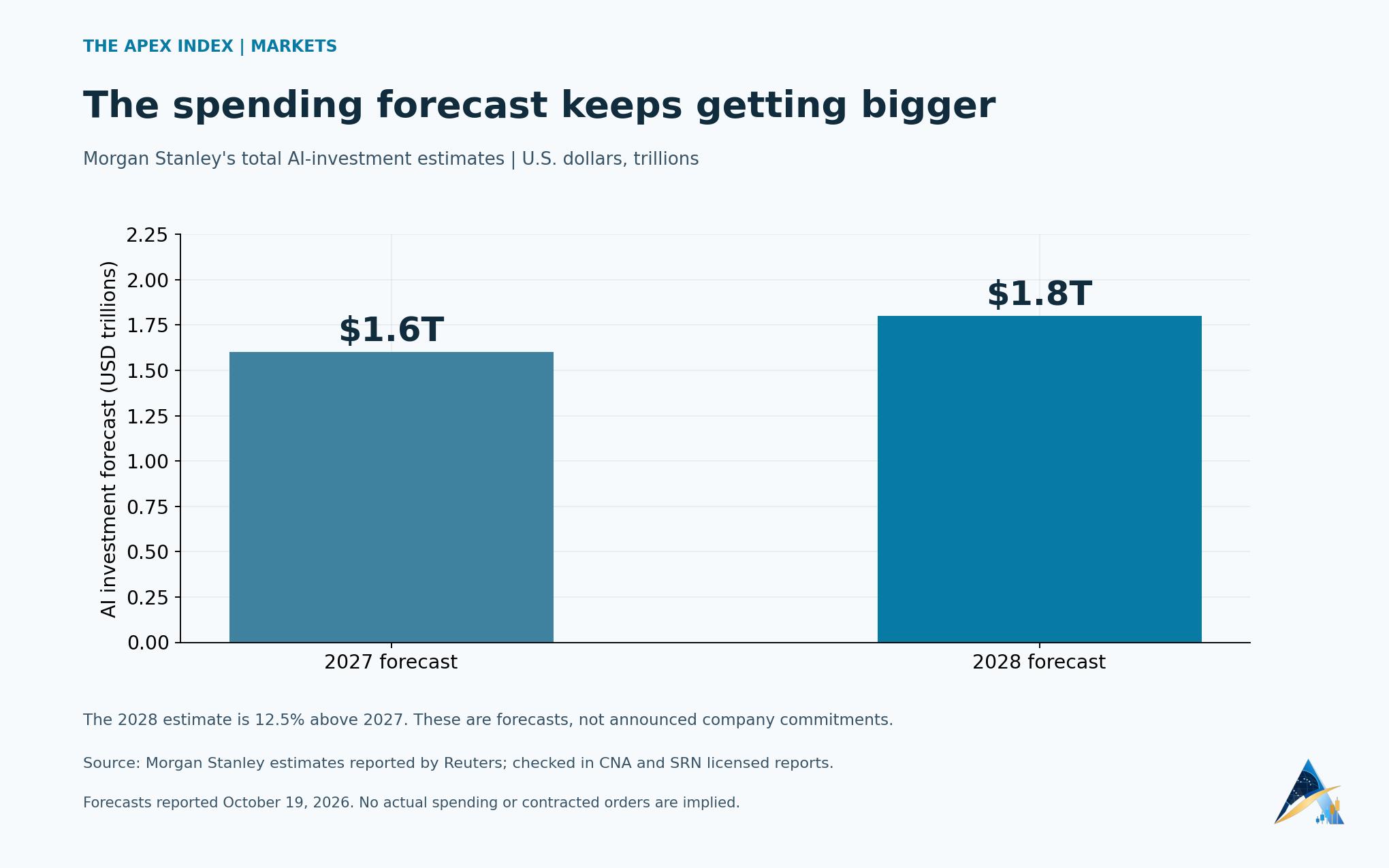
Those figures are forecasts, rather than completed spending or guaranteed orders for any particular chipmaker. They explain the scale of the opportunity investors are weighing against the cost of funding it.
Jay Woods, chief market strategist at Freedom Capital Markets, put the valuation question plainly to Reuters:
The question this quarter is not whether AI will continue to grow, it's whether investors are still willing to pay a premium for that growth.
As previously reported by Apex, Monday's earlier global trading had already produced a mixed picture, with sharp losses in Indonesia alongside gains in South Korea and Shanghai. The U.S. chip rebound added another turn to an unsettled day.
The $2 trillion figure describes the accumulated market-value loss through Friday, not money recovered on Monday. With trading still underway at the quoted snapshot, there was no final closing verdict on the rebound either.
For Intel, Micron and AMD shareholders, the immediate news was welcome: buyers had returned. The next test is whether company results and financing conditions give them enough reason to stay.