

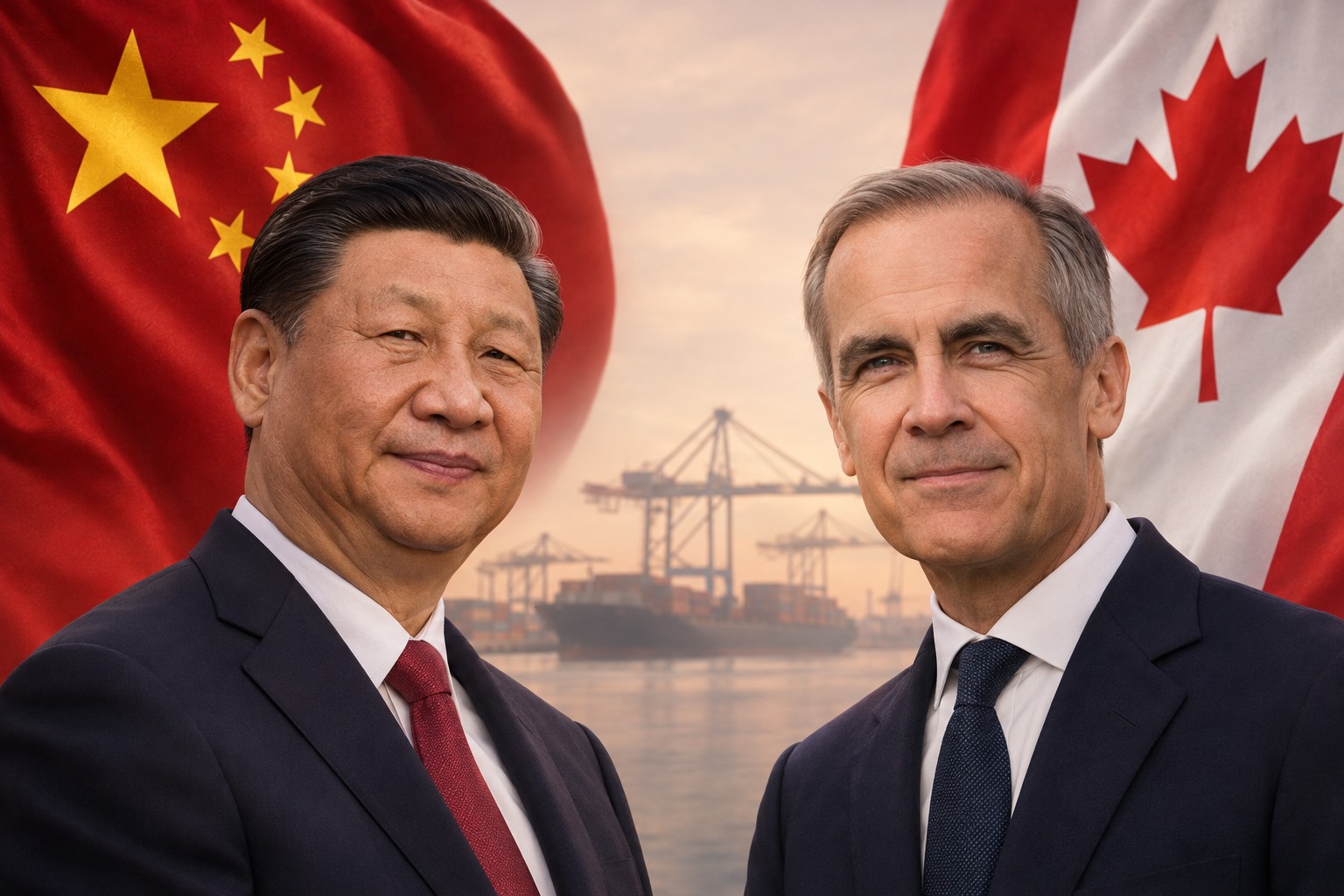
Xi Jinping paired a warm welcome for Mark Carney with fresh tariff concessions on Tuesday, giving Canada more room to sell pork and seafood to China while its trade relationship with the United States remains strained.
The two leaders met in Shenzhen ahead of the APEC summit and agreed to widen an existing trade arrangement. The package covers about C$400 million in additional Canadian exports and extends earlier relief, putting a commercial offer behind Beijing's pitch for closer ties.
Xi puts trade behind the warmer relationship
Xi said exchanges and cooperation had fully resumed since the leaders agreed in January to advance their strategic partnership. Speaking during the meeting, he presented the relationship as useful well beyond their two countries:
Stronger communication and cooperation between China and Canada will benefit not only our two countries but also Asia-Pacific and the world.
Carney, for his part, hailed greater predictability and stability in the relationship. He said Canada was ahead of schedule on its aim of increasing exports to China by 50% by the end of the decade, according to Reuters.
Tuesday marked their third meeting since Carney became prime minister. The public warmth comes with a practical purpose for Ottawa: finding more buyers abroad while American tariffs make access to its closest trading partner more expensive and uncertain.
As previously reported by Apex in the article linked below, Canada's ambassador Mark Wiseman has warned that Washington's shifting trade rules are also making it harder for American businesses to plan investments.
Pork and seafood get additional relief
The Canadian government's announcement puts the newly covered trade at approximately C$400 million. That includes C$116 million in frozen pork cuts and about C$285 million in fish and seafood exports.
The products include certain cold-water shrimp and prawns, including Pacific spot prawns; mollusks such as geoduck; sea cucumbers; and Greenland halibut. Farmers and seafood exporters gain a wider opening into the Chinese market as a result.
China will suspend the relevant anti-discrimination tariffs from January 1, 2027, through December 31, 2028. The expansion builds on a two-year extension of relief for canola meal, peas, lobster and crab announced earlier this month.
Canada is offering something in return. It will extend existing tariff remission measures for certain Chinese steel and aluminum products through December 2028 and add 32 tariff items where Canadian supply is insufficient or unavailable. Those additions cover 23 steel items and nine aluminum items, according to the official backgrounder.
Carney looks for more markets
Ottawa says its reset with Beijing has restored access for more than 90% of the trade previously hit by tariff action, covering nearly C$7.5 billion in Canadian exports. That figure concerns the trade affected by those measures, rather than all commerce between the countries.
Carney framed the broader effort around Canada's freedom to make its own choices:
Canada is building our strength at home and diversifying our relationships abroad so that we have the freedom to live our lives as we choose.
China bought C$35.1 billion in Canadian merchandise in 2025, while total two-way goods trade reached C$125.6 billion, up 5.6% from 2024, the government said.
The next steps reach beyond goods at the border. Canada plans a major trade mission to China and a joint year of e-commerce cooperation in 2027, aimed at helping smaller businesses reach customers through Chinese platforms.
The leaders also welcomed plans for Air Canada to launch Vancouver-Guangzhou flights in May 2027 and for Chinese airlines to expand services. Their talks covered opportunities in oil and gas, renewable energy, nuclear power and electric vehicles, connecting the tariff package to a wider push for investment and business ties.