

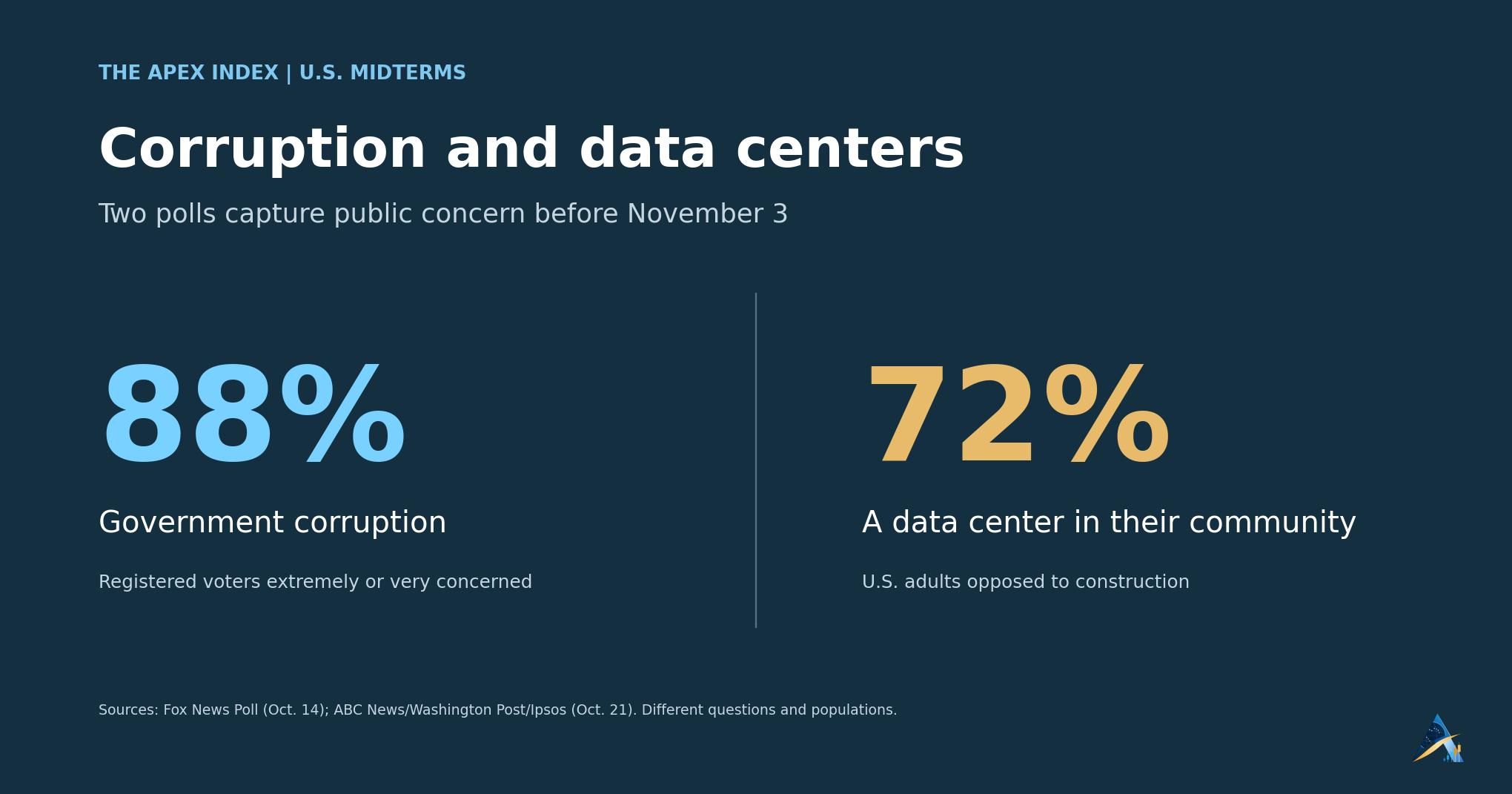
Government corruption is worrying an overwhelming majority of registered U.S. voters, while a separate national survey finds strong opposition to new data centers close to home. The two issues are drawing attention as Americans prepare to vote in the November 3 midterms.
A Fox News poll found 88% were extremely or very concerned about corruption in government. In an ABC News/Washington Post/Ipsos poll, 72% of U.S. adults opposed building a data center in their own community. The second figure measures opposition to construction, rather than a general question about being worried.
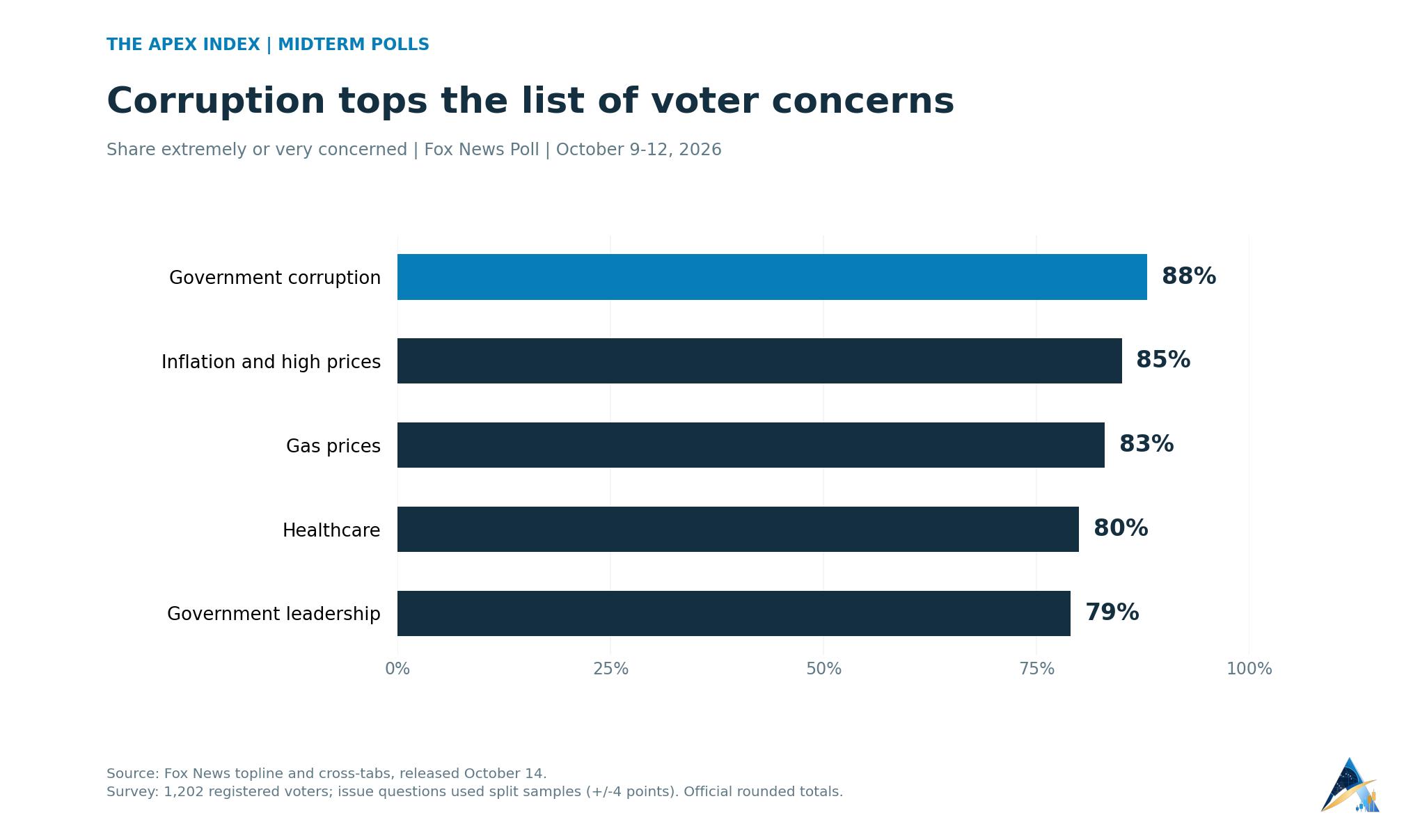
Corruption tops the worry list
The Fox News survey, released October 14, put corruption ahead of inflation, gas prices, healthcare and government leadership. Six in 10 voters said they were extremely concerned about it, the strongest level of concern offered in the question.
Democrats had an advantage on who voters trusted to deal with the problem: 54% picked them, compared with 44% who chose Republicans. But voters had little confidence in Congress as a whole. Just 15% approved of its performance, while 84% disapproved.
The same poll found that 54% would support the Democratic candidate in their House district and 45% would back the Republican. Among people who said they were certain to vote, the gap narrowed to 52%-46%.
The survey interviewed 1,202 registered voters from October 9 to 12. Beacon Research, a Democratic polling firm, and Republican firm Shaw & Company Research conducted it. The full sample's margin of error was 2.5 percentage points; the concern questions used split samples with margins of about 4 points.
Data centers become a local fight
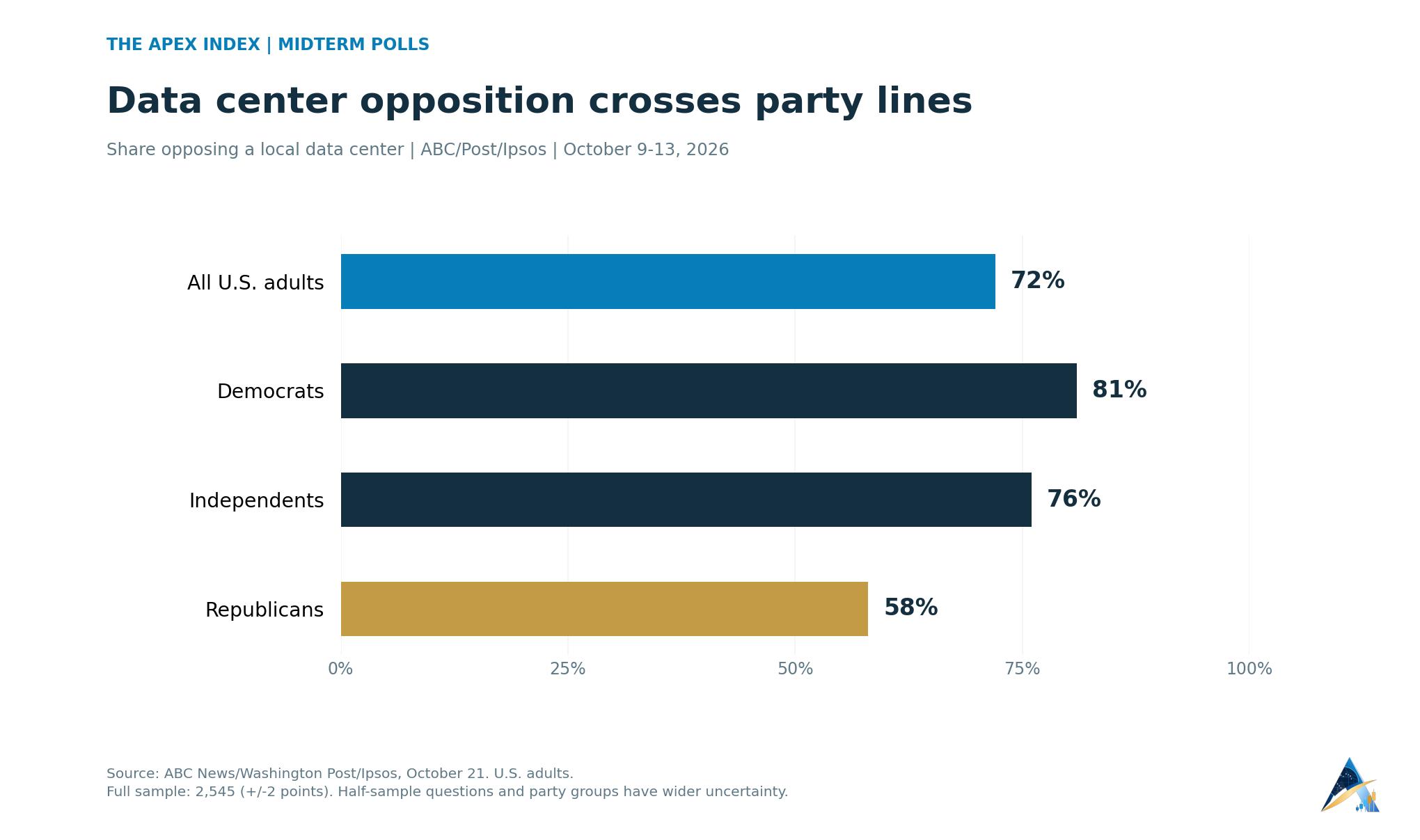
The ABC/Post/Ipsos poll, published October 21, found that resistance to a local data center crossed party lines. Opposition reached 81% among Democrats, 76% among independents and 58% among Republicans.
The national question drew a different response. Two-thirds of adults, 66%, opposed building new data centers across the United States, while 30% supported them. Support was strongest among MAGA Republicans, at 53%.
The concerns extended beyond the buildings themselves. Asked about AI's potential risks, 73% saw a high risk of it hacking secure computer systems, and 65% saw a high risk of many jobs being eliminated.
Neither party had earned much trust on the technology. Almost half of adults, 49%, said they trusted neither Democrats nor Republicans to handle AI. Democrats were chosen by 26% and Republicans by 19%.
Ipsos surveyed 2,545 U.S. adults through its probability-based KnowledgePanel from October 9 to 13. Its overall margin of error was 2 points, with wider margins for questions asked of half the sample and for smaller demographic groups.
A fresh poll finds a cost for candidates
The issue was back in focus on October 25, when POLITICO reported new results from its poll conducted by PF Global. Half of Americans opposed a data center being built within three miles of their home, up from 28% in January.
That question used a specific distance from home, unlike the ABC poll's broader wording about a person's community.
In the POLITICO poll, 41% of respondents presented with a Republican candidate who backed a nearby data center said they would be less likely to support that candidate. For a Democratic candidate supporting the same type of project, 39% said the same.
Candidates opposing local construction drew a more favorable response. Forty-seven percent said they would be more likely to support a Democrat who opposed a local data center, compared with 36% for a Republican taking that position.
Pennsylvania Republican strategist Sam Chen told POLITICO that local resistance can grow as residents learn more about a project:
"At first it sounds fine, the data centers bring jobs, they're not like warehouses or something."
He said concerns about water, electricity use and the environment could then turn it into a fight over what gets built near people's homes.