

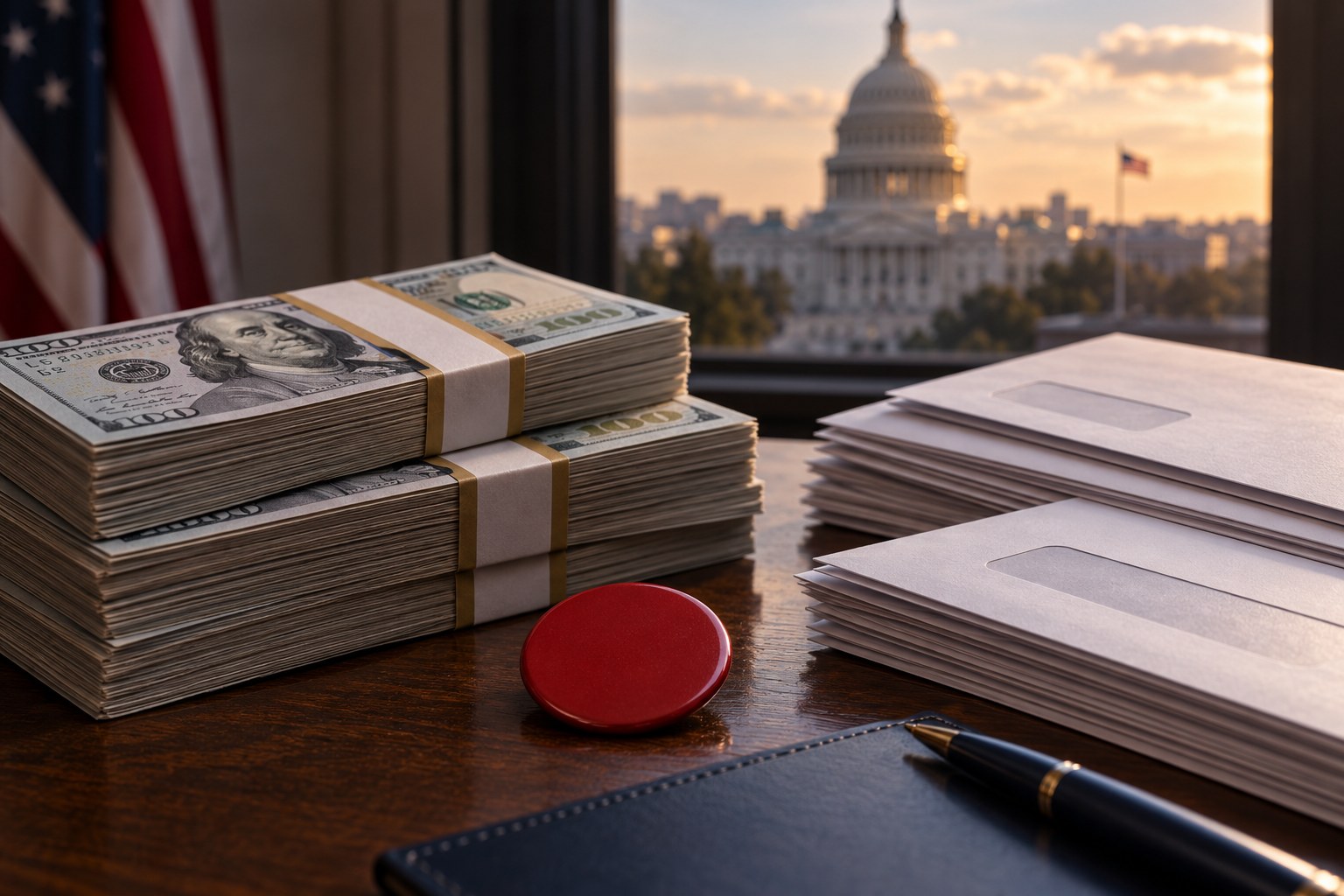
Donald Trump is promising more than $400 million to help Republicans keep Congress. With less than two weeks until Election Day, his allies are having to decide which Republican-held seats they can afford to keep defending.
Fresh reporting on October 21 shows the pressure spreading into districts that once looked comfortable for the party. In North Carolina, a Trump-linked group has canceled future advertising reservations in a seat Republicans have held for more than a decade. In Virginia, a congressman who won ten straight elections by double digits is facing a competitive race.
Trump announced his spending plans in an October 20 post, saying more than $300 million had already gone toward advertising, voter contact, rallies and turnout efforts. He wrote:
"I have spent, or will be spending, over 400 Million Dollars by Election Day."
Trump did not specify how much would come from his own finances, as opposed to allied political committees, or provide an accounting of the entire pledge.
The cash is moving, and so are the priorities
The scale of the fall push is substantial. The Washington Sun reported on October 21 that MAGA Inc. and two related committees, No Going Back PAC and Safety and Affordability PAC, had spent about $238 million from September through mid-October. The report put the three committees' combined reserves at $189 million in mid-October.
The buildup before that spending is visible in federal records. MAGA Inc.'s filings show it ended August with $415.8 million in cash. The same summary lists $424.4 million in total receipts from January 2025 through August 2026.
Spending decisions are becoming more selective. No Going Back PAC canceled its remaining ad reservations in North Carolina's 11th District on October 20, according to the Sun's original reporting. Other Republican organizations, including the National Republican Congressional Committee, still planned to spend there.
Trouble in territory Republicans used to count on
Democrat Jamie Ager faces Republican state Rep. Jennifer Balkcom in that North Carolina race. Trump carried the mountainous western district by nearly double digits in 2024. Balkcom joined the contest late after incumbent Chuck Edwards ended his campaign, leaving her less than three months to introduce herself to voters.
Local Republicans interviewed for the report described difficulties getting her name known across rural counties. The race also falls amid frustration over rising gas prices and a slow recovery from Hurricane Helene, which hit the region in 2024. Vice President JD Vance visited the district on October 19 to rally Republicans. The NRCC defended Balkcom as a candidate with deep local roots and argued Ager's policies would make constituents' lives more expensive and less safe.
Virginia offers another measure of the widening battlefield. In its 1st District, Republican Rob Wittman won reelection by 13 points in 2024, while Trump carried the district by five. Wittman now faces Democratic prosecutor Shannon Taylor in a race Inside Elections rates Lean Republican, according to Roll Call's October 20 reporting.
Wittman told reporters:
"We always knew it was going to be a competitive race, and we’re going to win."
Wittman entered October with $2.2 million in campaign cash, compared with Taylor's $891,000. House Majority PAC and Your Community PAC had spent more than $5 million, mostly attacking him.
Farther south, freshman Republican John McGuire won Virginia's 5th District by 15 points in 2024. Democratic former Rep. Tom Perriello's challenge has drawn the race onto the battleground, though Inside Elections still rates it Likely Republican. MAGA Inc. and No Going Back PAC had spent a combined $566,000 to support McGuire, Roll Call reported.
The financial stakes extend to the next Congress's decisions on taxes, spending and Trump's legislative agenda. Inside Elections lists a 220-215 Republican House majority, meaning Democrats need a net gain of three seats to take control. Its current projection puts Democrats ahead by 10-20 seats.