


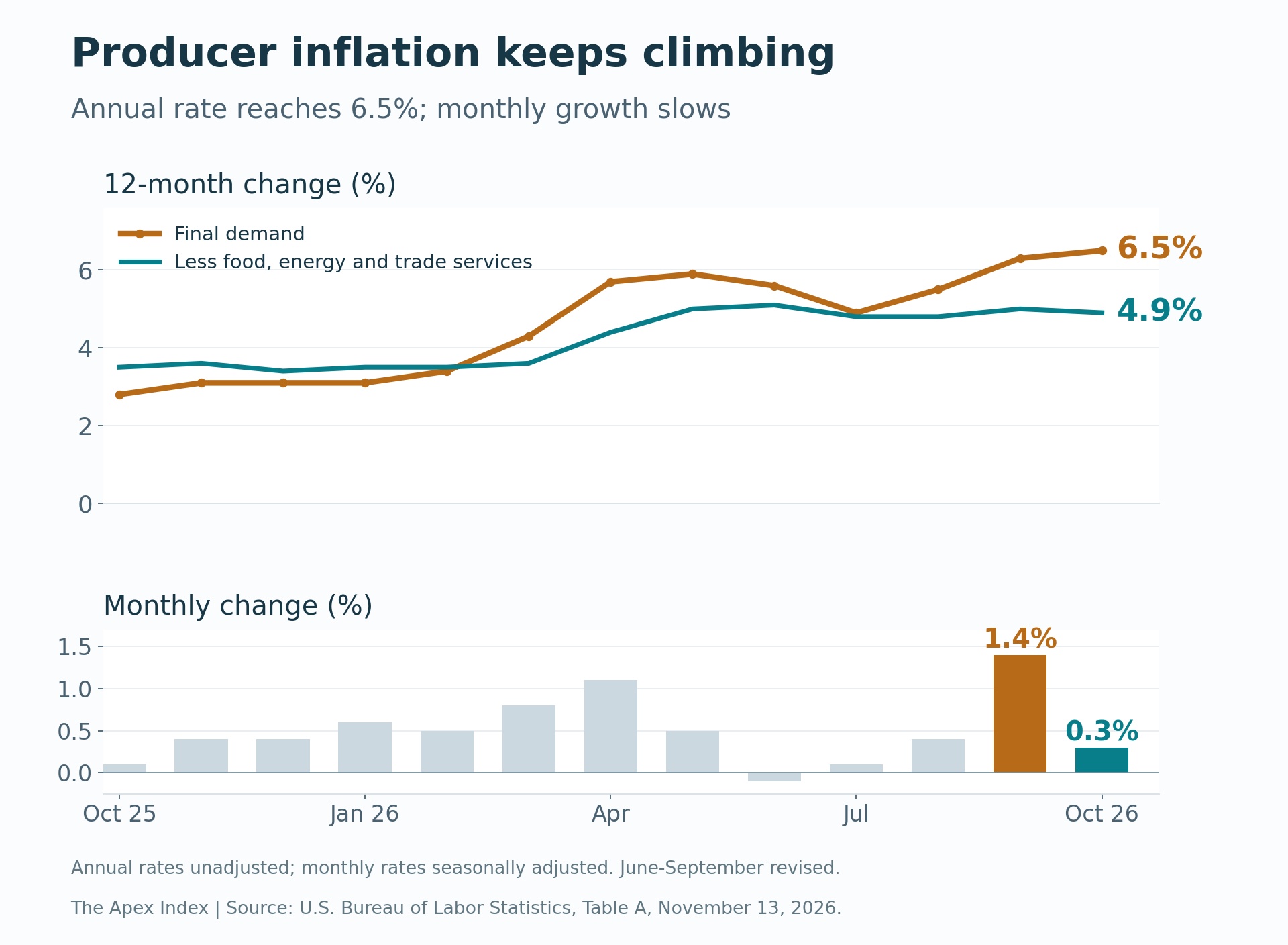
U.S. producer inflation climbed to 6.5% in October from 6.3% in September, reaching its highest annual rate since November 2022 and keeping price pressures in focus before the Federal Reserve's December meeting. Friday's report showed another increase in the prices businesses receive, even as the monthly pace cooled sharply.
The Producer Price Index for final demand rose 0.3% during October, following a revised 1.4% jump in September. That leaves policymakers with two different signals: a slower rise over the latest month, but a larger increase compared with a year earlier.
The Bureau of Labor Statistics published the report on November 13. The annual rate was the strongest since a 7.4% increase in November 2022. The move from September's reading amounts to 0.2 percentage point.
Goods lead the increase, while diesel retreats
Goods prices rose 0.5% in October, slowing from September's 2.5% increase. More than 60% of the latest gain came from goods excluding food and energy. Basic organic chemicals increased 3.9%, while fresh and dry vegetables, gas fuels, navigation instruments, jet fuel and processed young chickens also became more expensive.
Food prices rose 1.3%. Energy prices edged down 0.1%, with diesel falling 7.9%. Prices for pork and passenger cars declined too, showing that the pressure wasn't moving in the same direction across every category.
Even with the slower monthly advance, goods prices were up 10.2% from a year earlier, their largest annual increase since October 2022.
Services prices increased 0.2% for the month, their fifth consecutive rise. Transportation and warehousing prices rose 2%, accounting for three-quarters of the overall services increase. Freight trucking prices climbed 3.9%, while hospital outpatient care and traveler accommodation also contributed.
There were offsets. Margins for machinery and vehicle wholesaling fell 4.2%, and airline passenger services and system software publishing became cheaper.
The underlying measure sends a mixed message
The index excluding food, energy and trade services increased 0.5% for a second month. Its annual rate nevertheless eased to 4.9% from 5% in September.
The distinction matters because the headline annual acceleration wasn't matched by every underlying measure. Monthly changes in this release are seasonally adjusted; the annual comparisons are unadjusted. Figures for June through September were revised to include late reports and corrections from respondents.
Earlier in the production chain, processed goods prices rose 0.4% in October and were 14.6% higher than a year ago. Unprocessed goods moved the other way, falling 3.1% for the month, led by a 7.7% decline in energy materials. Crude petroleum prices fell 10.3%.
Producer prices measure what domestic producers receive for their output, including sales to governments. The Fed's 2% inflation target applies to the personal consumption expenditures price index, a separate measure of consumer prices.
December follows an October split
The next policy meeting is scheduled for December 8-9, according to the Fed's official calendar. It will also include a new Summary of Economic Projections, giving investors updated forecasts alongside the interest-rate decision.
As previously reported by Apex in the coverage linked above, officials held the federal funds target range at 3.75%-4.00% on October 28. Lisa Cook and Beth Hammack dissented, preferring a quarter-percentage-point increase.
The committee's statement described domestic spending as resilient, productivity growth as strong and capital investment as robust. On inflation and its next steps, it said:
The accumulation of more information will help the Committee determine the policy stance appropriate to ensure a timely return of inflation to the Committee's 2 percent goal.
The October statement also pointed to a steady labor market, another part of the rate-setting discussion:
Job gains have kept pace with the workforce, and the unemployment rate has changed little.