

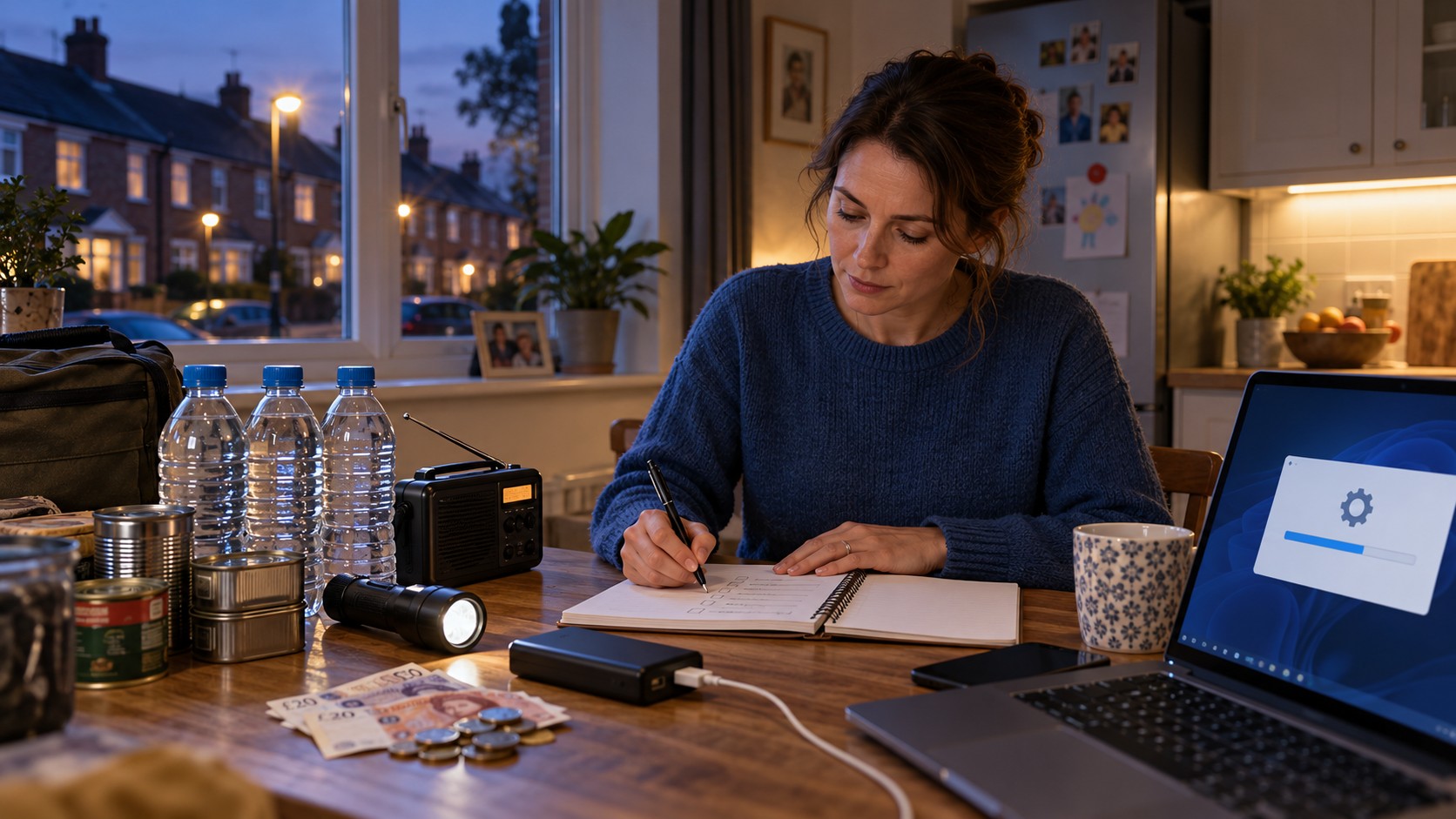
Britain is asking households to make sure they can manage three days of disrupted services, with drinking water, food and a plan that still works without the internet. New disclosures about AI finding weaknesses in government software give that ordinary-sounding checklist a more urgent backdrop.
As Apex previously reported, the Be Ready campaign was updated on October 22. Its advice covers storms and other emergencies, including cyber disruption. Three days is the preparation goal, not a forecast that an attack or outage will last exactly that long.
AI is finding more holes to fix
In a BBC interview published October 23, AI Minister Kanishka Narayan said the government had used advanced AI models to check public-sector systems for cybersecurity problems. He described finding 500 previously unknown vulnerabilities:
"We only spent £13,000 on it - we discovered 500 new vulnerabilities."
Narayan was describing a defensive exercise. He did not identify the systems involved. His example shows why AI is useful to security teams: it can help them find weaknesses before someone else exploits them.
Attackers have access to increasingly capable tools, too. In a June 22 statement, the UK's National Cyber Security Centre and its Five Eyes counterparts warned that AI was lowering barriers for malicious actors and shortening the time between finding a vulnerability and exploiting it. They urged organizations to patch faster, reduce unnecessary internet exposure and test their recovery plans.
The PHP security scramble offers a current example of the pressure on software operators. Two critical flaws in the widely used web programming language were patched on October 21. On October 23, its developers issued further advice about an uncommon configuration that could leave another route to remote code execution, with a fix planned for the next regular release.
The agency has told organizations to identify systems using PHP and prioritize updates for those exposed to the internet. If a system cannot be secured promptly, its guidance includes considering taking it offline until it can be protected. Users can therefore face disruption while a provider fixes a weakness, as well as after an attack.
What to have ready for three days
The household checklist starts with three liters of drinking water per person per day. Cooking and washing require more. It recommends three days of food that keeps without refrigeration and can be eaten without cooking, along with essential medication and supplies for babies or pets where needed.
A flashlight, spare batteries, warm clothing and a charged power bank cover some obvious problems. A battery-powered or wind-up FM radio provides another way to hear updates when online services are unavailable. The guidance recommends writing down the frequencies of stations you normally use.
It also asks people to keep cash in a mixture of notes and coins, alongside their cards, in case electronic payments or ATMs are disrupted. There is no fixed cash target; households should consider what they need for essentials.
Paper information matters, too. Important phone numbers, medication names and doses, insurance details and copies of key documents should be accessible without unlocking a working device. Families are encouraged to agree on a meeting place and decide who will check on relatives or neighbors if calls cannot get through.
Preparation should fit the household
People who depend on powered medical equipment are advised to discuss an outage plan with their care team. Eligible households can join the free Priority Services Register so electricity, gas and water providers know they may need extra support. Northern Ireland uses Customer Care Registers.
The campaign acknowledges that people have different budgets, housing situations and support needs. Its starting point is checking the cupboards, then adding missing items gradually during normal shopping. The Cabinet Office worked with charities supporting people in insecure housing and those using food banks.
Laura Scott, the British Red Cross's UK resilience director, said in the campaign announcement:
"We know from our work across the UK that local people know their communities best and want to play a part when a crisis happens."
The same guidance recommends protecting email with a passkey where available or a strong, unique password and two-step verification, keeping devices updated and backing up important files. For the physical supplies, it suggests a reminder every six months to check expiration dates and adjust the kit when the household's needs change.