

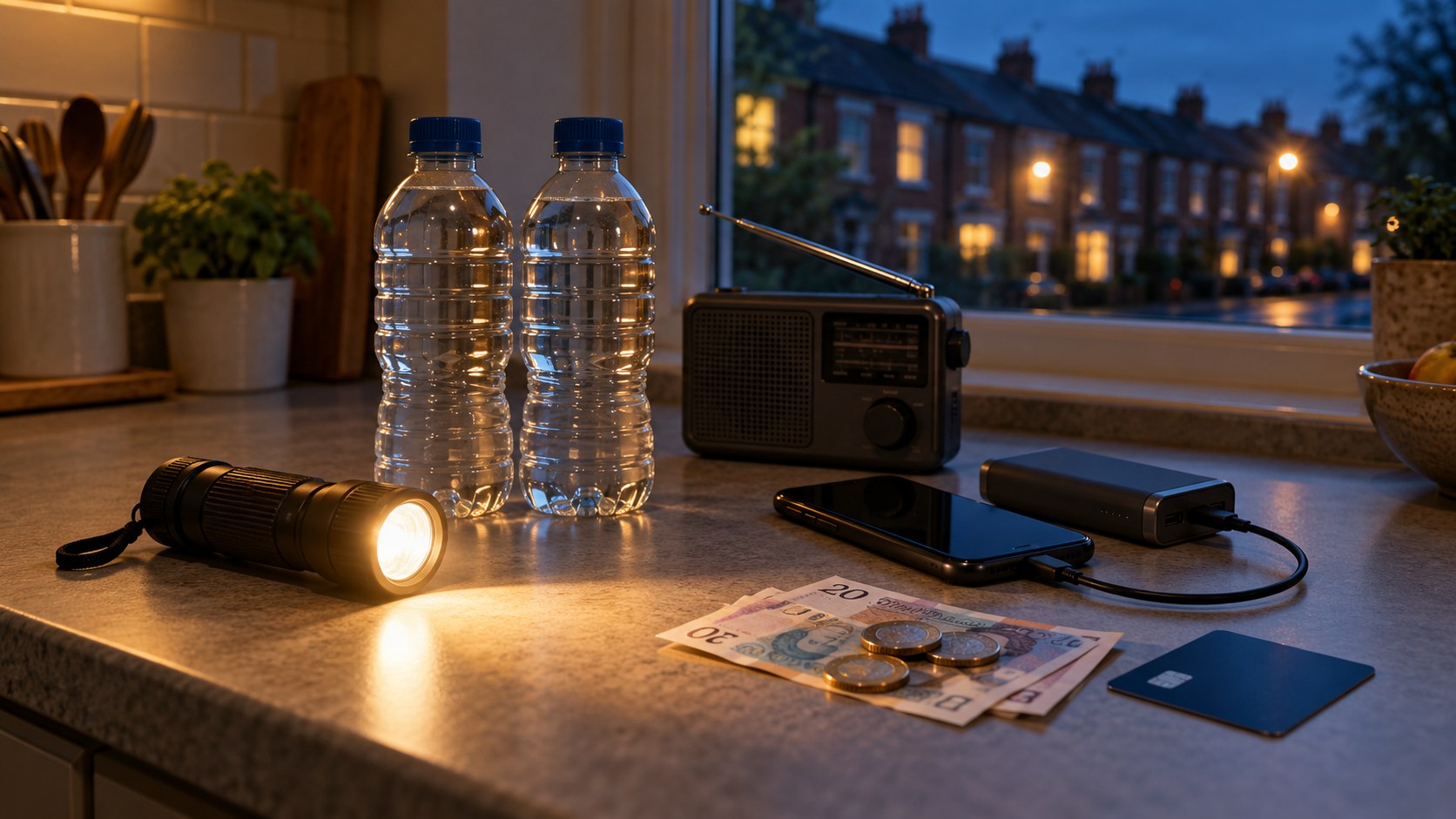
Britain is asking households to think through an uncomfortable question: how would you manage if the lights went out, the taps stopped running and paying for groceries suddenly became difficult? Updated government advice calls for three days of supplies, some cash and a plan that still works when your phone does not.
Cyberattacks are among the hazards covered by the new Be Ready campaign, alongside storms and other emergencies. The Cabinet Office announced the updated advice on October 22, beginning a three-year effort to prepare households for temporary disruption to everyday services.
The government's announcement puts severe weather at the center of its public message. The broader guidance also includes cyber risks, reflecting how much ordinary life now depends on functioning digital systems, utilities and payment networks.
An attack on a supplier can become a household problem
The connection becomes clearer in the 2025 National Risk Register. Its reasonable worst-case electricity scenario describes a malicious cyberattack on a critical system causing a failure of Great Britain's transmission network. Water, sewage, mobile networks and internet services could then be disrupted too. The document says a nationwide loss of power has never happened in Great Britain and its likelihood is low; these are planning scenarios, rather than a prediction of an imminent attack.
A separate scenario considers a sophisticated attack taking a retail bank's internal systems offline. It models at least two days of unavailable systems, followed by two days of partial disruption, with customers unable to access accounts. People relying on a single bank account would be particularly exposed.
That helps explain why the household checklist includes things that seem surprisingly old-fashioned: paper records, a battery-powered radio and cash. A fully charged phone is useful, but it cannot restore a payment network or a mobile mast that has lost power.
The cyber threat has also been documented separately. On June 17, National Cyber Security Centre chief Richard Horne said his agency had managed more than 200 incidents affecting critical national infrastructure and its supporting ecosystem in the year to May 2026. Around 75% were believed to be linked to state actors. Those incidents were not all household outages, but they show the pressure on the systems behind essential services.
What three days of preparation actually means
The Be Ready checklist recommends three liters of drinking water per person per day, with more needed for cooking and washing. It also lists food that does not require refrigeration or cooking, essential medication, warm clothing, a flashlight with spare batteries and a charged power bank.
For payments, it recommends keeping cash in a mix of notes and coins, alongside cards, in case electronic payments or ATMs are disrupted. It gives no universal cash amount; that depends on a household's essential needs.
The advice extends to information people normally keep on their phones. It asks households to write down important numbers, medication details and radio frequencies, and keep printed copies of key documents. Families should agree on a meeting place and a way to check on anyone who might need help if calls cannot get through.
Security Minister Dan Jarvis said:
"This is just the sort of community-focused campaign the UK needs to improve our resilience as a nation. It will bring us into line with European counterparts, where advice like this is a normal part of everyday life."
France, Ireland and the Netherlands already use three days of preparedness in their advice, the announcement says. More than 500 organizations have signed up to share the UK campaign's messages, with radio and social media advertising planned over the coming weeks and months.
The people who cannot simply wait it out
Households using powered medical equipment are advised to make an outage plan with their care teams. The guidance also points people toward the free Priority Services Register, which helps electricity, gas and water providers identify customers needing extra support. Northern Ireland uses Customer Care Registers.
Cost is part of the campaign's design. Officials tell people to check what they already own, build supplies gradually and take the steps they can afford. The Cabinet Office says it worked with charities representing people in insecure housing and those using food banks, among other groups.
British Red Cross resilience director Laura Scott said:
"Having clear and trusted advice for people, especially those who may be more at-risk, could help reduce the impact of crises and even save lives."
Household preparedness advice has been available since May 2024. Be Ready updates the previous Prepare website's branding and messaging, while keeping much of its existing guidance. On the cyber side, it tells people to secure their email first, use passkeys where available, enable two-step verification when using passwords and keep devices updated. Its backup advice includes practicing how to restore files before an emergency makes that necessary.