
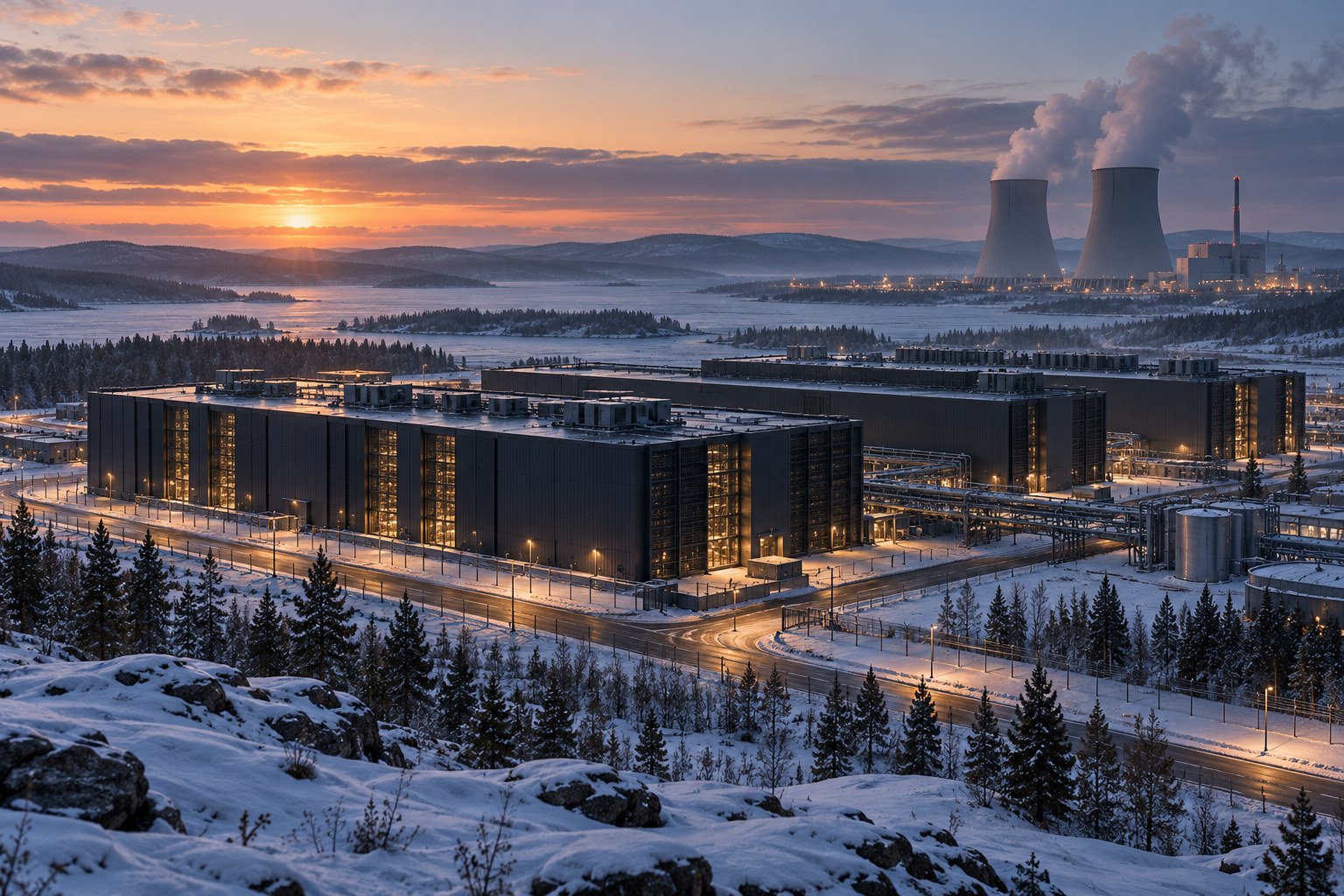
Russia wants to turn its nuclear power supply into a new business connection with Donald Trump's America. Vladimir Putin's investment envoy says the countries are discussing joint data centers powered by Russian nuclear plants, putting the electricity-hungry technology sector on the agenda alongside their diesel deal.
The proposal is still at the discussion stage. Kirill Dmitriev, who heads the Russian Direct Investment Fund, has not announced a signed construction agreement, named an American partner or given a budget or opening date. What he has offered is a glimpse of the economic relationship Moscow wants to build with Washington.
Nuclear power enters the talks
Speaking at Russian Energy Week in Moscow on October 16, Dmitriev said the countries were discussing cooperation on data centers. The original RIA report quoted him saying, in translation:
We are also discussing joint projects in the field of Russia-U.S. data centers, including using our nuclear power plants.
Reuters separately reported that he included small-scale nuclear plants in the discussions. He presented the idea as one of several possible ventures, alongside a broader push for investment cooperation while the war in Ukraine continues.
The attraction is easy to see. Data centers need electricity to run their servers and cooling systems. Nuclear generation offers a way to supply large amounts of power without depending on whether the sun is shining or the wind is blowing.
That demand is growing quickly. In its 2025 Energy and AI report, the International Energy Agency estimated that data centers used about 415 terawatt-hours of electricity globally in 2024. Its base-case forecast put demand at around 945 terawatt-hours by 2030, with AI the biggest driver of that increase.
Those are global estimates and projections, not specifications for the proposed Russian-American projects. But they explain why access to power has become such a valuable part of the AI infrastructure business.
The diesel deal is Moscow's starting point
Dmitriev tied his optimism to the recent fuel agreement. In separate remarks reported by the Russian agency, he said, in translation:
As the diesel example shows, I think we will announce some important initiatives soon; the ice has begun to move after all.
As we previously reported on Apex, Trump waived new Russia-related tariffs and sanctions on October 16. That followed his diesel agreement with Putin, which he promoted as a way to ease fuel costs for American consumers, farmers and truckers.
Getting a deal announced and getting its payments through are different problems. Dmitriev said the U.S. Treasury had asked his fund to help resolve payment difficulties surrounding the diesel agreement. He described layers of sanctions that had left participants struggling to work out how transactions could proceed.
His account points to a practical obstacle for any larger partnership: investors need to know which transactions are permitted and whether the money can actually reach its recipient.
Congress is pushing back
The political resistance became more visible on October 17. The Associated Press reported criticism from both parties over Trump's decision to waive the new sanctions before they were due to take effect on October 18.
Republican Sen. Thom Tillis called the decision "beyond irresponsible" and challenged the administration over legislation the Senate had passed 86-11:
It's unconscionable that this administration is capitulating to a Russian dictator who illegally invaded Ukraine.
The same report said Democratic Rep. Gregory Meeks had introduced legislation to block Trump's diesel deal. The House and Senate are on recess until after Election Day, complicating any immediate congressional response.
That leaves two very different conversations running at once. Moscow is pitching a future in which Russian energy helps power joint technology projects. Critics in Congress are trying to stop the commercial opening already underway. Before either side can argue over the merits of a particular nuclear-powered campus, there needs to be a named project, a financing plan and companies willing to build it.