
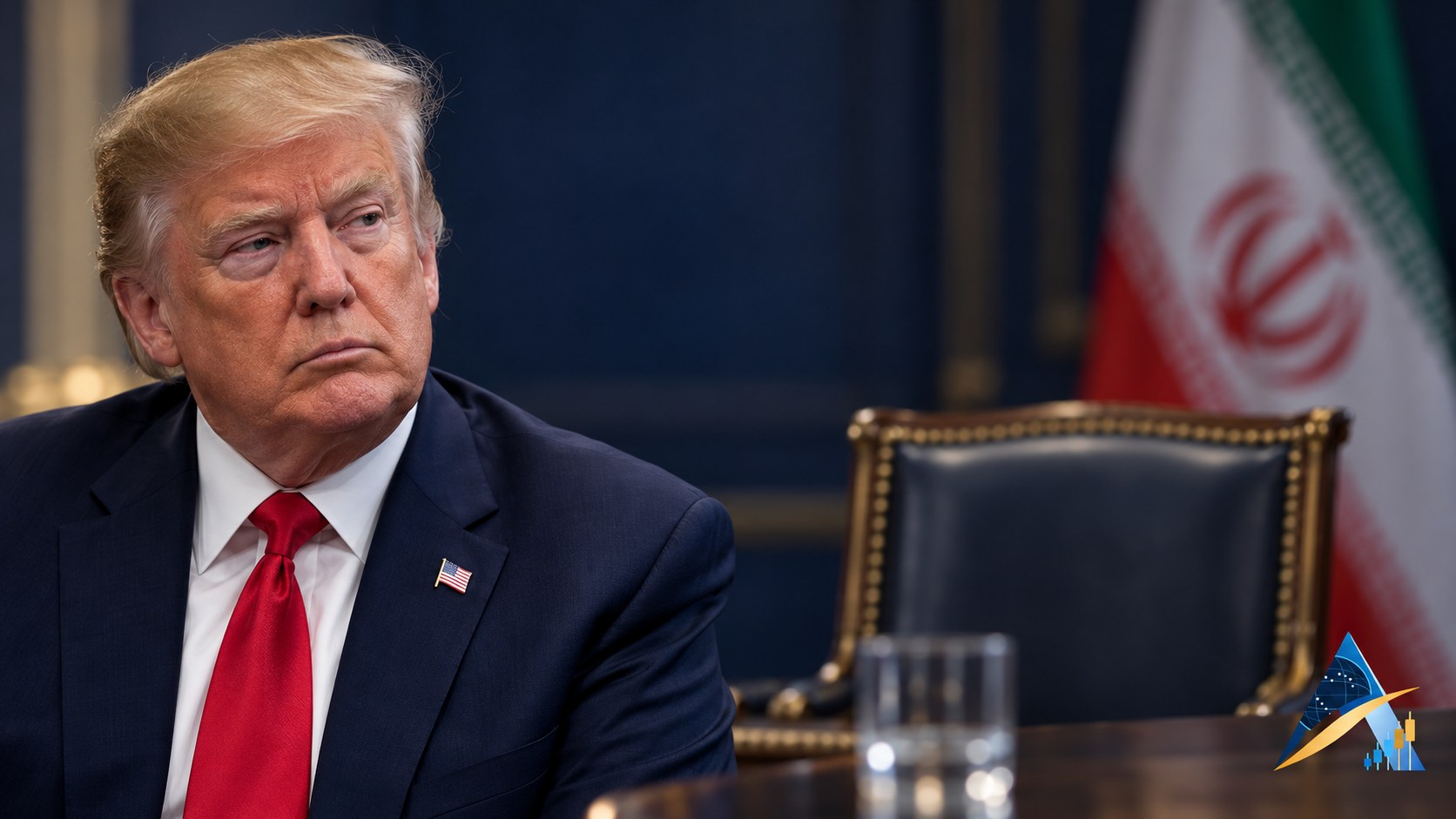
Donald Trump says killing Iran’s leaders may have made it harder to find someone who can negotiate an end to the war. Speaking at a campaign rally in Youngstown, Ohio, on October 12, the president described Washington’s difficulty identifying whom to deal with even as he promised the conflict would end soon.
His remarks were an admission about the diplomatic problem he sees, not a verified count of dead officials. They do not establish that Iran has no functioning leadership or that talks have stopped. Iranian officials continue to discuss proposals, while Washington’s own account identifies political leaders involved in negotiations.
Trump questions the consequences of targeting leaders
In his rally remarks, Trump said the United States was having difficulty figuring out whom to deal with. He then offered a blunt assessment:
To be honest, I think we went too far.
He also said nobody wanted to be Iran’s president, portraying the leadership as a dangerous job. That assertion was his characterization, not evidence that Iran’s presidency was vacant. He did not name the officials whose deaths had allegedly complicated negotiations or explain which decision-making channels Washington could no longer reach.
The president coupled those comments with claims that Iran had lost its air force and all 159 naval vessels. The ship figure is an unverified assertion, not a confirmed loss count. The speech does not supply an inventory or independently establish that Iran has lost every military capability he described.
Vance’s account identifies negotiating partners
Vice President JD Vance gave a more specific account in an October 5 Reuters interview. Asked whom the United States was negotiating with, he identified Iran’s political leadership, including the foreign minister and president, before raising doubts about who ultimately controlled decisions.
You know we’re negotiating with the political leadership of the country, specifically, you know, the foreign minister has led the negotiations, the president of the country, a number of people work for them. But one of the things we picked up on is it’s not totally clear how their country makes decisions.
Vance said some figures wanted a deal while others were trying to sabotage one. That was Washington’s assessment of divisions inside Iran, not a jointly agreed explanation for the stalled diplomacy. His account describes uncertainty about authority, rather than an absence of people with whom to speak.
Vance also said ending the conflict would require a meaningful reduction in Iran’s enrichment capacity, keeping the nuclear program central to Washington’s negotiating demands.
Tehran says its response is still being prepared
Iranian Deputy Foreign Minister Kazem Gharibabadi told Al Arabiya on October 12 that Tehran was finalizing its response to American observations on an Iranian proposal presented in New York. State broadcaster Press TV reported his comments on October 13.
He said a final position would pass through mediators after consultations and that Iran remained ready for diplomacy if the proposals were realistic. He also said its readiness to defend itself was no less than its readiness to negotiate. Those are Tehran’s stated positions, not proof that a settlement is close.
Gharibabadi accused Washington of disregarding commitments under the Islamabad memorandum. Vance had instead accused Iran of failing to stop attacks on commercial shipping. Both sides’ allegations need to remain attributed; neither account, by itself, resolves the dispute over compliance.
The original White House pool report records Trump saying the midterms would have no impact on his thinking about Iran. As previously reported by Apex, Washington has considered options for pre-election strikes against Iran. His latest remarks leave the central question open: whether Washington can identify negotiators able to deliver an agreement.