
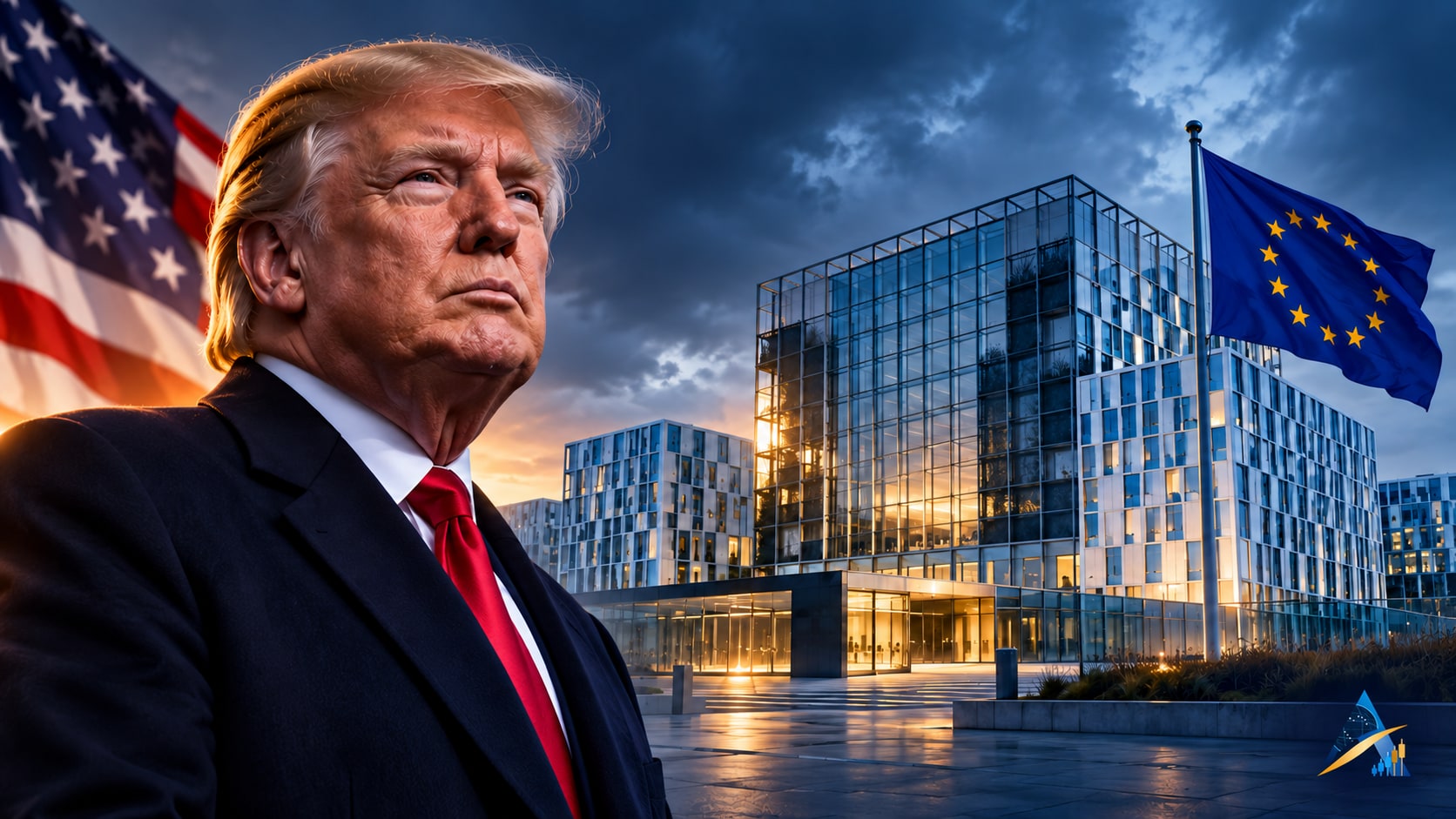
The Trump administration sanctioned the International Criminal Court itself on October 9, escalating its campaign against the tribunal from individual judges and prosecutors to the institution investigating some of the world’s gravest crimes. European allies rallied behind the court, setting up a confrontation over whether American financial pressure can obstruct its work.
The designation puts the Hague-based court on Washington’s blocked-persons list. But accompanying licences preserve specified operations and services, including a temporary authorisation through April 7, 2027. That leaves governments and suppliers confronting a sanctions regime with important exceptions, rather than an immediate blanket shutdown.
European allies close ranks
The foreign ministers of Denmark, Germany, France, Italy, the Netherlands and Britain joined Canada and Japan in an October 9 statement rejecting Washington’s move. All eight are parties to the Rome Statute, the treaty establishing the court.
They said:
As committed supporters of the ICC we regret and strongly disagree with the announcement of sanctions to be imposed upon the Court by the United States.
Their warning reached beyond judges and prosecutors:
Nevertheless, if put into effect, these sanctions will have a significant impact on the Court’s work, its dedicated staff and their families. They work every day to bring those accused of the most serious international crimes to justice and to support their victims.
The governments pledged continued support while pursuing dialogue with countries outside the treaty ahead of the December 2026 Assembly of States Parties. Dutch Prime Minister Rob Jetten also said companies supplying the court could continue operating during the six-month window, while allies prepared further protective measures if needed.
What the sanctions actually restrict
Treasury’s October 9 designation identifies the ICC as a sanctioned entity under Executive Order 14203. The underlying rules block covered property within U.S. jurisdiction and generally prohibit U.S. persons from providing funds, goods or services unless authorised.
General License 13 authorises transactions necessary to maintain or wind down operations, contracts and agreements until April 7. Its examples include member-state contributions, salaries, medical services, rent, utilities and routine commercial services. Other newly issued licences cover telecommunications and enterprise software, pensions and the continued detention of specified prisoners.
These permissions preserve channels the court needs to function. They also have limits: the maintenance licence does not generally authorise dealings with separately sanctioned court personnel. Suppliers must distinguish an authorised institutional transaction from one involving another blocked person.
As previously reported by Apex, Washington also opened Russian diesel trade on October 9, provoking Ukraine’s criticism of sanctions relief during peace negotiations. The two decisions underline how differently the administration is deploying economic restrictions across its foreign-policy priorities.
The court refuses to retreat
In its October 9 response, the tribunal said the institutional designation followed earlier sanctions against its judges and prosecutors. It described the new measure as an attempt to obstruct justice and intimidate people working for or cooperating with it.
President Tomoko Akane said:
The Court will continue to fully discharge its mandate, with independence and impartiality, acting only on the basis of the law and the evidence, for the sake of the countless victims of grave crimes.
Washington’s objections predate this latest action. Trump’s February 2025 executive order accused the court of illegitimate action against American personnel and Israeli officials, including its warrants against Benjamin Netanyahu and Yoav Gallant. That is the administration’s position; the court maintains that it acts under its treaty mandate.
The clash coincided with the Norwegian Nobel Committee awarding its 2026 Peace Prize to former ICC judge Navi Pillay for advancing peace and international law. The committee’s October 9 announcement explicitly defended international legal institutions against growing political pressure.
The practical question now falls to the court’s member states: whether they can sustain funding, suppliers and cooperation as Washington tightens the sanctions framework. Europe has promised support, but the temporary operating licence makes April 2027 a concrete deadline for resolving the dispute or protecting the court against its consequences.