

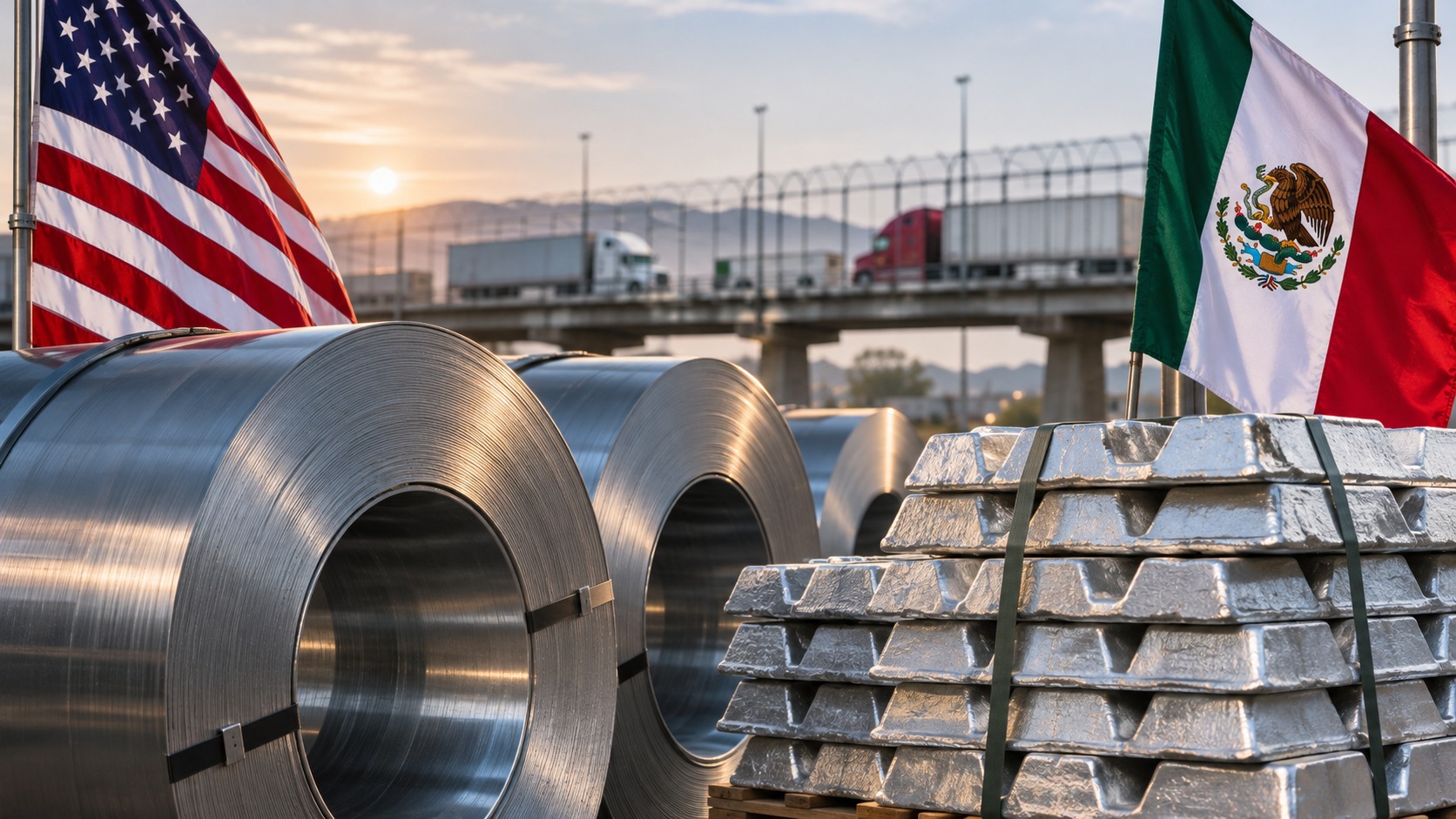
President Donald Trump has threatened to double tariffs on Mexico unless it stops migrant caravans moving toward the United States, putting Mexican steel and aluminum at risk of a 100% duty. His warning ties the immigration dispute directly to the cost of goods crossing one of North America's busiest trading borders.
The 100% figure comes from doubling the existing 50% metals rate. Trump's message was broader than metals: he threatened to double tariffs on Mexico without spelling out how the increase would treat individual products or existing exemptions. It was a conditional threat, rather than an announcement that a new 100% metals tariff had taken effect.
Trump puts tariffs behind his border demand
In his November 12 Truth Social post, the president demanded immediate action from Mexico:
MEXICO MUST STOP THEM, NOW, and if they do not do so, the Tariffs on Mexico will be IMMEDIATELY DOUBLED.
He said the Texas governor, U.S. Border Patrol and Immigration and Customs Enforcement had been informed, and added that there would be no leniency. He also linked his warning to the midterm election outcome, while emphasizing that he had not been on the ballot.
The post described caravans forming and traveling through Mexico. It did not set out a numerical threshold for Mexico to meet, specify a deadline for compliance or explain which tariff orders would be changed. Those details would determine how a political warning turns into a bill for importers.
Why steel and aluminum face the 100% risk
The relevant baseline is the administration's existing sector-specific duty. A June 2025 proclamation raised additional tariffs on covered steel and aluminum imports from 25% to 50%, with the increase taking effect on June 4 that year.
Doubling a 50% tariff produces a 100% rate. That is an increase of 50 percentage points, and the duty would equal the customs value to which it applies.
The existing metals order also distinguishes between covered articles and derivatives. For specified steel and aluminum products, it applies the additional duty to the metal content. Any new action would need to establish its own coverage, treatment of derivatives and relationship with other duties.
For manufacturers, that makes the scope important. A tariff on an imported coil of steel can affect the buyer using it to make another product. A duty on the metal content of a finished item works differently. Businesses need the actual customs rules to price either transaction.
The exposure runs in both directions
The economic relationship is much larger than metals alone. The U.S. Trade Representative's figures put goods trade between the two countries at $871.6 billion in 2025. That included $534.3 billion in U.S. imports from Mexico and $337.3 billion in American exports to its southern neighbor.
American businesses also sell Mexico electrical machinery, machinery, energy products, vehicles and plastics, which the agency lists among the leading export categories. The commercial exposure therefore includes U.S. suppliers as well as the companies buying Mexican goods.
The agency describes why disruption can spread through manufacturing:
The two countries share a long history of supply chain integration, including especially in the automotive, electronics, medical devices, and textiles industries.
Both countries, together with Canada, are parties to the United States-Mexico-Canada Agreement, which entered into force in July 2020. Its regional trade framework sits alongside the separate tariff measures now at the center of Trump's warning.
The pressure on businesses is already a North American issue. As Apex previously reported in the article linked above, Canada's ambassador has warned that Trump's tariffs also hurt American companies. The latest Mexican threat adds another border-enforcement condition to the decisions facing firms buying, selling and making goods across the region.