

Samsung Electronics reported the biggest quarterly operating profit in its history on October 29, yet its shares fell as much as 6.2% in morning trading. Investors wanted more detail on how the AI windfall would reach shareholders, while chip earnings came in slightly below forecasts.
Operating profit reached 107.4 trillion won, about $80.04 billion, for July-September, up from 12.2 trillion won a year earlier. Revenue hit another quarterly record at 195.3 trillion won.
Record earnings met even bigger expectations
The disappointment was concentrated in two areas: semiconductor earnings and shareholder returns. According to the Reuters report, the chip division earned 106.5 trillion won, compared with an LSEG analyst estimate of 107.3 trillion won. That is a shortfall of roughly 0.75%, despite profit increasing about fifteenfold from a year earlier.
The comparison with SK Hynix also raised the bar. Its South Korean rival had reported better-than-expected earnings a day earlier and outlined plans to return about $75 billion to shareholders this year.
Lee Min-hee, an analyst at BNK Investment & Securities, explained the contrast:
"SK Hynix did quite a lot more than expected yesterday... it went beyond market expectations, but Samsung Electronics hasn't really changed anything from the guidance it gave before."
Shares had initially risen before reversing course. The reported 6.2% decline was an intraday move, not a final closing result.
The cash is coming, but the final split must wait
Samsung announced a third-quarter dividend of 30 trillion won, or 4,601 won for each common and preferred share. Its results put estimated total shareholder returns for 2026 at 90 trillion-110 trillion won.
With 35 trillion won already planned or completed, the company expects another 55 trillion-75 trillion won to remain for distribution.
The earnings presentation spells out how management intends to use the remaining funds:
"The return of the remaining funds will include a substantial share repurchase and cancellation program, along with cash dividends."
The final amount, execution plans and next shareholder-return policy will be decided at a board meeting in late January 2027. Investors therefore still lack the complete schedule and allocation between dividends and share cancellations.
The company also acknowledged interest in the price gap between its common and preferred shares. It said it would consider adjusting the proportion of preferred stock included in repurchases and cancellations, depending on market conditions.
Chips are booming while consumer businesses struggle
The earnings mix shows how heavily the group now depends on semiconductors. Device Solutions, which houses its chip operations, generated nearly all of the total operating profit. The broader Device eXperience division, covering phones, televisions and appliances, recorded an operating loss of 800 billion won.
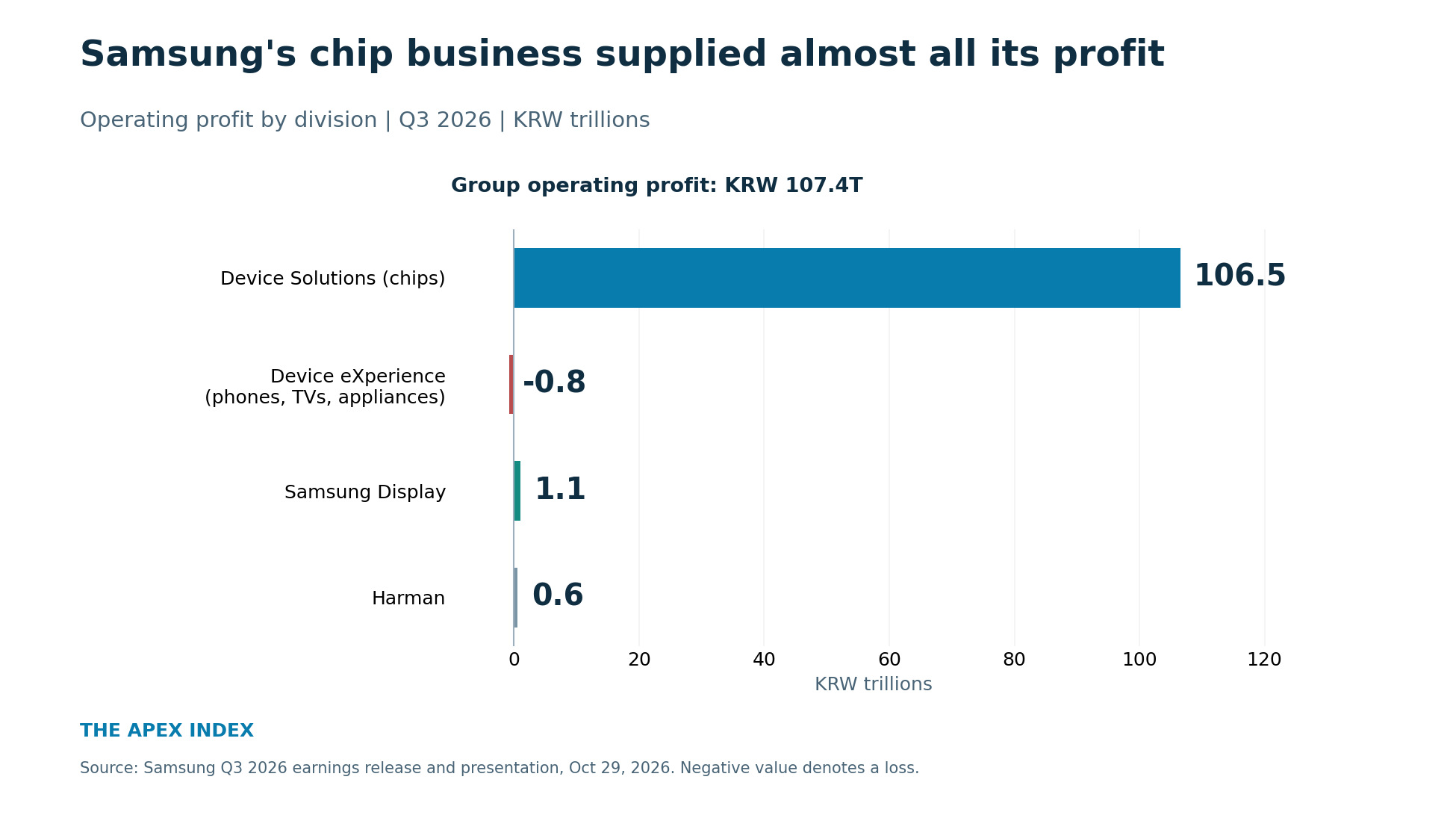
The mobile and networks businesses together lost about 600 billion won, according to the presentation. Higher component and other costs squeezed those operations, even as new product launches and higher average selling prices helped revenue. Strong memory prices can benefit the chip business while raising costs elsewhere in the same company.
Management expects the AI-driven memory shortage to become more severe in 2027 as demand grows faster than industry supply. It increased HBM4 sales during the quarter and expects continued demand for server memory and storage used in AI systems. Those are upbeat expectations for future business, rather than orders already delivered.
The pricing outlook is more complicated. The pace of memory-chip price increases is slowing as manufacturers sign more long-term supply contracts, Reuters reported. Higher chip costs are also weighing on demand from smartphone and PC makers.
The spending commitment is substantial. Full-year capital expenditure is forecast at 84.4 trillion won, including 76.8 trillion won for the chip division. Management plans investment in new factories and infrastructure, while trying to secure a steadier sales base through multiyear contracts. That means committing more money to capacity as customers themselves face rising AI infrastructure bills.