

Oracle stock is rallying as the company gives investors a clearer answer to a question hanging over its AI expansion: how much more money will it need to raise before the business can fund that growth itself?
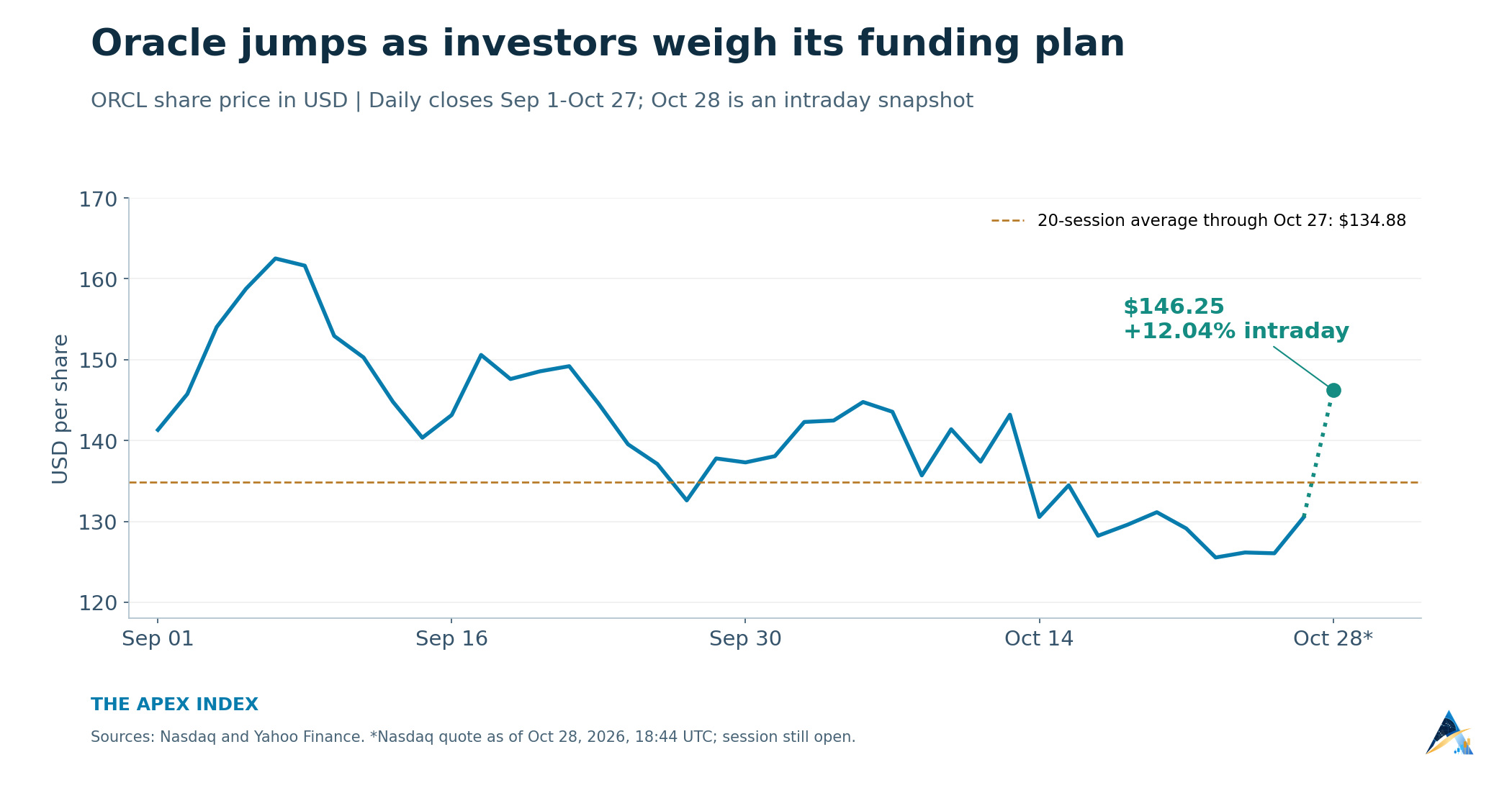
Shares traded at $146.25 at 18:44 UTC on October 28, up $15.72, or 12.04%, from Tuesday's $130.53 close. That was an intraday reading, with the U.S. session still open. The day's recorded range was $128.42-$146.82.
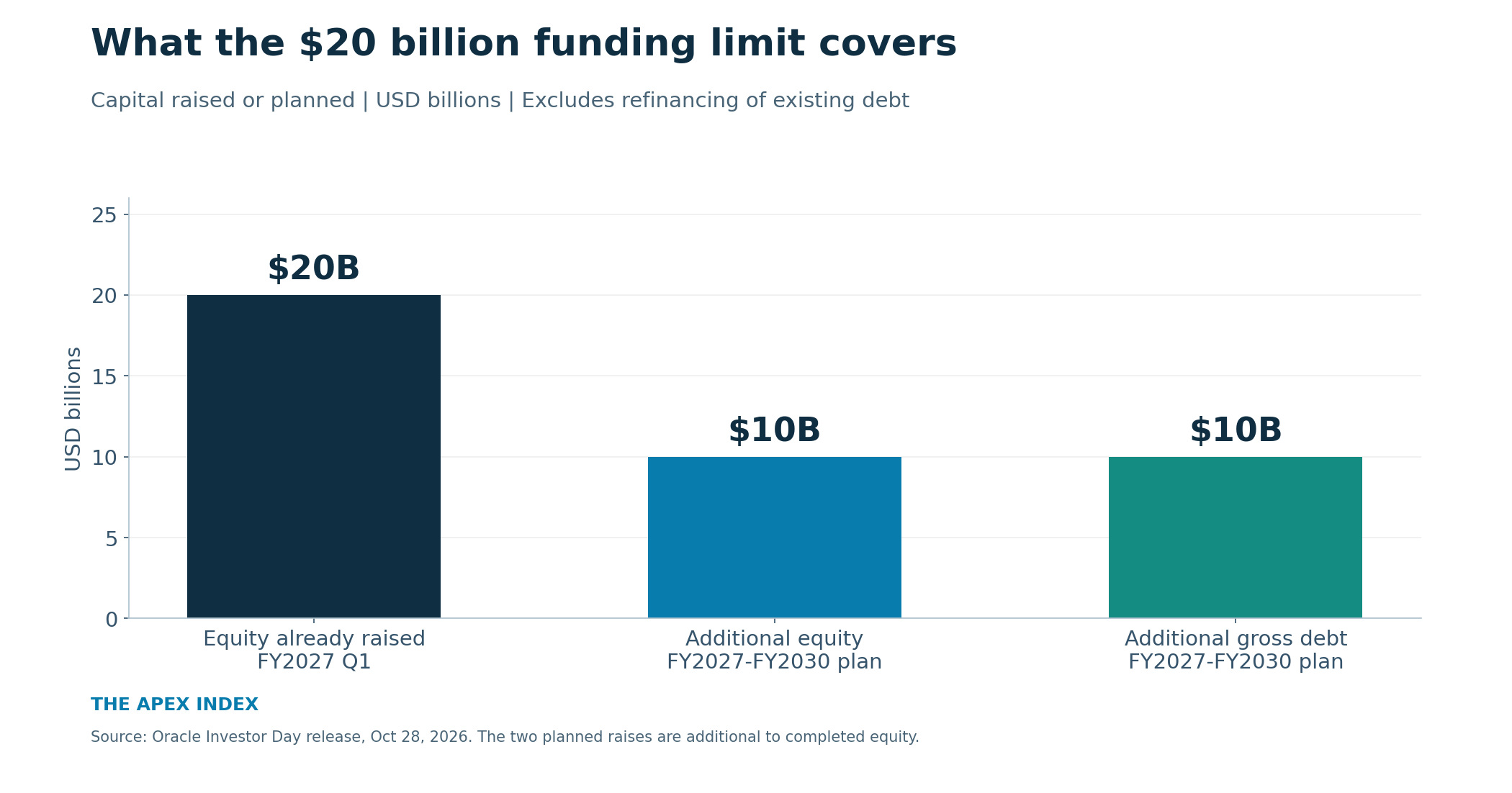
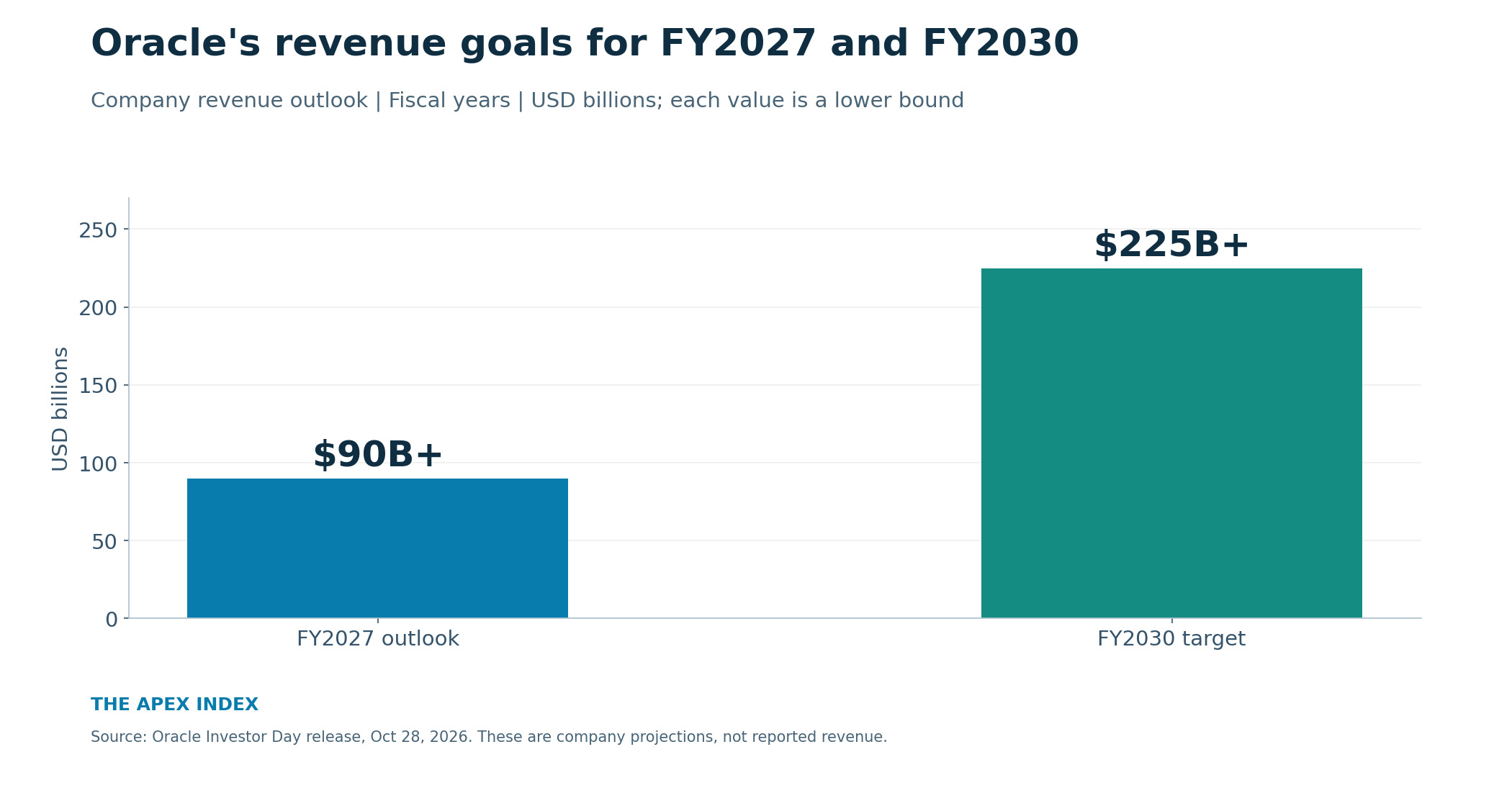
The fresh development is today's Investor Day in Las Vegas. Management set a fiscal 2030 revenue target of at least $225 billion and committed to limiting additional capital raises for its fiscal 2027-2030 investment cycle to $20 billion, excluding refinancing. The announcement gives the rally a concrete business backdrop, although a share-price move alone cannot tell us how much each promise contributed.
The funding plan matters as much as the sales target
The company expects that remaining $20 billion to come equally from equity and gross debt. Its release makes clear that this is additional to a $20 billion at-the-market equity sale completed in the first quarter of fiscal 2027.
That distinction matters for shareholders. Further stock issuance can dilute existing owners, while borrowing adds financing obligations. Refinancing existing debt sits outside the new limit, so the pledge does not cap every future trip to the capital markets.
There is also a plan to reduce the cash Oracle needs to pay upfront. The company said:
"Vendor financing, customer-provided hardware and customer prepayments are expected to reduce upfront cash requirements through the transition to positive free cash flow."
Those arrangements help explain the proposed funding limit. Suppliers can finance equipment, customers can supply hardware, and advance payments bring cash in before the associated work is completed. The statement describes expectations for those arrangements, rather than an itemized list of newly signed financing deals.
Management expects capital spending to peak in fiscal 2027-2028 and step down in fiscal 2029. It projects a return to positive free cash flow during the second half of fiscal 2028, followed by at least $30 billion in fiscal 2029. Free cash flow measures the cash left after capital spending, which makes the timing important during an expensive data-center buildout.
AI demand comes with a large spending bill
The sales outlook is ambitious. Management expects compound annual revenue growth of more than 35% from fiscal 2026 through fiscal 2030, with a non-GAAP operating margin of at least 40% and non-GAAP earnings of at least $21 per share at the end of that period.
For fiscal 2027, it reaffirmed revenue of at least $90 billion and non-GAAP earnings of $8.10 per share. These are company forecasts. The adjusted earnings figures exclude expenses including stock-based compensation and certain acquisition and restructuring costs, so they should not be treated as GAAP profits.
The product announcements also provide context. As previously reported by Apex, Oracle expanded its OpenAI partnership on October 27, outlined plans to bring Google TPUs to its cloud in 2027 and deepened its Nvidia relationship. Those developments broaden its software and computing offerings, while several products and larger deployments remain plans.
Today's funding outlook addresses the financial side of that expansion. The company expects growth to become self-funded in fiscal 2029 and net debt to adjusted EBITDA to fall below 3.5 times that year. Its definition of net debt includes vendor financing and operating and finance lease liabilities, alongside borrowings, less cash and marketable securities.
The release also sets out its capital priorities:
"The company's capital allocation priorities remain maintaining investment-grade credit ratings, paying a dividend and funding growth opportunities."
What the price chart says now
The rally has carried ORCL above its 20-session simple moving average of $134.88, calculated from completed daily closes through October 27. That is a useful recovery marker, though today's final closing price will determine how much of the jump survives the session.
The first nearby test is around $146.82-$147.00: the current session high and the area around October 6's $146.94 high. A sustained move above that area would put the September 17 closing level of $150.59 in view. These are historical price references, not guaranteed ceilings or price targets.
If the rally fades, $134.88 is an initial reference below the market, followed by Tuesday's $130.53 close. A return below that prior close would erase the measured one-day gain. The October 22 low of $122.76 marks a deeper downside reference in the recent history.
The bullish case now depends on execution: delivering cloud growth while reaching the promised cash-flow milestones and containing additional fundraising. Delayed data-center capacity, weaker AI demand or spending that stays elevated longer would put those assumptions under pressure. A financing roadmap can improve the outlook; the next quarterly reports will show whether cash generation is following it.