

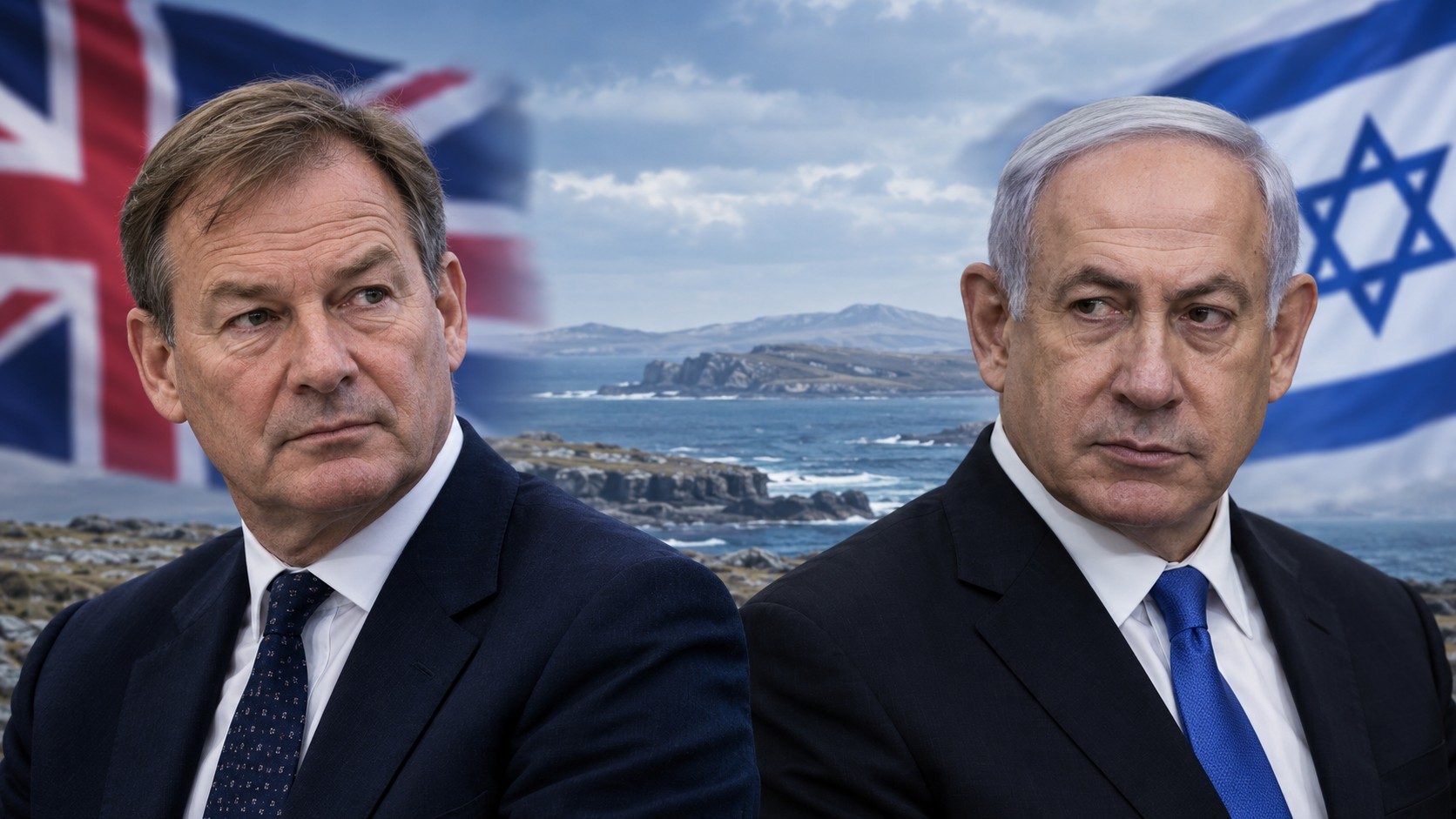
Rupert Lowe has questioned why Britain should defend Israel's national interests if its leadership will not respect British interests in the Falkland Islands. The Restore Britain leader made the argument on October 24 after a report that Benjamin Netanyahu had ordered Israeli diplomats to support negotiations over the islands.
Israel's embassy in Britain has denied that Netanyahu issued such an instruction. The dispute centers on a report about backing talks between Britain and Argentina, whose competing claims to the South Atlantic islands have long divided them.
Lowe says support should follow British interests
In his original post, Lowe, the member of Parliament for Great Yarmouth, said he was responding to reporting by The Telegraph. He asked:
"Why should Britain be expected to defend Israel's national interests if Israel's leadership refuses to respect ours?"
Lowe then set out the principle he wanted applied to Britain's relationships abroad:
"Britain is not obliged to give any foreign government unconditional political or military support."
He said British interests alone should guide foreign policy and described that as Restore Britain's position. He also said the Falkland Islands were British and would remain so.
The reported Netanyahu directive faces an explicit denial
The Telegraph's report said Netanyahu had instructed diplomats to support direct negotiations between Britain and Argentina over the islands' future. Ynet's account of the report said the proposed position also acknowledged Argentina's historical connection to the territory.
The reported shift concerned support for negotiations, stopping short of formally recognizing Argentine sovereignty. The newspaper linked the alleged instruction to Britain's sanctions on Israeli settlements in the West Bank and Netanyahu's close relationship with Argentine President Javier Milei.
Ynet described Milei as a close Netanyahu ally who supported Israel during the war and took part in Israel's Independence Day torch-lighting ceremony.
The account also pointed to remarks by Israel's U.N. ambassador, Danny Danon, who reportedly called for direct negotiations during a U.N. debate the previous week.
Alex Gandler, the spokesman for Israel's embassy in Britain, issued a direct response on October 24:
"I categorically deny this allegation. No such directive exists."
Lowe published his statement before Gandler issued that denial.
The Falklands argument has an immediate economic backdrop
Britain has administered the Falklands since 1833, apart from the brief Argentine occupation in 1982. They are a British overseas territory. Argentina also claims sovereignty and calls the islands the Malvinas. Argentine forces invaded in 1982, triggering a war that ended with Britain regaining control.
The islanders' own wishes are central to Britain's position. In the March 10-11, 2013 referendum, they voted overwhelmingly to retain their constitutional arrangements with the United Kingdom. In a statement to Parliament that month, then-Foreign Secretary William Hague described the result as a democratic expression of their wishes and called for international recognition of their self-determination.
Lowe has challenged Netanyahu's family over the issue before. In a September 3 report, Al Jazeera quoted his response to Yair Netanyahu, the prime minister's son, who had backed Argentina's claim. Lowe said the islands would remain British and called on the Israeli government to clarify its position. He also said a government led by his party would go to war if necessary to keep them British.
The latest argument also comes while Britain and Argentina are in a separate confrontation over the Sea Lion oil project near the islands. Downing Street's account of Prime Minister Andy Burnham's October 23 call with Donald Trump said the two leaders discussed the project.
Burnham raised what his office described as the economic consequences of Argentina's coercive measures for both the United Kingdom and the United States. He also reiterated the importance of respecting the islanders' right to develop their natural resources.