

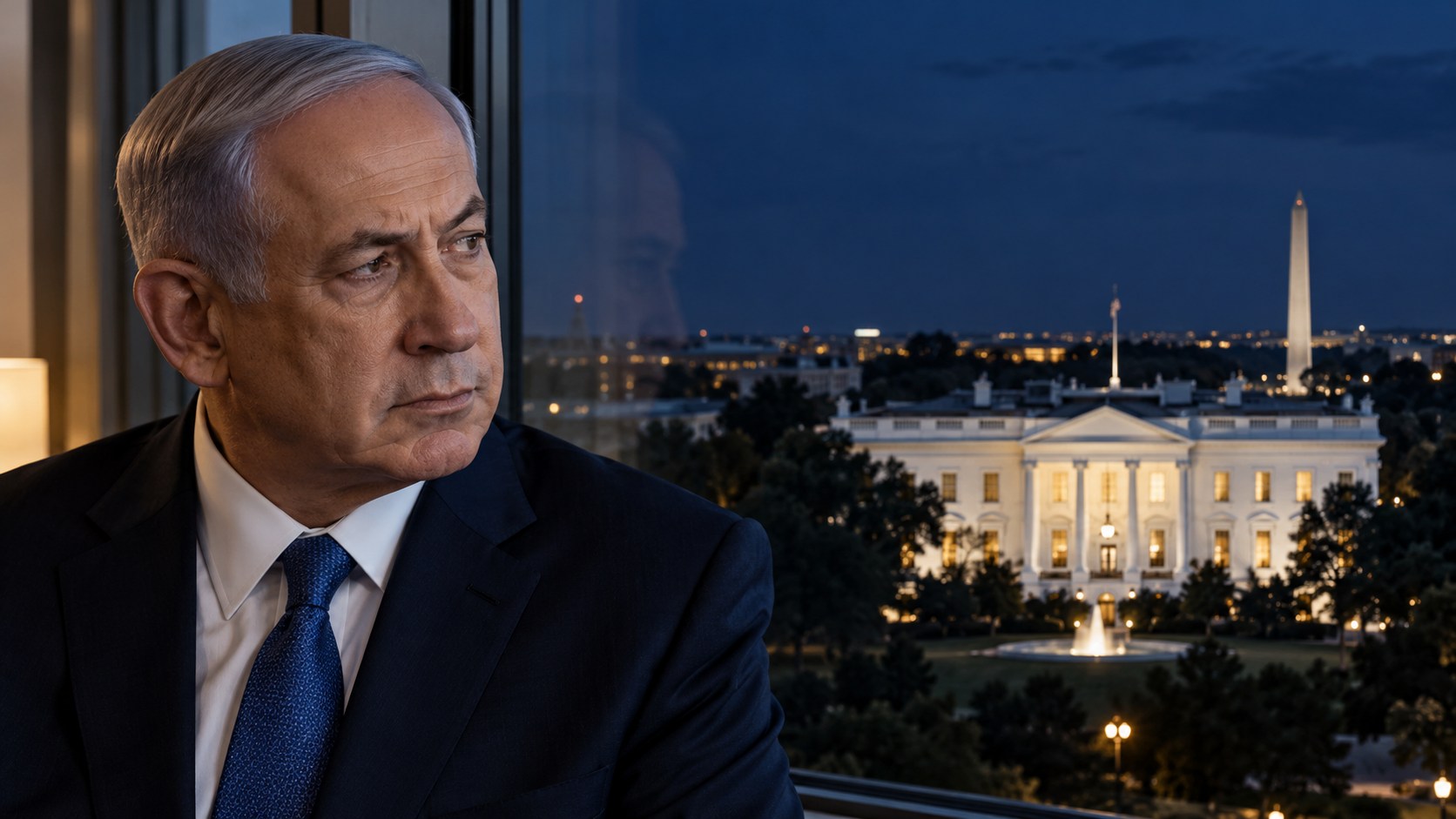
Benjamin Netanyahu is looking beyond Donald Trump to a Washington he fears could turn against Israel. In an interview published on October 22, the prime minister argued that the country needs someone who can make the most of Trump's friendship now and stand up to a much less friendly president later.
His clearest example was Palestinian statehood, which he continues to reject. With Israelis voting on October 27, Netanyahu is presenting his experience with American presidents as another reason to keep him in office. He raised a possible hostile successor without identifying one or saying a break with Washington was certain.
A warning about the president after Trump
The original interview, conducted on October 21 by The Jerusalem Post's Zvika Klein and Amichai Stein, turned to what would happen when Trump left office. Netanyahu objected when the prospect was described as a less friendly administration.
He put the question more sharply:
"What happens if you have a hostile administration? Who will withstand the pressures? Who will stand up to them? And I think the answer in both cases is the same."
Netanyahu was making the case for himself. He said his experience would help Israel benefit from Trump's support while preparing to resist demands from a successor. A Palestinian state, in his telling, could become an Iranian-backed terror base overlooking Israeli population centers. That is his argument against statehood, which remains a central dividing line in diplomacy over the conflict.
He added:
"You’re not going to withstand the pressure by succumbing to it, because then you’re finished."
Trump's endorsement has given that campaign pitch an unusually direct boost. On October 18, the American president publicly backed Netanyahu's reelection, praising their partnership against Iran and suggesting his willingness to pursue further military action depended on who led Israel.
The Jewish Telegraphic Agency's report also carried a response from Netanyahu's rival Gadi Eisenkot. He said Israelis alone would decide their next prime minister and coalition, while describing Trump as a friend of the country. The disagreement was over the president's involvement in the election.
Vance leaves a question hanging
The interviewers also raised Vice President JD Vance's refusal to issue his own endorsement. As Apex previously reported, Vance said he was concentrating on American candidates and the U.S. midterms. He explicitly said he was neither endorsing nor opposing Netanyahu.
That leaves a gap between Trump's personal backing and what another Republican leader might offer. Vance has not announced a future administration's policy toward Israel. Netanyahu's answer was to emphasize his own ability to handle pressure, alongside the opportunity he sees in Trump's remaining time in office.
He also outlined three broader tasks: strengthen Israel's existing American support, fight the information war and widen its international partnerships. India was one example he named. The strategy acknowledges that Israel needs relationships extending beyond the person occupying the White House.
American opinion is part of the problem
There is evidence that the political audience has changed. A Pew Research Center survey, published April 7, found 60% of U.S. adults viewed Israel unfavorably, compared with 53% a year earlier. Some 59% had little or no confidence in Netanyahu on world affairs.
Those are older findings, based on interviews with 3,507 adults on March 23-29. They are relevant to the longer-term challenge he describes: negative views were common among younger Americans in both parties. Among Republicans under 50, 57% viewed Israel unfavorably, even as Republicans overall remained more positive than negative.
Netanyahu's political opponents reject the idea that his leadership is essential to the relationship. In the agency's October 18 report, Democratic Majority for Israel chief Brian Romick criticized Trump's endorsement and argued that the alliance rests on shared interests and values, rather than one prime minister.
For now, Netanyahu still has to build a government at home. He told the interviewers he would govern with his current coalition partners if he secured at least 61 of the Knesset's 120 seats. Others could join afterward on the government's terms. His pitch asks voters to trust him with both a friendly White House and a difficult one; the first test comes at Tuesday's ballot box.