

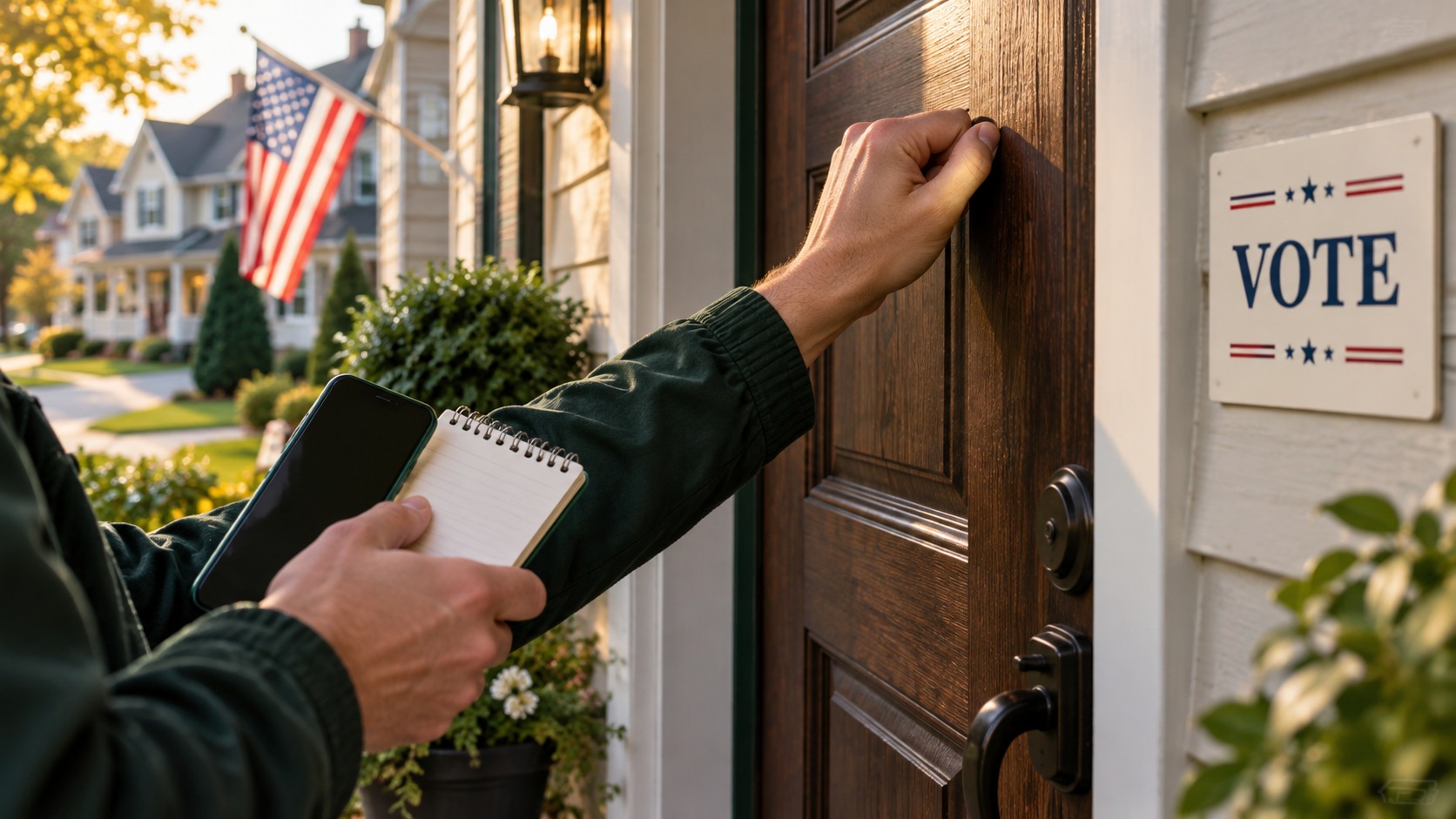
Some of the people knocking on voters' doors ahead of the U.S. midterms have money riding on the answers. Election traders on Kalshi have been going door to door to gather information for their bets, Bloomberg reported on Sunday.
The appeal is straightforward: find out something useful before other traders do, then decide whether the market has got the race wrong. A voter answering the door becomes a source of information for someone trying to make money from the result.
Bloomberg described the activity in a public post accompanying its report:
Top election traders on Kalshi went door to door ahead of the midterms, hunting for intelligence to inform their wagers
The report puts a familiar election-season activity into a different business. Conversations with voters are becoming part of the research behind financial trades, alongside the polls, headlines and other information available online.
What a useful answer is worth
On Kalshi, people buy and sell contracts tied to whether an event happens. A winning contract pays $1. What a trader earns depends on the purchase price and fees, so correctly picking the winner doesn't mean every successful bettor makes the same amount.
The price is the crucial part. A trader looking at a race is making two judgments: who is likely to win, and whether the price already reflects that chance. Information only helps financially if it leads to a better trade.
Kalshi's own explanation says contract prices reflect traders' views about the likelihood of an event. Buyers and sellers with opposing views meet in the market. Those prices can move when new information changes what people are willing to pay.
The platform made its case for election markets in an October 28 statement:
In a free and open market, those trades bring together information from people across the country to produce a market price that updates in real time.
That is the company's argument for why the prices are useful. The displayed odds are the market's judgment about an outcome, not the percentage of voters who support a candidate.
A conversation isn't a reliable poll by itself
There is a catch to taking election research onto someone's porch: who answers matters.
The American Association for Public Opinion Research says a survey's sample needs to be designed around the population the researcher wants to understand. Its guidance distinguishes randomly selected samples from methods that recruit people through personal networks or other nonrandom routes.
For those nonrandom surveys, the association says researchers often need special statistical methods and should be open about how they collected the answers. Question wording also matters. Its recommendations call for clear questions that avoid pushing respondents toward a particular answer.
That makes the research method important to any claim that a door-knocking exercise has found something the wider market missed. Talking to voters and measuring voters as a whole are different tasks.
The rules still apply to election bets
Kalshi's published policy says it screens candidates, members of Congress, campaign staff, election officials and poll workers for conflicts involving specific markets. It also prohibits trading by people who can influence the relevant result.
The company says it monitors suspicious timing, unusually successful trading and coordinated activity. Flagged accounts can be frozen while investigators examine the funding and trading history, with confirmed violations reported to the Commodity Futures Trading Commission.
Those restrictions matter when political knowledge comes from a person's job or role in a campaign. Kalshi describes a previous case in which a candidate for California governor traded on his own candidacy. The exchange says it froze the account, investigated and imposed a five-year ban.
A winning election bet also has to satisfy the contract's terms. Kalshi says each market specifies the rules and information source it will use to determine the outcome after trading closes. A trader's conversations with voters may inform the wager, but they don't settle it.