

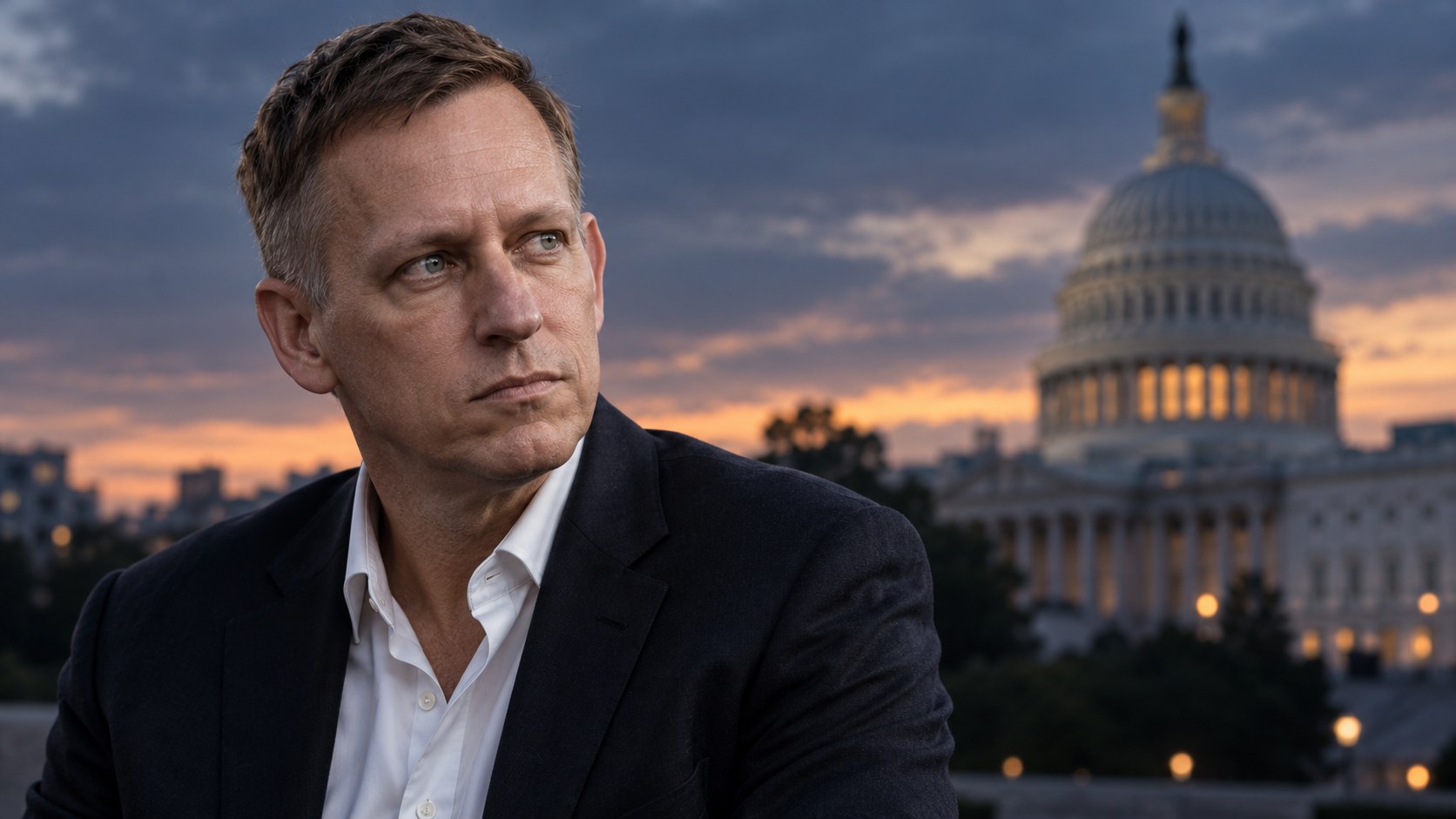
Peter Thiel was one of the technology world's most prominent early backers of Donald Trump. Now, with the midterms approaching, the billionaire investor is questioning one of the president's biggest decisions: going to war with Iran.
The billionaire investor said the United States should not have started the conflict, according to newly reported audio from a private October 12 lecture, part of a series held in Nashville. He also continued to support Trump.
In a report published late October 21, Politico said it had obtained a recording of the remarks. Thiel said:
“I’m skeptical of [the war], I think we should not have done it. There were a lot of mistakes that were made.”
He then questioned whether American military strength and international influence were sufficient to sustain its position:
“Maybe we don’t have the hard power. Maybe we’re going to lose the soft power war.”
Those are doubts about what Washington can achieve and what the conflict could cost its standing abroad. Hard power generally refers to military and other coercive strength; soft power is influence built through attraction and credibility.
The criticism comes from inside Trump's circle
Thiel was an early and prominent technology-world supporter of Trump in 2016, when he spoke at the Republican National Convention. The PayPal and Palantir co-founder has also helped finance Republican candidates and conservative causes.
His ties extend to Vice President JD Vance. Thiel backed the political operation supporting Vance's 2022 Senate campaign and helped connect him with Trump, The Daily Beast noted in its Thursday account of the recording. That history gives his foreign-policy criticism a different significance from another denunciation by a Democratic opponent.
The remarks also touch a debate within Trump's own political coalition: how an administration that campaigned on America First should weigh the costs of military intervention in the Middle East. In Thursday's coverage, Anadolu reported that Thiel expressed opposition to neoconservative foreign policy and intervention in the region during the lecture series.
The setting and timing are worth keeping straight. Thiel spoke privately on October 12. The recording was reported nine days later, and the story spread Thursday, 12 days before the November 3 election.
The election argument reaches the gas pump
The war is arriving at voters' doors through fuel bills as well as foreign-policy arguments. AAA put the national average for regular gasoline at $4.27 a gallon on October 22, compared with $3.07 a year earlier. Diesel averaged $6.31, up from $3.63.
A Reuters/Ipsos poll completed October 19 put Trump's overall approval at 31%, while 68% disapproved of his handling of the economy. The online survey included 1,679 U.S. adults and had a two-percentage-point margin of error for the full sample.
Trump has been trying to put responsibility for oil prices on Tehran. In a Truth Social post Thursday, he accused Iran of trying to drive prices higher before the midterms, including by inventing reports of attacks and mines. He supplied no evidence for the allegation that incidents were fabricated.
Meanwhile, the threats from the region have continued. The Guardian reported Thursday that Iranian security chief Mohsen Rezaei threatened Gulf oil facilities and other infrastructure if the United States and Israel attack again.
Thiel's concerns went beyond military strategy and election results. According to the reported lecture, he also worried about potential consequences from the International Criminal Court, describing the prospect of an arrest warrant as a “sword of Damocles hanging over the Trump administration.” That was his warning about a possible legal threat, rather than a report that such a warrant had been issued.
Anadolu also noted that the court has been targeted by U.S. sanctions.