

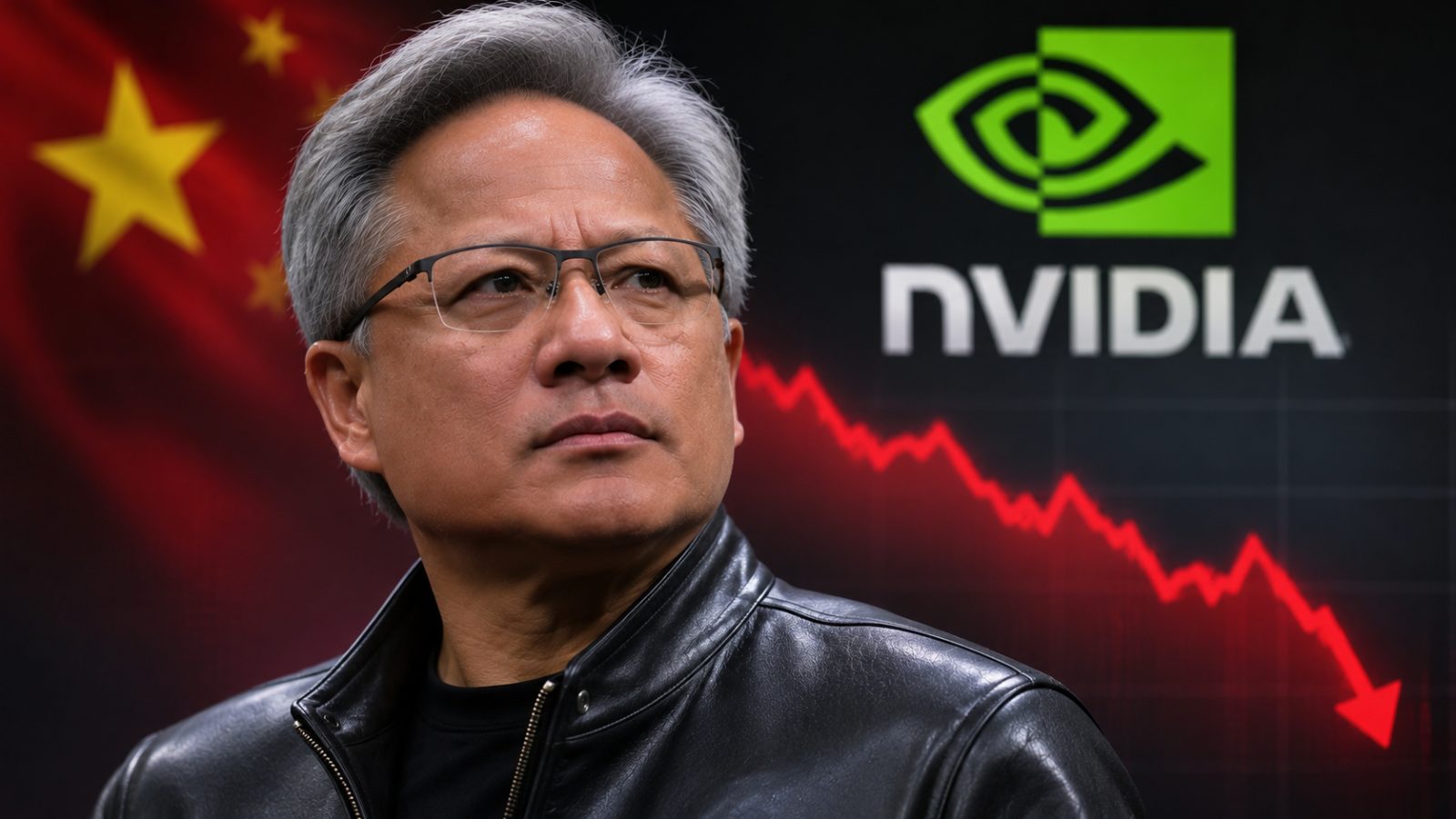
Nvidia saw $270 billion wiped from its implied market value Monday as shares sank nearly 5% before Wall Street opened. The selloff followed Apex's report that CEO Jensen Huang had an affair with a businesswoman accused of passing information to Beijing.
Now the chipmaker's own board is independently investigating whether its boss was caught up in a foreign intelligence operation.
Investors are asking whether the person running one of America's leading AI companies became a potential security risk. And with Nvidia's chips powering the AI boom, that question has an unusually large price tag.
Nvidia opens an investigation as Jensen apologizes
Shares of Nvidia (NASDAQ: NVDA) were last down 4.8% in Monday's premarket session, after falling 5% earlier. The $270 billion figure reflects the drop suggested by trading before the opening bell, not a final loss recorded at the close.
At the center of the allegations is Alice Huang, an executive at cloud company Megaspeed. Reports attributed to The New York Times and Financial Times say U.S. intelligence agencies suspect her of providing information to Chinese authorities.
That allegation remains disputed, and the available reporting does not establish that Jensen knowingly shared secrets.
Nvidia's directors announced an independent investigation on Sunday, November 8, following reports that Jensen had been targeted by what the company described as a foreign intelligence effort.
Jensen “fully supports the review and has committed to cooperating with it,” Nvidia said Sunday. The board has released no findings or decision about his job.
Jensen admitted cheating on his wife in an email to employees. “There is no excuse for what I did,” he wrote, apologizing to his family and telling colleagues, directors, partners and shareholders he had failed them. His admission addressed infidelity, not espionage.
China denies the allegations as British politician raises concerns
Beijing pushed back Monday. Foreign Ministry spokesperson Guo Jiakun dismissed the spy story as lacking evidence, according to Reuters. Chinese officials also called the accusations baseless speculation intended to damage the country's reputation.
British politician Tom Tugendhat, described as shadow foreign secretary, offered a different possibility during BBC Radio 4's Today program. He said it would not surprise him if Chinese authorities had approached Alice only after the alleged relationship began.
Tom also speculated that officials could threaten imprisonment for her relatives to force cooperation. He presented that as something the Chinese state might do, not as a verified account of what happened.
Chinese state-run newspaper Global Times took aim at the coverage itself. Its commentary called the New York Times report speculative and questioned why the story appeared just as relations between Washington and Beijing were showing signs of improvement.
The paper suggested unnamed interests might want to inflame tensions. It argued that treating accusations as guilt could hurt both countries and disrupt international supply chains. It also accused some American news outlets of weakening their credibility by spreading claims they had not proved.
Global Times described the combination of a wealthy executive, a secret romance and an alleged spy as irresistible media material, while asking whether someone was deliberately stirring trouble.