

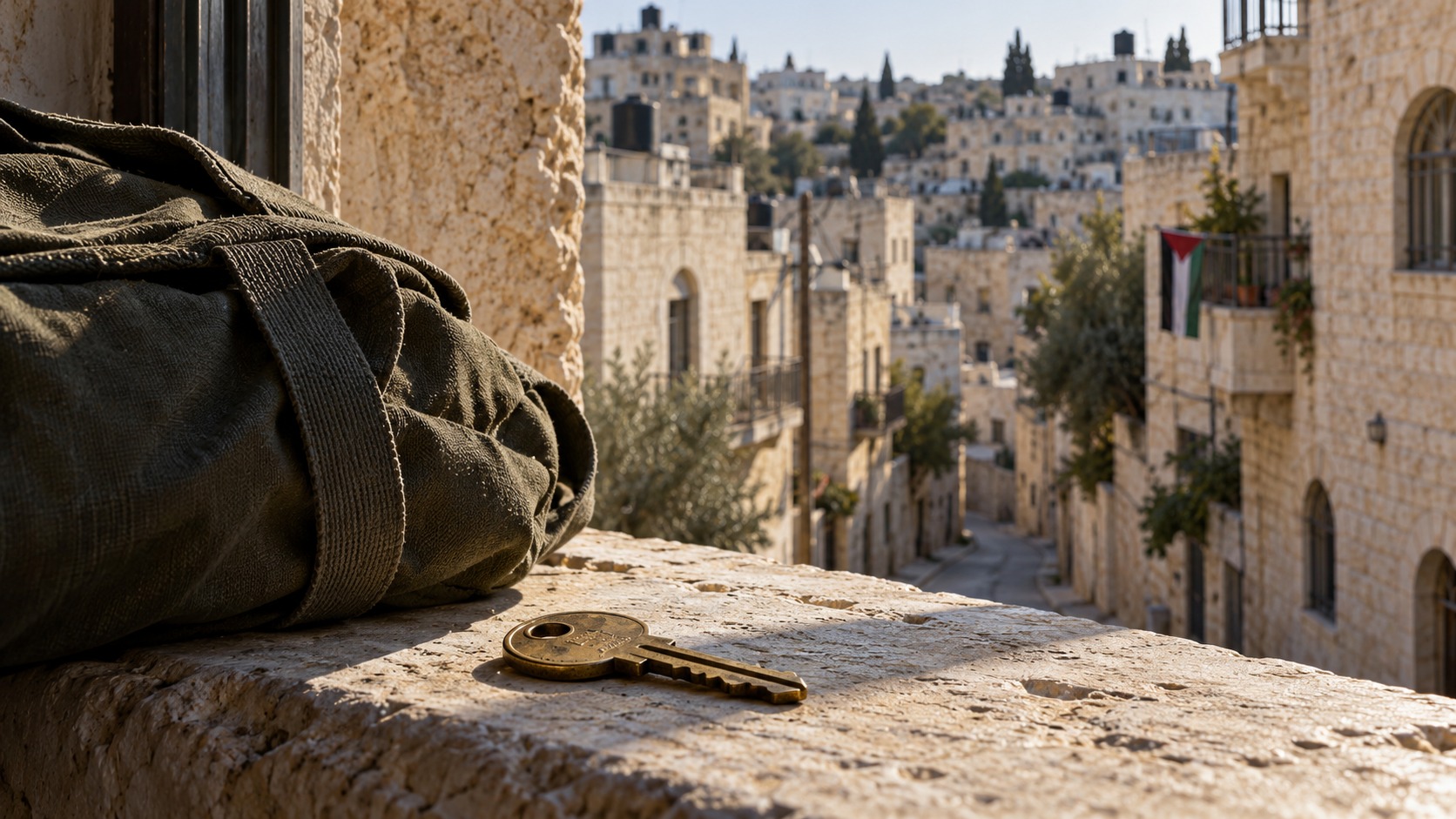
Benjamin Netanyahu has promised a "big surprise" for the Palestinian Authority as Israeli forces push ahead with an operation in Hebron that Palestinian officials say has already driven about 1,500 people from their homes. The warning follows the killing of two Israeli soldiers near the occupied West Bank city on October 23.
Netanyahu hasn't said what he intends to do to the authority. Asked whether he would dismantle it, as one of his far-right coalition partners has demanded, he declined to give a direct answer. There is no evidence that the Palestinian Authority was involved in the shooting.
Netanyahu leaves the threat open
The Israeli prime minister made the remarks in an October 23 i24News interview, according to an AFP report. He pointed to Israel's military campaigns across the region before turning to the Palestinian leadership:
"We transformed the Middle East. I said that we would change things and we have."
He added that there was "a very big surprise for the Palestinian Authority as well."
National Security Minister Itamar Ben-Gvir has called for the authority to be dismantled. It governs parts of the West Bank under the peace agreements reached in the 1990s, with security cooperation between Palestinian and Israeli authorities.
Netanyahu's warning comes just days before Israel's October 27 election. His opposition to Palestinian statehood has also featured in his campaign. As Apex previously reported, he has argued that Israel needs to prepare for pressure from a potentially hostile American president after Donald Trump leaves office.
Families leave as troops search Hebron
The Palestinian news agency WAFA's October 24 report put displacement at around 1,500 Palestinians from the Deir Bahha and al-Jalda areas since the previous day. Governor Khaled Dudin said more than 200 families had been displaced, with some spending the night outdoors.
The governorate declared a state of emergency and was organizing a crisis committee with local institutions and community leaders to help those who had left. Mayor Youssef al-Jaabari said Israeli forces were seeking to displace another 2,500 people. That figure describes people facing evacuation, rather than an additional completed displacement.
Residents were also dealing with road closures. The same account described earth mounds and concrete blocks cutting access near Kharsa, closed entrances to al-Arroub refugee camp and sealed gates around southern Hebron. Demolitions included homes and commercial buildings in Farsh al-Hawa.
AFP spoke to Higazi Shawer al-Tamimi, a 70-year-old shopkeeper in Ein Dir Baha, who said soldiers woke him during the night and gave him two hours to pack clothes and official papers. Families without vehicles were trying to arrange somewhere to stay with relatives.
The military and Palestinian officials give different accounts
In its account of the response, i24News reported that Netanyahu had ordered troops to evacuate the attackers' neighborhood, search homes, seize weapons and destroy what he described as terrorist infrastructure.
The Israeli military said the operation would take several days and was focused on the area from which the gunmen operated. It said residents could leave through three designated points after questioning and security checks.
The Times of Israel reported the army's explanation that buildings near the shooting site were being demolished because they were illegal and posed security risks. Its account also noted that Israel hasn't granted Palestinians building permits in that part of the West Bank in years.
The soldiers killed were Staff Sgt. Ron Yonatan Roytman, 23, and Sgt. Yuval Shai Svilem, 20. Three other soldiers were wounded, and both Palestinian attackers were killed in the gunfight, according to the military.
Palestinian officials and Israeli rights advocates have condemned the measures as collective punishment. Speaking to AFP, Dudin said:
"This amounts to collective punishment being imposed on civilians who have nothing at all to do with this."
Palestinian Authority Vice President Hussein al-Sheikh called on October 24 for international action and accountability. His demand went beyond condemnation: he urged governments to stop the violations and ensure those responsible faced consequences under international law.