

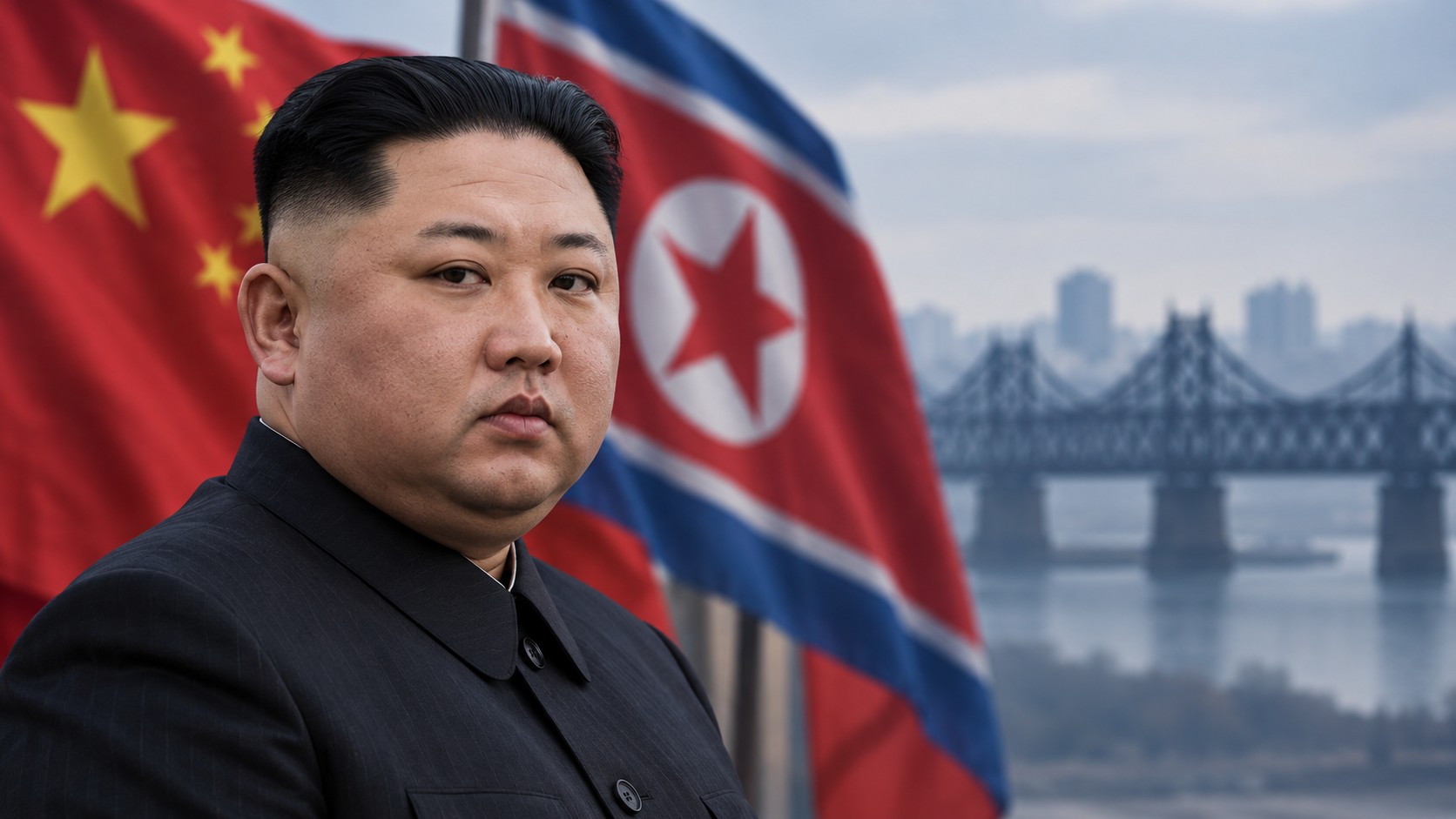
Kim Jong Un crossed into China on October 24, arriving in the border city of Dandong as the two countries step up economic ties and high-level contacts. South Korea's Unification Ministry confirmed the visit, which had not been announced in advance.
The North Korean leader took the New Yalu River Bridge, a crossing that opened on October 15 after sitting unused for more than a decade. His choice of route put a new trade link at the center of a closely watched diplomatic trip.
A short visit, with Li Qiang reportedly meeting Kim
A government source told Yonhap that Kim entered Dandong, in China's northeastern Liaoning Province, through the bridge connecting the city with Sinuiju in North Korea. The river is known as the Yalu in China and the Amnok in Korea.
Chinese Premier Li Qiang met Kim in Dandong, a separate South Korean official familiar with the matter told Reuters. The official spoke anonymously because they were not authorized to discuss the matter publicly.
The trip was expected to be brief. A ruling-party source told the South Korean news agency that Kim appeared likely to return home that day. Another official told Reuters that a visit to Beijing was unlikely ahead of high-level Chinese Communist Party meetings beginning October 26.
China's foreign ministry had not immediately responded to the news agency's request for comment. A meeting with President Xi Jinping had not been confirmed.
The bridge gives closer ties a practical purpose
The four-lane crossing stretches 3,026 meters between the two border cities. It was completed in 2014, but the opening was held up as connecting roads and customs facilities on the North Korean side remained unfinished.
That left trade relying on an older combined road-and-rail bridge. According to Xinhua, its road section could accommodate only one-way traffic by trucks weighing no more than 20 metric tons. The new crossing provides four lanes for two-way traffic.
Li welcomed the opening in a video address on October 15:
"The bridge is bound to become a new landmark symbolizing the traditional friendship between China and the DPRK."
He also called for better customs clearance, stronger transport connections and more cooperation in the border areas.
Lu Chao, an expert on China-North Korea relations at the Liaoning Academy of Social Sciences, told the news agency that the visit fit a period of closer economic ties and more frequent high-level exchanges.
"The opening of the bridge has resolved a major bottleneck in China-North Korea trade logistics."
Lu expects trade to increase as that constraint eases. The crossing is expected to help carry heavy equipment, raw materials and energy products needed by North Korea.
Two visits in 13 months, and another summit season ahead
Kim's previous trip to China was in September 2025, when he attended Beijing's military parade marking the 80th anniversary of the end of World War II. He met Xi and appeared alongside Russian President Vladimir Putin during that visit.
Xi traveled to Pyongyang in June this year. During their summit, he expressed China's willingness to expand cooperation in trade, agriculture, construction and technology, while Kim described the relationship as a top strategic priority, the Associated Press reported.
The timing of the latest visit also carries historical weight. China marks October 25 as the anniversary of its participation in the 1950-53 Korean War, when Chinese troops fought alongside North Korea. This year marks 76 years since that intervention.
China remains North Korea's main economic and diplomatic backer and accounts for most of its official trade. Pyongyang has also developed closer ties with Moscow during Russia's war in Ukraine, giving Kim another important partner.
Washington is still seeking a meeting of its own. As previously reported by Apex, U.S. approaches to arrange another Trump-Kim summit have gone unanswered. The next possible opening is the November 18-19 Asia-Pacific Economic Cooperation summit in Shenzhen, China, which Trump is expected to attend.