

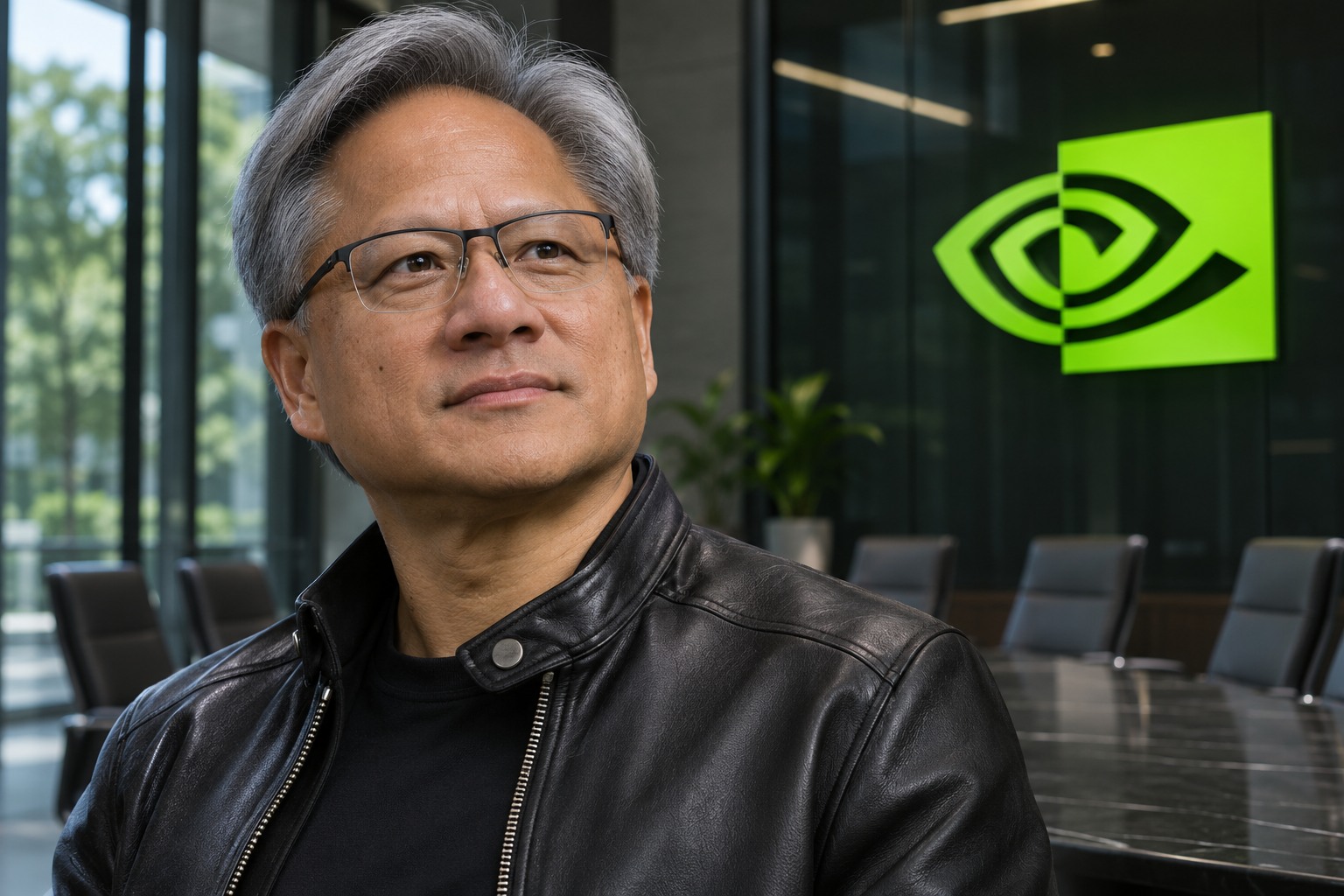
Jensen Huang is willing to return as Nvidia's chief executive if asked, The Wall Street Journal reported Tuesday, putting the founder's own position into public view five days after his resignation.
The offer leaves the next move with the directors who are looking for his permanent successor. It comes after reporting that the board was not considering reinstatement, while investors, employees and technology executives have been pressing to keep a comeback possible.
Huang puts himself back in the conversation
The Journal's report follows days of lobbying by Huang's supporters. The publication confirmed on its own social account that he was prepared to return if asked. His willingness to take the job again does not amount to a board decision to restore him.
As previously reported by Apex, Huang had already discussed a possible comeback with confidants. Allies were considering a Silicon Valley lobbying effort and seeking White House support, while investors urged the directors to avoid rushing into a permanent appointment.
The difference now is that Huang has publicly signaled where he stands, rather than leaving the discussion to allies speaking about his intentions.
His departure on November 12 covered his positions as president, CEO and a director, ending 33 years at the company he founded. Colette Kress took over as interim chief while keeping her chief financial officer responsibilities, and Harvey C. Jones became Nvidia's first board chair.
Directors have been looking in another direction
CNBC reported Monday that the board was focused on a national security investigation into Huang and was not discussing bringing him back, citing a person familiar with the matter. As Apex detailed in its latest coverage, a representative for the board had said directors were selecting an executive search firm.
The succession plan calls for candidates from inside and outside Nvidia to be considered. Huang's supporters have urged the board to leave all options open while the independent inquiry continues.
OpenAI chief Sam Altman added his own support Monday, saying it was hard to imagine the AI revolution without Huang. But when asked directly whether Nvidia should bring him back, Altman declined to make that call, as Apex reported in the article linked above.
Nvidia adds a new security committee
The directors made a separate governance move Tuesday, announcing a standing National Security and Export Control Oversight Committee. It will oversee national security policies, export-control compliance and global trade risk management.
Director Suzanne Nora Johnson will chair it, joined by Stephen C. Neal and John O. Dabiri. Nvidia's national security and trade compliance teams will report directly to the committee and to Kress on day-to-day operations. The committee will meet at least quarterly and use independent outside experts. Those advisers will provide expertise in law, national security and global trade compliance.
Jones described the reason for the change:
NVIDIA recognizes that advanced silicon technologies and the emergence of artificial and superintelligence present unprecedented challenges for national security.
He also set out the company's approach:
We are committed to working constructively with government and industry partners to help establish and advance a robust framework that uses every tool at our disposal to safeguard national security while supporting continued technological innovation.
The company is already conducting a separate independent investigation led by former acting U.S. Attorney Joon H. Kim and Wachtell, Lipton, Rosen & Katz. Allegations that Alice Huang acted as a Chinese spy remain publicly unproven.
All of this lands on an important day for the business. Nvidia is scheduled to report quarterly results on November 17, giving Kress and the leadership team an immediate opportunity to explain how the company is operating through the handover while directors decide who will lead it permanently.