
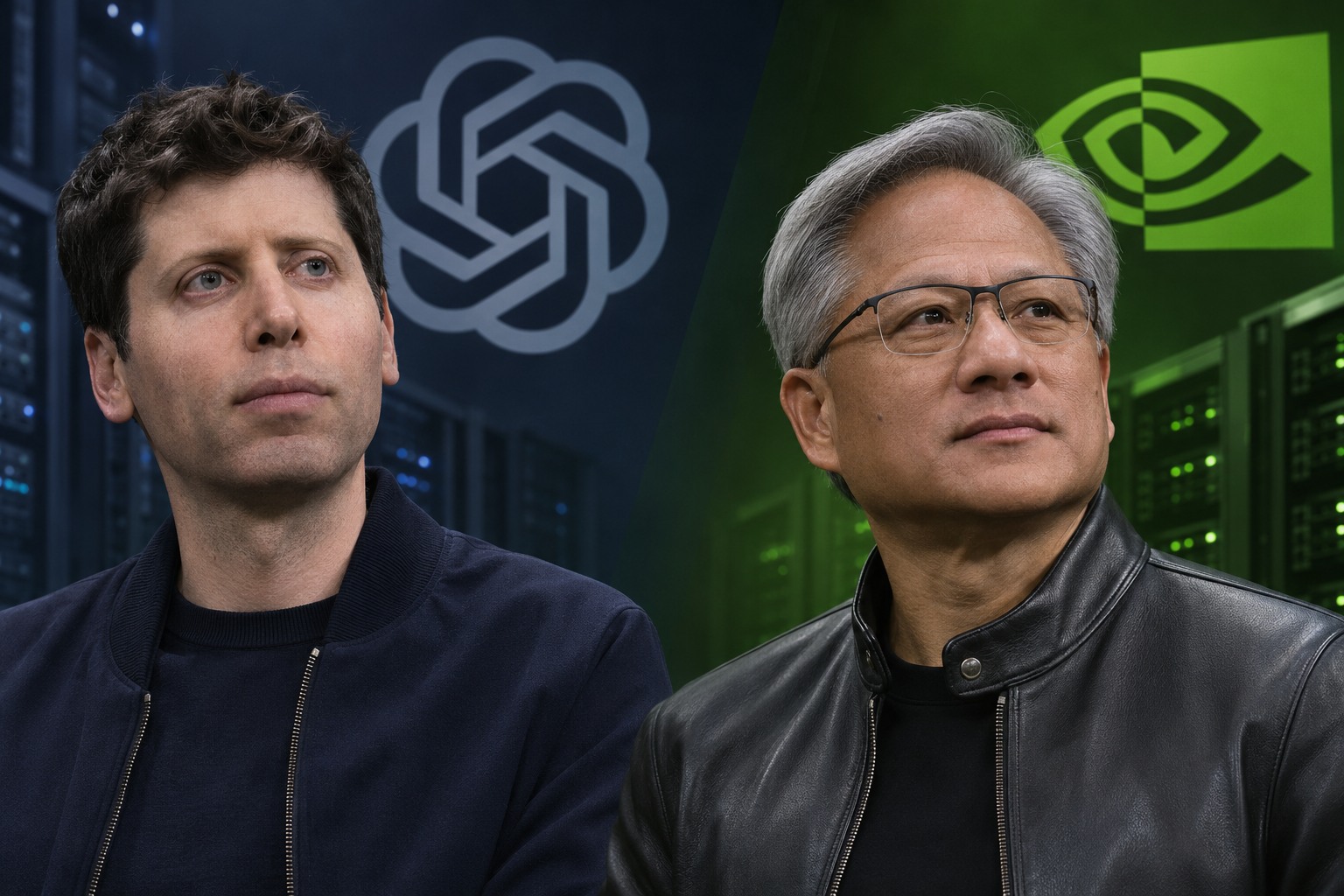
Sam Altman has finally spoken up for Jensen Huang, four days after the Nvidia founder resigned, saying the AI revolution is hard to imagine without him. The OpenAI chief expressed personal sympathy for Huang on Monday, while stopping short of calling for his return as CEO.
By the time Altman made those comments, Huang's supporters had already spent the weekend pushing for a comeback. Elon Musk and other technology executives had backed a public campaign, and investors had urged Nvidia's board to keep reinstatement among its options.
Altman praises Huang, but leaves the board decision open
Speaking with Reed Albergotti at Semafor's Silicon Valley & The World event, Altman described Huang as a longtime hero. In the organizer's original video, he said:
Jensen has long been a hero of mine. Heroes have flaws.
He followed that with a broader assessment of Huang's place in the industry:
But it's hard to imagine the AI revolution without Jensen.
That was a public show of support for Huang's contribution to AI. Asked directly whether the former chief executive should return to Nvidia, however, Altman declined to make that call.
I don’t think I know enough to answer that question.
Semafor's account of the interview also described Altman as having "personal strong empathy" for Huang. He also described Nvidia as "a behemoth of a company," pointing to the size of the business continuing under its new leadership.
The event's own website lists Altman and Huang as co-chairs, alongside Microsoft chief Satya Nadella, Alphabet executive Ruth Porat and AMD chief Lisa Su. Huang is identified there as Nvidia's founder, reflecting his changed role after the resignation.
A familiar situation for the OpenAI chief
Altman has his own experience of being pushed out of a company he helped build, then returning to run it. OpenAI's November 29, 2023, announcement confirmed his return as CEO and a new initial board consisting of Bret Taylor, Larry Summers and Adam D'Angelo.
The same announcement said Mira Murati would remain chief technology officer and Greg Brockman would return as president. Altman wrote to employees that he was returning as CEO and thanked colleagues who had helped resolve the leadership crisis.
As previously reported by Apex, Huang's allies have been discussing a Silicon Valley lobbying effort to bring him back, with plans to seek White House support. Musk and Epic Games CEO Tim Sweeney were among executives supporting an open letter demanding his return.
Altimeter Capital founder Brad Gerstner and Atreides Management chief Gavin Baker also urged directors to leave a possible Huang comeback on the table. Their position concerns keeping the option open during the leadership search, while the public campaign has pushed for reinstatement during the independent inquiry.
Nvidia's transition continues
Huang's November 12 exit, previously reported by Apex, covered his positions as president, chief executive and board member. Colette Kress took over as interim CEO while keeping her finance responsibilities, and Harvey C. Jones became the company's first board chair. Kress joined Nvidia in September 2013 and has led its finance organization through the company's expansion into AI computing.
The transition plan calls for consideration of internal and external candidates for a permanent chief executive. Nvidia is also due to report quarterly results on November 17, putting the management handover alongside an immediate deadline for explaining the business to investors.
Altman also used Monday's interview to discuss the broader backlash against AI and data centers following the US midterm elections. He argued that people wanted to remain in control of the future, and said the industry should take a strong position on how AI develops.
He opposed a gradual or sudden handover of decisions about humanity's future to AI. The public, he said, should understand that the people building the technology are "team human."