

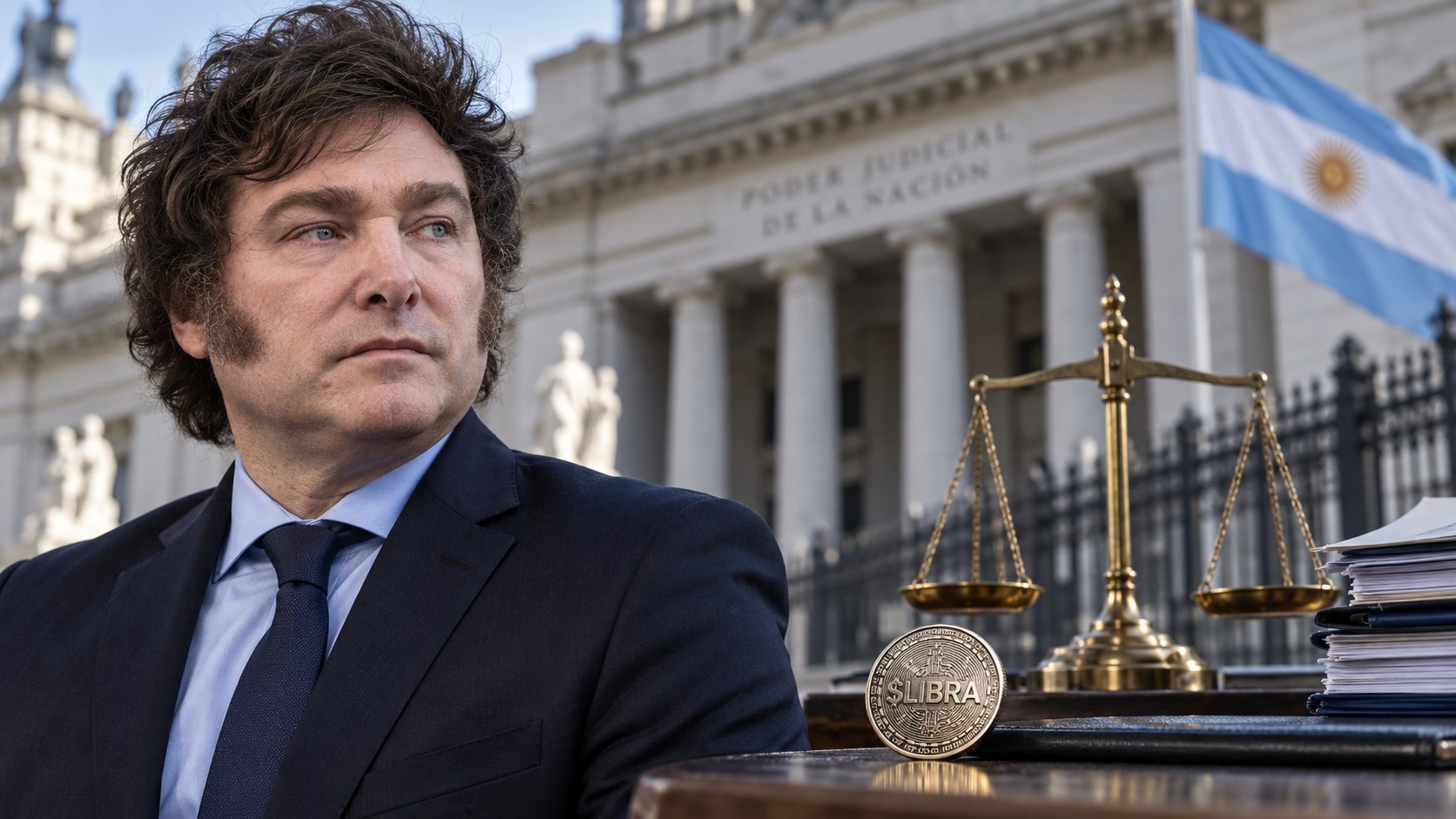
Javier Milei has been cleared in the Argentine criminal case over $LIBRA, the memecoin he promoted before its price collapsed. Federal Judge Marcelo Martínez de Giorgi dismissed proceedings against the president, his sister Karina and nine other people on October 23, accepting prosecutor Eduardo Taiano's request to close the case.
The complaints estimated that more than 40,000 buyers suffered losses. That is the reported scale of the alleged scam, rather than a court-certified victim count. The judge concluded that the evidence did not establish criminal fraud, even though the token's collapse had left investors out of pocket.
Why the judge dismissed the case
The central question was what buyers had been deceived about. According to the Associated Press, which obtained the decision, the court found no proven deception that had induced people to buy the token and no established causal link between an alleged deceptive scheme and their losses.
The 60-page ruling relied on Article 336(3) of Argentina's criminal procedure code. Translated into English, that provision permits dismissal when:
"The act under investigation does not fall within a criminal offense."
The case ended before trial. None of the 11 people investigated had been called for formal questioning as a suspect, Argentine broadcaster TN reported. Those cleared include U.S. entrepreneur Hayden Davis, Mauricio Novelli and Manuel Terrones Godoy, who were linked to the project's launch or its contacts with the presidency.
Milei's position as president was an important part of the complaints. His post could give a little-known token an audience and a level of credibility that an ordinary promotional message would struggle to achieve. The court acknowledged that potential influence, but found no specific deception sufficient to support the fraud allegation.
It also dismissed allegations involving misuse of public office. The ruling took account of the Anti-Corruption Office's conclusion that the post was a personal action, rather than an institutional act involving state resources. Investigators had not established official decisions or administrative acts tied to the token's promotion.
Karina Milei, the presidency's secretary-general, had faced allegations that she received money to arrange access to her brother. The judge found that payments for such influence had not been established. MDZ's account of the ruling said an unsigned proposed agreement and references to possible payments were insufficient to prove an arrangement had been communicated and accepted.
The post that sent buyers rushing in
The scandal began on February 14, 2025, when Milei shared $LIBRA on X, including its contract address. He presented the project as a way to encourage Argentina's economy by funding businesses. The token traded on Solana, giving buyers a route into the market almost immediately.
The price shot up and then collapsed within hours. Complaints summarized in the ruling alleged that a small group of wallets withdrew roughly $100 million as other buyers were left with falling holdings. That estimate concerns withdrawals by those wallets, rather than the combined losses of everyone who bought the token.
Investigators searched premises, seized electronic devices and examined communications and blockchain transactions. They also sought U.S. assistance to identify operations and wallet holders. The inquiry went well beyond reading the president's post.
One request sought to freeze approximately 44.6 million USDC associated with a wallet linked to $LIBRA's team. According to the ruling as reported by the broadcaster, U.S. authorities closed that cooperation request after finding the evidence supplied insufficient to establish the required connection between the people investigated, the alleged crimes and the records sought. That was a decision about judicial assistance.
Milei celebrates, while the legal questions narrow
Milei responded with an Instagram image carrying a quotation attributed to the philosopher Epictetus. The post, reproduced in Argentine reporting, read in translation:
"Truth triumphs on its own; lies always need complicity."
Presidential adviser Santiago Caputo was more confrontational, accusing those behind the complaints of creating a scandal to damage the president. Other officials declined to comment on judicial proceedings.
The dismissal remains subject to possible appeals. Article 337 gives prosecutors and private complainants three days to appeal, although the ability to challenge a particular ruling depends on their standing in the case. The resolution also mentions another judicial investigation connected with $LIBRA, so its scope is the proceedings before this court.