

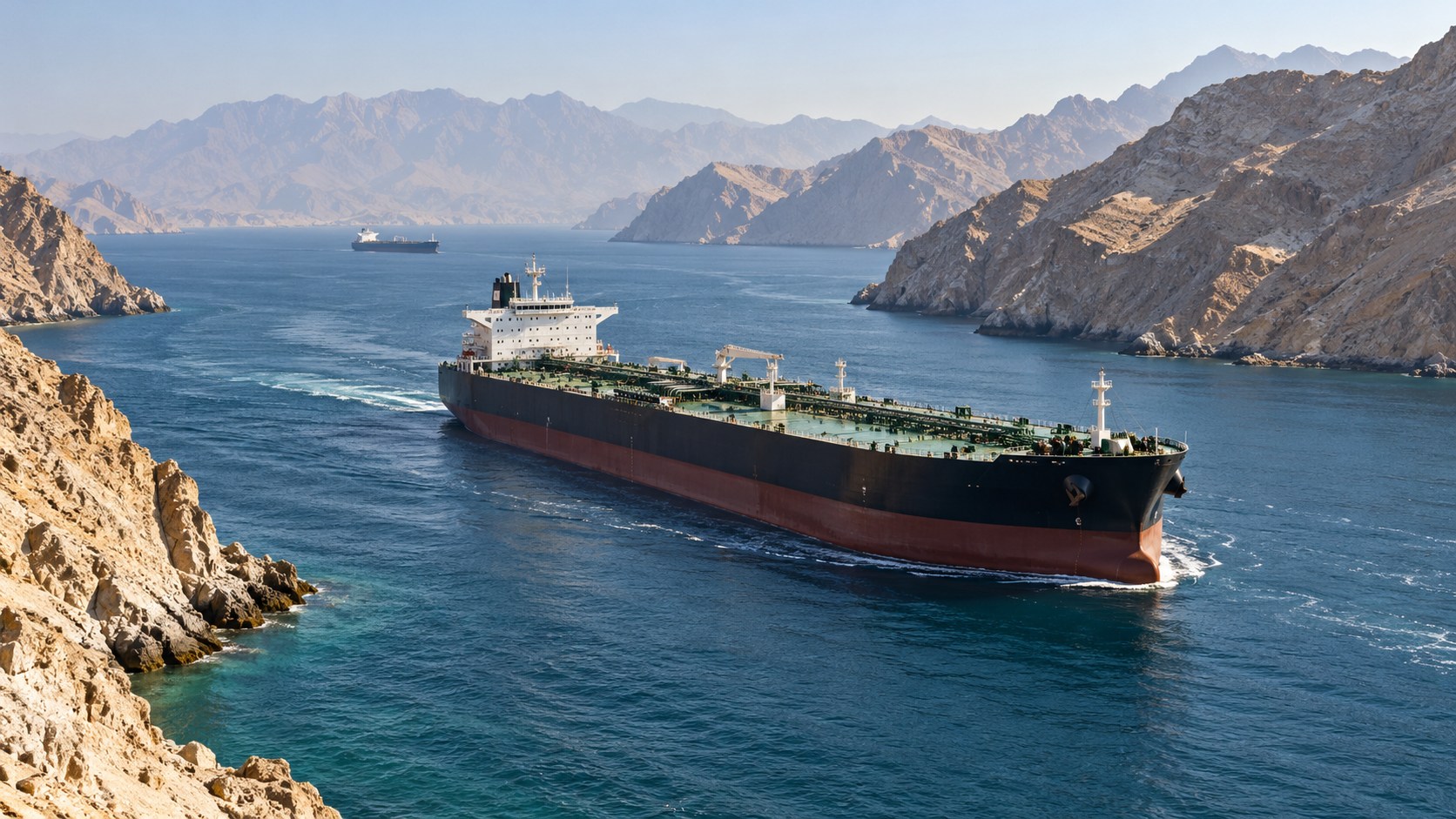
Iran's Revolutionary Guards said on October 29 that three oil tankers exploded and caught fire after hitting sea mines south of the Strait of Hormuz over the previous 24 hours. The claim has not been independently verified.
The force said the ships were trying to use a route it considered unauthorized, had switched off their radar and navigation systems, and ignored warnings from its navy. It said the vessels were abandoned along the southern shores of the strait.
Reuters carried those details in a report published by LBCI. The account did not identify the ships, their owners or their flags, leaving basic questions about the claimed incidents unanswered.
A separate report of a ship on fire
There is a separate maritime alert about a burning vessel in the same waterway. The United Kingdom Maritime Trade Operations agency said the captain of another ship had reported seeing a vessel on fire nine nautical miles north of Khasab, Oman, on October 29.
The agency did not establish the cause of the fire, and the crew's condition was unknown. DPA reported that it was unclear whether the vessel was one of the three described in Iran's statement.
Shipping publication Seatrade Maritime provided further details from security firm Vanguard Tech. The company said a tanker had been struck by an unknown projectile in the southern corridor of the strait.
According to that account, the captain of a passing Panama-flagged tanker saw the damaged vessel on fire and mostly submerged. Another ship was nearby, possibly providing assistance. The Panama flag described the ship whose captain made the report, not an established identification of the damaged tanker.
The accounts therefore describe different levels of information: Iran alleges three mine strikes, while maritime reporting describes a burning vessel and a separate security firm's account of a projectile strike. They cannot be added together as a confirmed count of ships damaged.
The shipping dispute continues alongside diplomacy
The new reports arrive as Washington and Tehran are trying to find a way back to talks. As previously reported by Apex, Trump said on October 28 that he approved Vice President JD Vance's outreach to a senior Iranian security official.
The president described the contact as an effort to help get medical supplies into Iran:
"Basically, it's getting supplies in to help people that are not well."
The earlier reporting described a wider negotiating purpose as well. A U.S. official said the letter sought talks addressing Iran's nuclear program, while Tehran wanted relief from the American naval blockade, access to frozen funds and permission to sell oil before negotiations resumed.
Those competing demands put shipping restrictions and oil exports directly inside the diplomatic dispute. Trump's approval of the contact was not an announcement that the two governments had reached an agreement.
Why the route matters beyond the Gulf
Hormuz connects the Persian Gulf to the Gulf of Oman and Arabian Sea. It sits between Iran and Oman, carrying cargoes from major oil and gas exporters to buyers around the world.
The U.S. Energy Information Administration's June 2025 analysis estimated that about 20 million barrels of oil a day passed through the strait in 2024, equivalent to roughly one-fifth of global petroleum-liquids consumption. That is a historical measure of the route's importance, rather than a current estimate of disrupted supply.
The agency explained the economic risk this way:
"The inability of oil to transit a major chokepoint, even temporarily, can create substantial supply delays and raise shipping costs, potentially increasing world energy prices."
Saudi Arabia and the United Arab Emirates have pipelines that can move some oil around Hormuz. But most volumes normally shipped through the passage have no alternative way out of the region, the analysis said. Its 2024 figures also showed that around one-fifth of global liquefied natural gas trade used the strait, primarily from Qatar.