

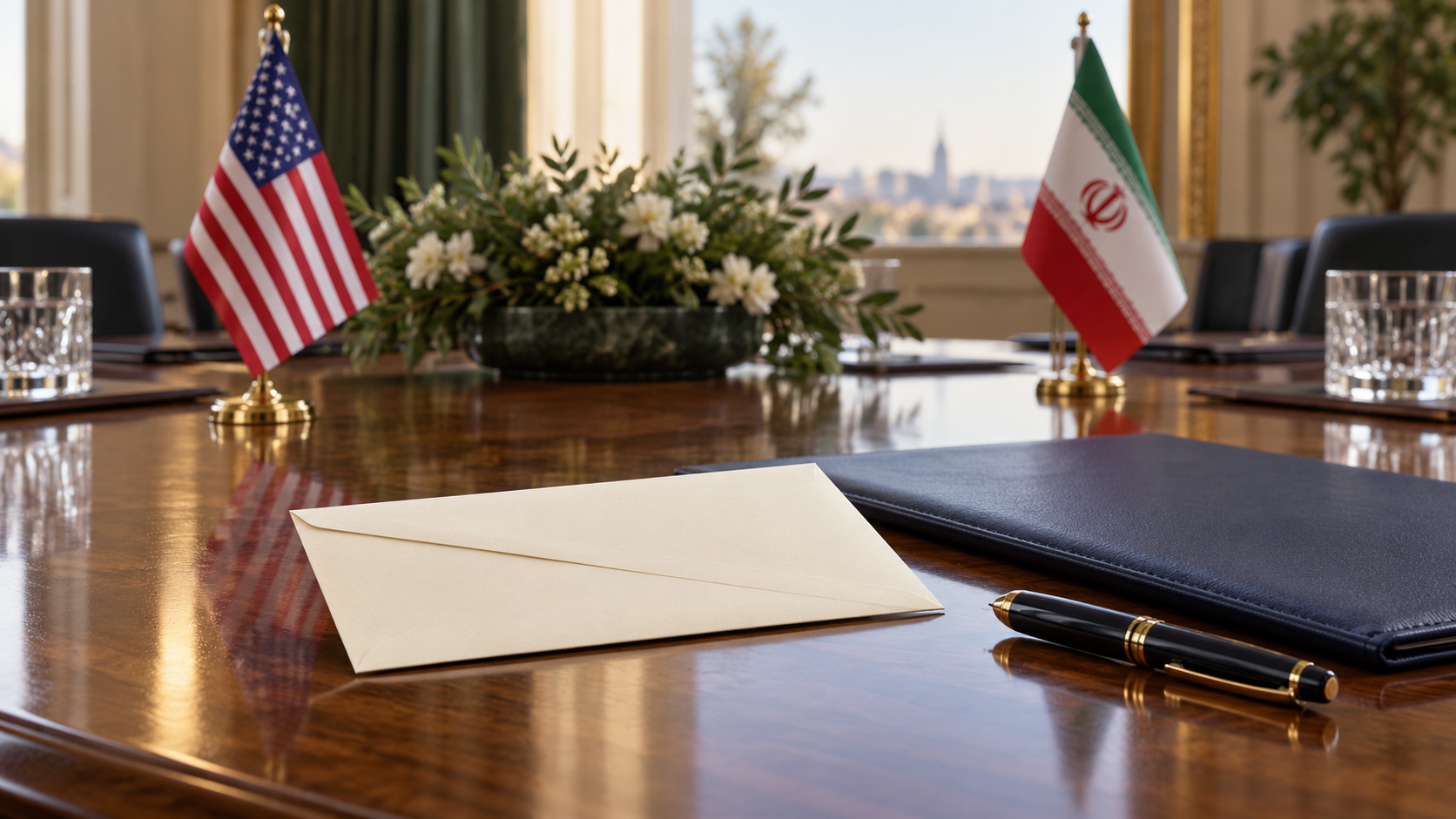
Donald Trump says he approved JD Vance's outreach to Iran. That puts the president's own account at odds with the suggestion that his vice president is trying to negotiate behind his back.
The latest effort centers on a letter to Mohsen Rezaei, secretary of Iran's Supreme National Security Council and a former commander of the Islamic Revolutionary Guard Corps. The reported goal is to find a way back to negotiations as Washington considers another round of strikes.
Trump says Vance asked first
Speaking to reporters on October 28, Trump confirmed the contact, the New York Post reported:
"He asked me what I thought and I said if you want to do that that's OK."
A separate Axios report, citing a U.S. official, said the idea of sending the letter came from Vance and that Trump was enthusiastic about it. The Wall Street Journal first reported the outreach. Axios described it as Washington's highest-level outreach to Tehran in several months.
There is, however, a difference between Trump's public description of the letter and the negotiating purpose described by the official. Trump framed it as an effort to get medical supplies into Iran:
"Basically, it's getting supplies in to help people that are not well."
The U.S. official said the letter stressed that negotiations intended to head off military strikes would have to address Iran's nuclear program. The official declined to say when the message was sent. No completed agreement has been announced.
The dispute is over what happens first
According to that account, Tehran wants Washington to lift its naval blockade, release frozen funds and permit oil sales before negotiations restart. The United States wants nuclear talks to begin before Iran receives sanctions relief.
That leaves a disagreement over the order of concessions. A discussion about humanitarian supplies would not, on its own, resolve the separate demands over nuclear activity, sanctions and shipping restrictions.
Rezaei matters because he is a senior security figure with a direct line to Supreme Leader Mojtaba Khamenei, according to the report. Contacting him potentially brings the discussion closer to Iran's security leadership, although his response to the letter has not been publicly established.
Previous Iranian negotiating teams included parliament Speaker Mohammad Bagher Ghalibaf and Foreign Minister Abbas Araghchi. The Post reported that they met Vance, U.S. envoy Steve Witkoff and Jared Kushner for 21 hours during April negotiations in Islamabad.
Rezaei also met a delegation from Pakistan, Saudi Arabia and Turkey on October 25, placing the new contact alongside regional efforts to reopen diplomacy.
The outreach comes against a continuing threat of force. As previously reported by Apex, Trump said on October 25 that he faced a choice between making a deal and resuming attacks. The latest reporting places possible renewed major combat operations after the November 3 U.S. midterms.
Vance has been involved before
Vance was involved in earlier negotiations. In an October 6 Reuters interview, he said Iran would need to make a meaningful reduction in its nuclear enrichment capacity to secure an agreement. He had also helped broker a provisional agreement in June. World Israel News reported on October 28 that the memorandum collapsed two weeks after signing amid conflicting interpretations over reopening shipping through the Strait of Hormuz.
His position in that interview was that concrete steps on enrichment had to come before Washington accepted Iranian assurances. He said:
"We're not going to trade words for actions."
Vance also acknowledged uncertainty about how decisions were made within Iran's leadership. Iranian Foreign Ministry spokesperson Esmaeil Baghaei had rejected that criticism earlier in October. He said U.S. officials understood who their Iranian counterparts were, then argued:
"The problem is actually the opposite: it lies in the contradictory positions and mixed messaging from US officials."