
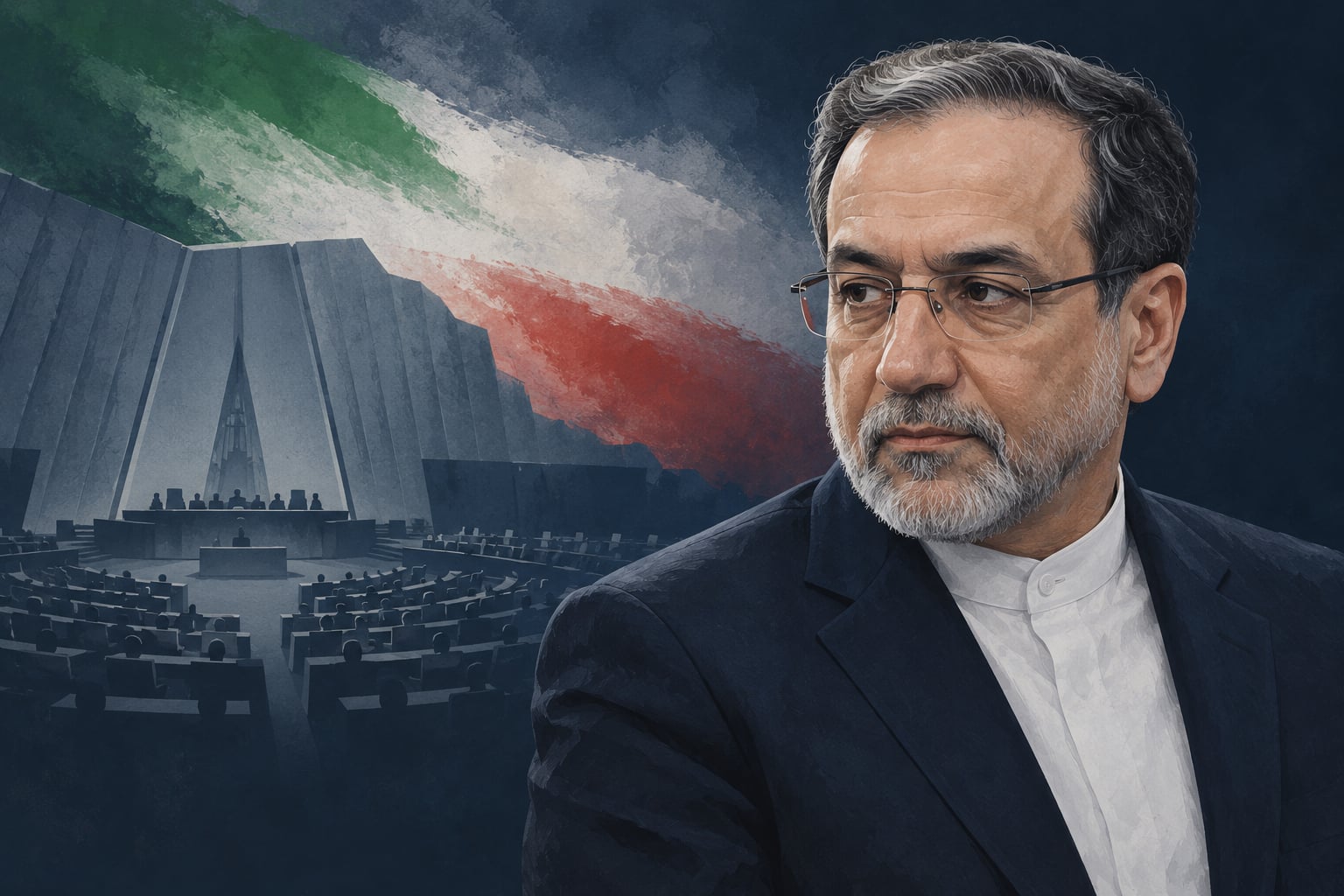
Iranian Foreign Minister Abbas Araghchi faces an impeachment motion filed by lawmaker Amirhossein Sabeti over contacts with U.S. officials, with the legislator alleging that he acted without authorization from Iran's leadership.
Amirhossein's account says he entered the motion in parliament's electronic system and asked Speaker Mohammad Bagher Ghalibaf to refer it to the National Security and Foreign Policy Commission. The motion asks for examination of the allegations with the minister and the legislators seeking his impeachment.
Ali Khezrian, a member of parliament's National Security and Foreign Policy Committee, had previously told the legislature's news service, ICANA that lawmakers had registered an impeachment request and were pursuing it. The September 24 interview shows that the impeachment effort preceded Tuesday's social-media report.
In remarks translated from Persian, he said:
Members of parliament have registered Mr. Araghchi's impeachment and are pursuing it.
Lawmakers challenge the authority for U.S. talks
The Hormuz Letter's October 6 report identified the disputed New York meeting as involving Steve Witkoff and Jared Kushner, negotiators for President Donald Trump. It alleged that the meeting lacked authorization from the Supreme National Security Council or Supreme Leader Mojtaba Khamenei.
Authorization is disputed within parliament. Fellow committee member Mojtaba Zarei said Abbas had received the necessary authorization from Iran's governing structures and was implementing their decisions. That counterclaim means the absence of permission cannot be presented as an established finding.
An account citing Tasnim's reporting said that, as of Tuesday, the request had been entered in parliament's system but had not yet been referred to the presiding board. Registration therefore should not be confused with an impeachment vote or removal from office.
Ali argued that Iran's conditions were supposed to be conveyed through intermediaries, citing remarks by council secretary Mohsen Rezaei. He said direct negotiations went outside the country's policy framework and that the minister should explain his actions to parliament.
He also said the signatories would hear Abbas's explanations and consider arguments that could change their position.
The foreign minister keeps a diplomatic path open
In separate remarks to foreign ambassadors in Tehran on Sunday, Abbas said Iran remained open to a negotiated end to its conflict with the United States, while warning that renewed military action would draw a stronger response.
Tehran Times' account of the October 4 address quoted him saying:
And if they are seeking diplomatic avenues, we remain ready to reach a just and dignified solution to end this war through diplomacy.
He said he had met 42 foreign ministers during the recent U.N. General Assembly meetings in New York. Those public comments describe his broader diplomatic activity, rather than answering the specific allegation about authorization for the U.S. meeting.
Abbas also outlined a conditional proposal for reopening the Strait of Hormuz:
This plan is known as the seven-day plan, and if it is accepted, the Strait of Hormuz will be reopened within seven days.
The reopening timetable depends on acceptance of the proposal; it is not an announcement that the strait has reopened.