

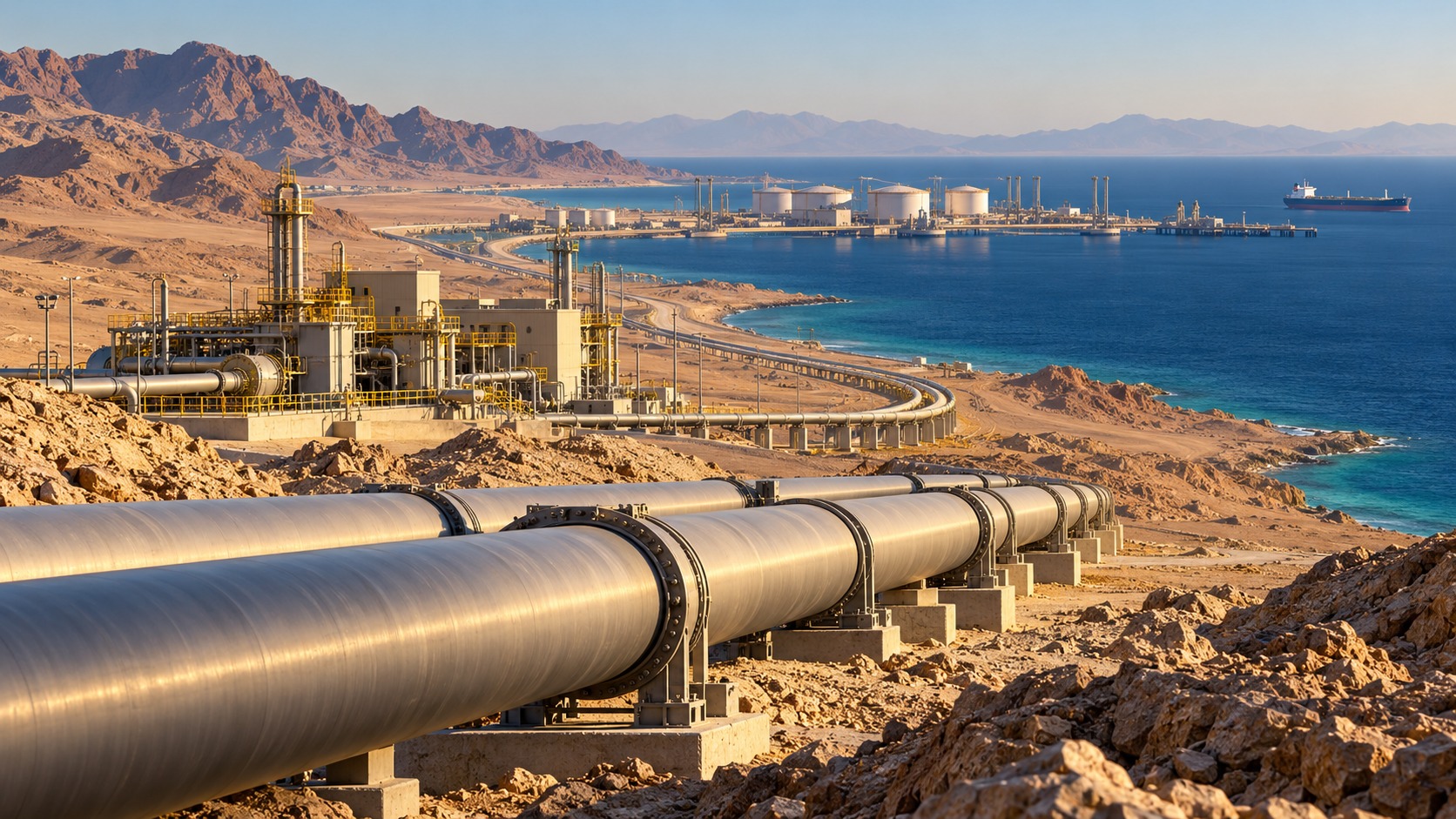
Yemen's Houthis say they have attacked Saudi Arabia's East-West crude oil pipeline and its pumping stations, targeting the route the kingdom uses to get oil to the Red Sea without passing through the Strait of Hormuz. The announcement comes as Crown Prince Mohammed bin Salman's government seeks foreign military help against repeated missile and drone attacks.
The group described the pipeline strike as one of seven operations announced on October 24. Damage to the pipeline and any resulting interruption to oil flows have not been independently confirmed.
The pipeline was one of several claimed targets
The full statement, published by the Houthi-run SABA news agency, said ballistic missiles and drones had been used against Saudi airports, oil facilities and an air base. In translation, it said:
"The fourth operation targeted crude oil pumping stations and the crude oil transport pipeline from east to west."
The other operations named King Khalid airport in Riyadh, Aramco facilities in Yanbu, the Rabigh refinery, King Fahd airport in Dammam, Najran airport and the Khamis Mushait air base. The Riyadh operation was described as taking place in two stages.
The statement presented the attacks as retaliation for Saudi strikes on Yemen and said operations would continue until those attacks and the blockade ended. DPA's account, carried by Egypt's Al-Shorouk newspaper, reported no immediate response from the Saudi-led coalition to the seven-operation announcement.
As Apex previously reported, the Houthis had already warned Aramco shareholders to sell and told workers to stay away from Saudi oil facilities. That October 18 warning threatened further attacks without identifying a specific operation.
Why this route matters so much
The East-West pipeline carries crude across Saudi Arabia to Yanbu on the Red Sea. It stretches roughly 1,200 kilometers, or 746 miles, according to the Associated Press, and was built in the 1980s amid fears that the Iran-Iraq war could disrupt Hormuz.
That gives Saudi Arabia another way to reach buyers when shipping through the Gulf is dangerous. Tankers loading at Yanbu can sail north toward Europe through the Suez Canal or south toward Asia through Bab el-Mandeb, where the Houthis have also threatened shipping.
The export system has faced attacks from more than one direction. In September, Saudi Arabia shut the pipeline after a drone attack that officials blamed on Iran-backed militias in Iraq. That earlier incident is separate from the Houthis' new claim.
Riyadh has been asking allies for protection
Saudi requests for help have brought concrete commitments. On October 20, Britain's Ministry of Defense announced that RAF Typhoon fighters would fly defensive missions against incoming missiles and drones. It also pledged an A400M transport aircraft and military advisers.
The ministry set a clear limit on the fighter mission:
"These aircraft will operate in a defensive role and will not conduct offensive strikes against the Houthis."
Britain also extended aerial refueling support for Saudi operations. Egypt's National Defense Council agreed on October 18 to provide all possible forms of support for Saudi security, following a visit by the crown prince the previous month. It did not specify what that assistance would include.
The Associated Press has reported Saudi requests to France, Britain, Pakistan and Egypt for air-defense assistance. The requests cover threats from the Houthis and other Iran-backed groups.
Oil prices had already climbed before Saturday's claim
Brent crude settled at $116.72 a barrel on October 23, up $3.55, or 3.14%, according to a Reuters report. That was its highest settlement since April 29, before the latest pipeline announcement.
The confrontation continued on October 24. Saudi civil defense said it was responding to debris from the interception of two Houthi ballistic missiles in the Mecca and Medina regions, according to AFP. Houthi spokesman Yahya Saree denied targeting the holy areas, saying the group's operations targeted oil facilities and military bases.