
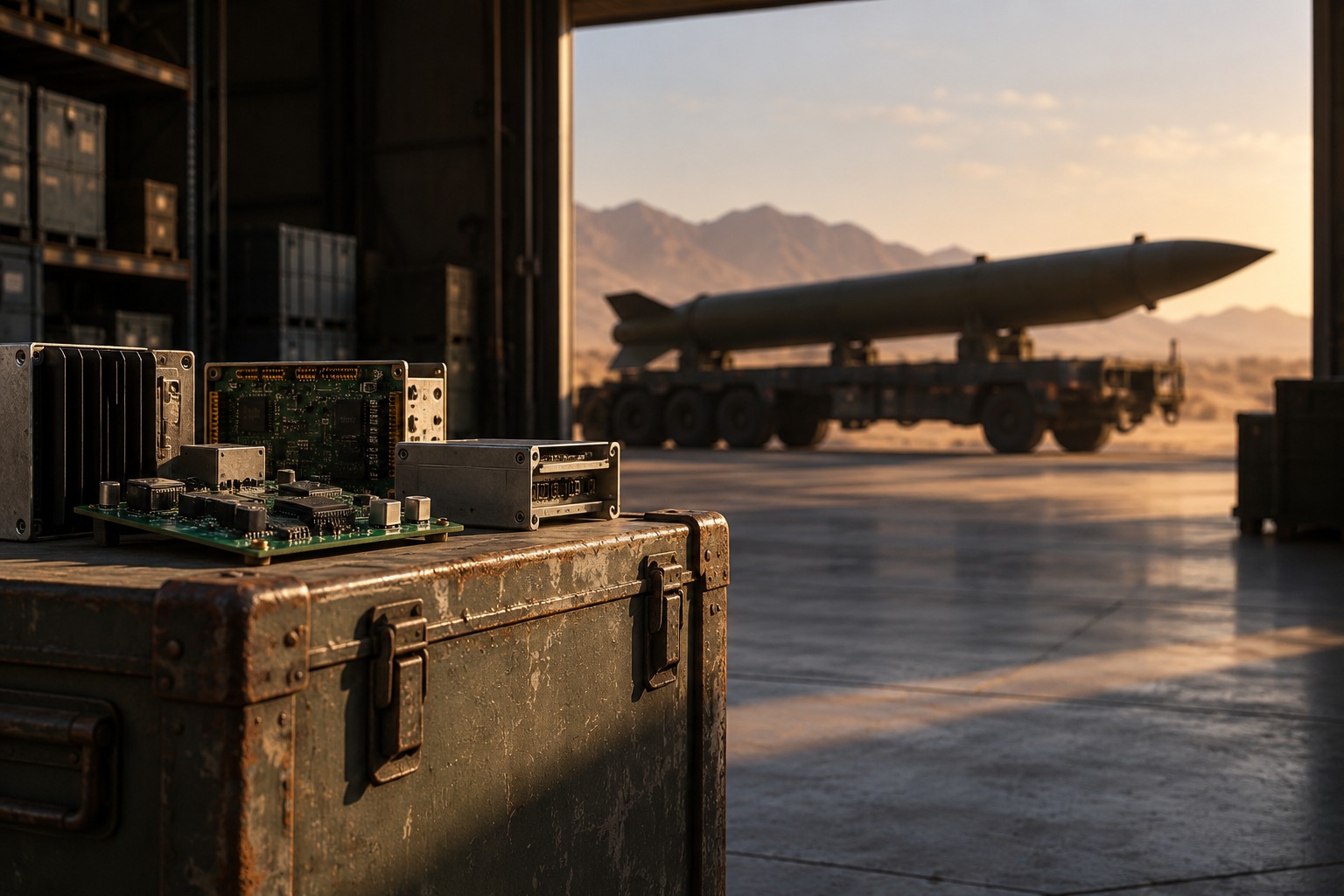
The Houthis are trying to build an Iranian-designed ballistic missile using parts imported from China, according to an October 14 report by The Wall Street Journal. The concern for Saudi Arabia is an armed group that could make more of its own missiles instead of relying on deliveries of finished weapons.
The project reportedly involves a version of Iran's Kheibar Shekan precision-guided missile. The Houthi version's performance, including whether it could reach all of Saudi Arabia, remains unverified. The immediate concern is the attempt to turn imported hardware into a weapon the group can produce in Yemen.
Iranian design, a wider supply chain
The WSJ exclusive cites weapons investigators at Conflict Armament Research and describes the Houthis developing medium-range weapons independently of Iran. Chinese-imported drone parts are reportedly being used in the project. That would connect two problems Saudi defenders already face: Iranian missile technology and commercial components that can move through international supply chains.
The supply chain has been taking shape for years. In its May 2026 report, the research group documented more than 800 missile and drone components recovered from Red Sea maritime seizures in 2024 and 2025.
Investigators found equipment associated with anti-ship, air-defence and ballistic missiles. Some systems had only recently been publicly disclosed by Iran when their components turned up in shipments bound for the Houthis. The discoveries gave investigators a closer look at an arsenal that had previously been much harder to examine.
A key finding was how the weapons travelled:
These missiles were not supplied in assembled form. Rather, they were packaged and labelled with codes indicating which components belonged to what missile system.
Putting those kits together still required industrial capability and technical expertise in Yemen. But the investigators also found that Iranian designations on the parts pointed to continued dependence on Iran. The Houthis' claims of domestic production went further than the physical evidence supported.
Local production could give the group more room to sustain its arsenal when complete weapons are harder to obtain. The bottleneck would shift toward obtaining the parts and keeping production working, rather than securing a delivery of finished missiles.
Ordinary electronics, military consequences
Much of the hardware in these supply chains has legitimate civilian uses. Navigation equipment and microprocessors can end up in commercial products as well as weapons. Investigators described many of the components as commercially available and widely found on the open market.
Company markings on the recovered equipment pointed to firms headquartered in at least 16 countries and territories, including China, the United States and Germany. Identifying a company name is only the beginning of tracing a shipment. A product can pass through distributors and intermediaries before reaching its eventual user, and investigators also encountered counterfeit components.
The investigation does not establish that Beijing directed those shipments. Who sold the parts, who handled them along the way and whether anyone knew their final destination matter to assigning responsibility.
The dependency also reaches beyond Yemen. The researchers pointed to Iran's own need for imported technology:
Moreover, as much as the Houthis depend on external supply of Iranian-origin weapons, Iran itself clearly depends on critical foreign technology to sustain its production of missiles and UAVs.
Saudi Arabia is already dealing with the threat
As previously reported by Apex, Saudi authorities said they intercepted a Houthi ballistic missile aimed at Dhahran on October 13, with debris falling in a residential area. Reports of smoke and a fire around Saudi Aramco's headquarters followed, while a direct hit on the headquarters remained unconfirmed in that coverage.
The latest missile-production report adds a different worry to those immediate attacks. Saudi Arabia has to defend against weapons already being fired while assessing whether the Houthis are expanding the ability to make more.
The fighting is immediate; the manufacturing effort is a longer-term problem. Iran's designs give the Houthis a starting point. Access to commercial hardware could help them turn that starting point into a more sustainable arsenal, even as Saudi forces try to destroy the weapons already in use.