


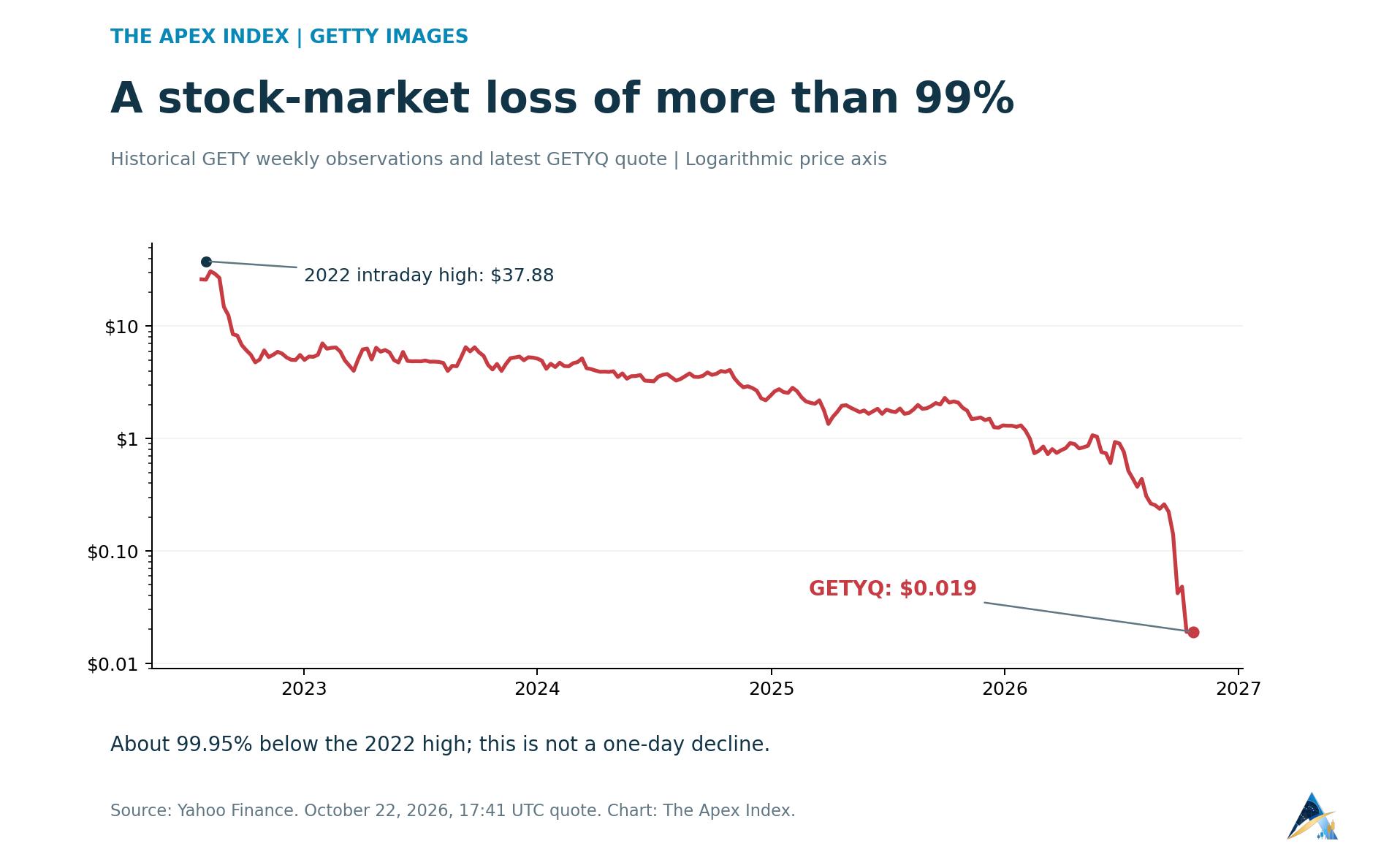
Getty Images has filed for bankruptcy protection, leaving its existing shareholders facing a wipeout while the company tries to keep its photography business running. The stock is trading for pennies after losing more than 99% from its 2022 high.
AI is part of the pressure on the business, particularly in cheaper stock imagery. An industry-wide wipeout of human photographers' jobs has not been verified. Getty says it expects to keep paying contributors and serving customers through a restructuring backed by the Getty family and Koch Equity Development.
The company's October 21 SEC filing confirms that Getty and six affiliated U.S. entities sought Chapter 11 protection in Delaware. Its foreign operating companies are outside the bankruptcy cases. Management wants to emerge under private ownership before the end of the year.
CEO Craig Peters said in the announcement:
“Getty Images continues to operate normally, serving customers and supporting contributors and partners around the world.”
What shareholders stand to lose
A Yahoo Finance quote put GETYQ at $0.019 at 17:41 UTC on October 22. Against the $37.88 intraday high recorded in 2022, that represents a decline of about 99.95%. The collapse happened over years; it was not a 99% fall in Thursday's session.
The proposed reorganization is more consequential for current owners than another price swing. Existing holding-company shares would be canceled without a distribution. The Getty family and Koch investors would own the reorganized company, subject to a management incentive plan.
Getty's announcement describes up to $533 million of equity investment and up to $143 million of financing from a Koch affiliate to support the process. Those are restructuring commitments, with the final outcome dependent on court approval and the plan taking effect.
AI competition meets a heavy debt load
The company's court plan puts funded debt at approximately $1.46 billion. Annual interest expense of roughly $154 million had consumed a substantial portion of free cash flow, according to the disclosure statement.
Cash was also going toward legal liabilities. Getty drew $120 million from its revolving credit facility in April, partly to pay a warrant-litigation judgment and related interest, then drew the remaining $30 million in July. Within about three months, it had used the entire credit line.
That financial strain arrived as the image market was changing. Getty says generative AI has pressured budget-conscious microstock, which it describes as a small part of its overall business. Its pitch for the rest of the library rests on authenticity, clear rights and photographs of real events.
The company is selling AI services itself through Getty Images and iStock. Its bankruptcy therefore captures a business trying to earn money from the same technology that competes with some of its existing products. The filing presents AI as both a challenge and an opportunity.
A proposed merger with Shutterstock offered another route forward. It collapsed after British competition regulators required the sale of Shutterstock's editorial business as a condition of approval, a condition Getty's board declined.
What happens to photographers now?
Getty says its network includes more than 600,000 content creators and over 360 content partners. The first-day court motions seek authority to pay wages, benefits, suppliers and contributors in the ordinary course. The plan would leave general unsecured claims unimpaired.
In a Thursday report, PetaPixel highlighted guidance from Thomas Maddrey, CEO of the American Society of Media Photographers. He described the practical objective as:
“preserve the licensing business while changing its financial obligations and getting out of some of the debt it is carrying. A successful restructuring could leave more cash available for operating the business.”
Maddrey advised Getty and iStock contributors to gather their records. Contracts, licensing statements and payment histories matter as the court works through the treatment of obligations.
The disclosure statement requests a combined approval hearing for December 14, subject to the court's availability and approval. Until a plan is confirmed and completed, the promised ownership change and creditor treatment remain proposed terms. Getty's next task is securing those approvals while keeping the customers and photographers who make its archive valuable.