
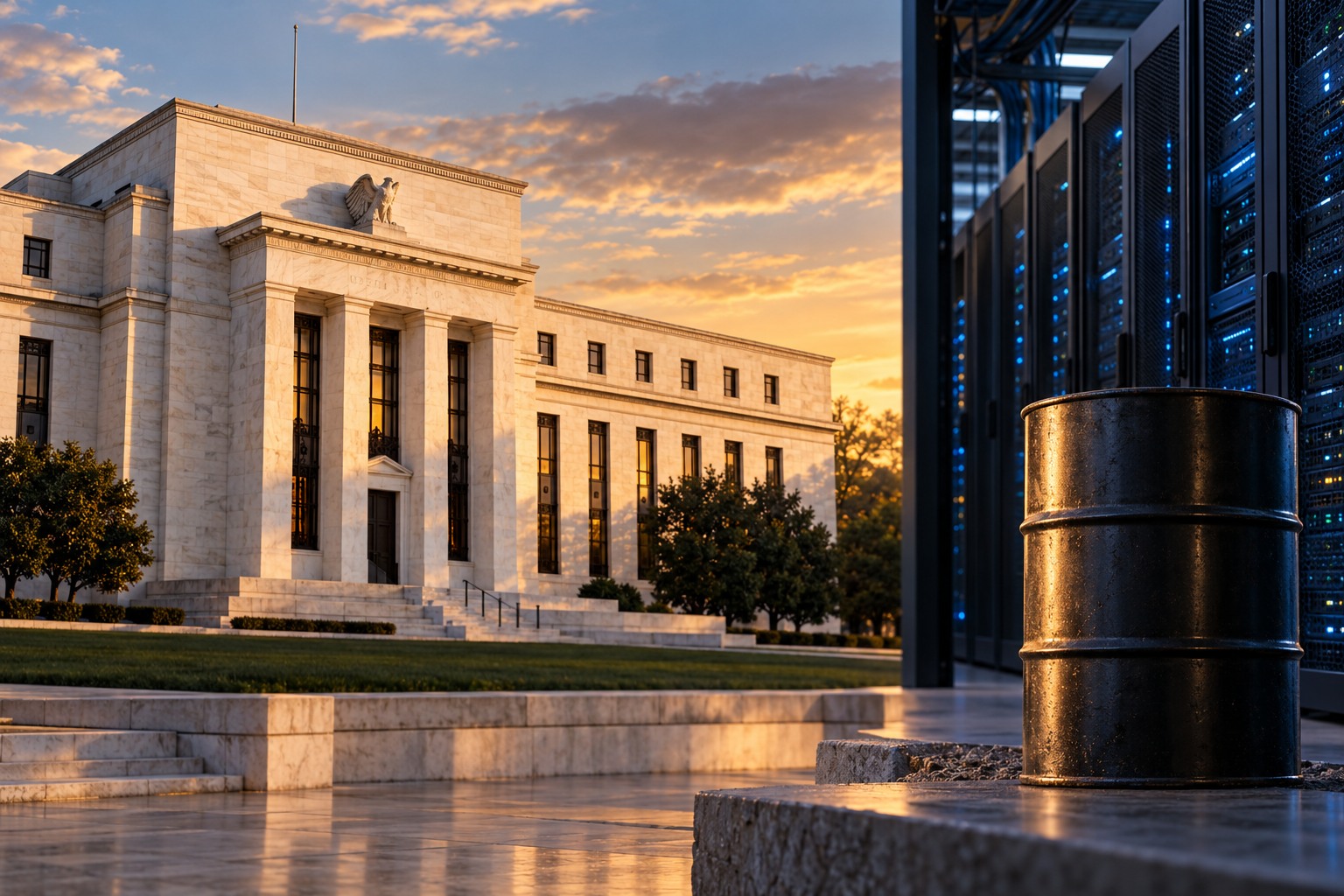
New York Federal Reserve President John Williams says artificial intelligence investment and the Middle East energy shock are pushing up prices, but he currently sees no need for another interest-rate increase in 2027. His expectation is that those pressures will ease enough for inflation to move close to the Fed's 2% target next year.
That does not mean the tightening is finished. Williams still considers one more increase appropriate in 2026. Boston Fed President Susan Collins also backed further tightening before year-end in comments on October 13, warning that fuel costs and the AI build-out could keep inflation elevated. Neither outlook is a commitment from the full rate-setting committee.
Williams sees pressures easing next year
In his October 13 interview with Bloomberg News, Williams said disinflationary forces remain at work. He expects the effects of tariffs to fade and believes energy prices will stop adding to inflation next year. Those are forecasts, with incoming data capable of changing his view.
He acknowledged price pressure from technology investment, but rejected the idea that the entire economy is running too hot:
My view is this is not an economy that is overheating overall. This is not an economy where it's adding inflationary pressures beyond these particular shocks that we're experiencing.
That distinction drives his rate outlook. Williams sees a case for one further increase this year without assuming additional hikes will be necessary throughout 2027. He also cautioned that it is still October and the economy faces many different influences.
As previously reported by Apex, the Fed raised its benchmark range by a quarter percentage point to 3.75%–4% on September 16. The next policy meeting is October 27–28, followed by December 8–9. Williams' comments leave the timing of another increase open.
Collins wants insurance against persistent inflation
Collins used her October 13 speech at the Boston Fed's regional and community bankers conference to explain why she supported September's hike and expects more tightening:
I also currently expect that it will be appropriate to raise rates a bit further before the end of the year to ensure a timely and durable return of inflation to the Committee’s 2 percent target.
She made that judgment conditional on the full range of incoming data and the balance of risks.
August's annual inflation rate was 3.4% on the personal consumption expenditures measure, with core inflation excluding food and energy at 3%. Collins noted that the three-month annualized core rate was only about 2%. That shorter-period reading suggests recent improvement; it does not mean annual core inflation has already reached the target.
Her concern is the renewed jump in jet fuel, diesel and heating oil prices. She expects those costs to affect transportation, lodging and related services, alongside continued pressure on materials for data centers.
Collins' central outlook remains healthy growth, a labor market near full employment and inflation gradually returning to 2% as efficiency improves. But she sees stronger AI-driven demand and further tariff or energy shocks as plausible threats to that outcome.
Goolsbee worries AI demand is spreading
Chicago Fed President Austan Goolsbee sounded more concerned about overheating in an interview published by Semafor and updated October 13:
Prices are going up in spaces that are not just components in data centers and the directly adjacent industries.
He said he was increasingly nervous about demand-driven overheating, rather than price increases confined to AI construction. His warning explains the unresolved policy question: temporary supply shocks may fade, while broad demand pressure could require a stronger response. Williams' 2027 outlook depends on those pressures easing, not on inflation becoming harmless.