

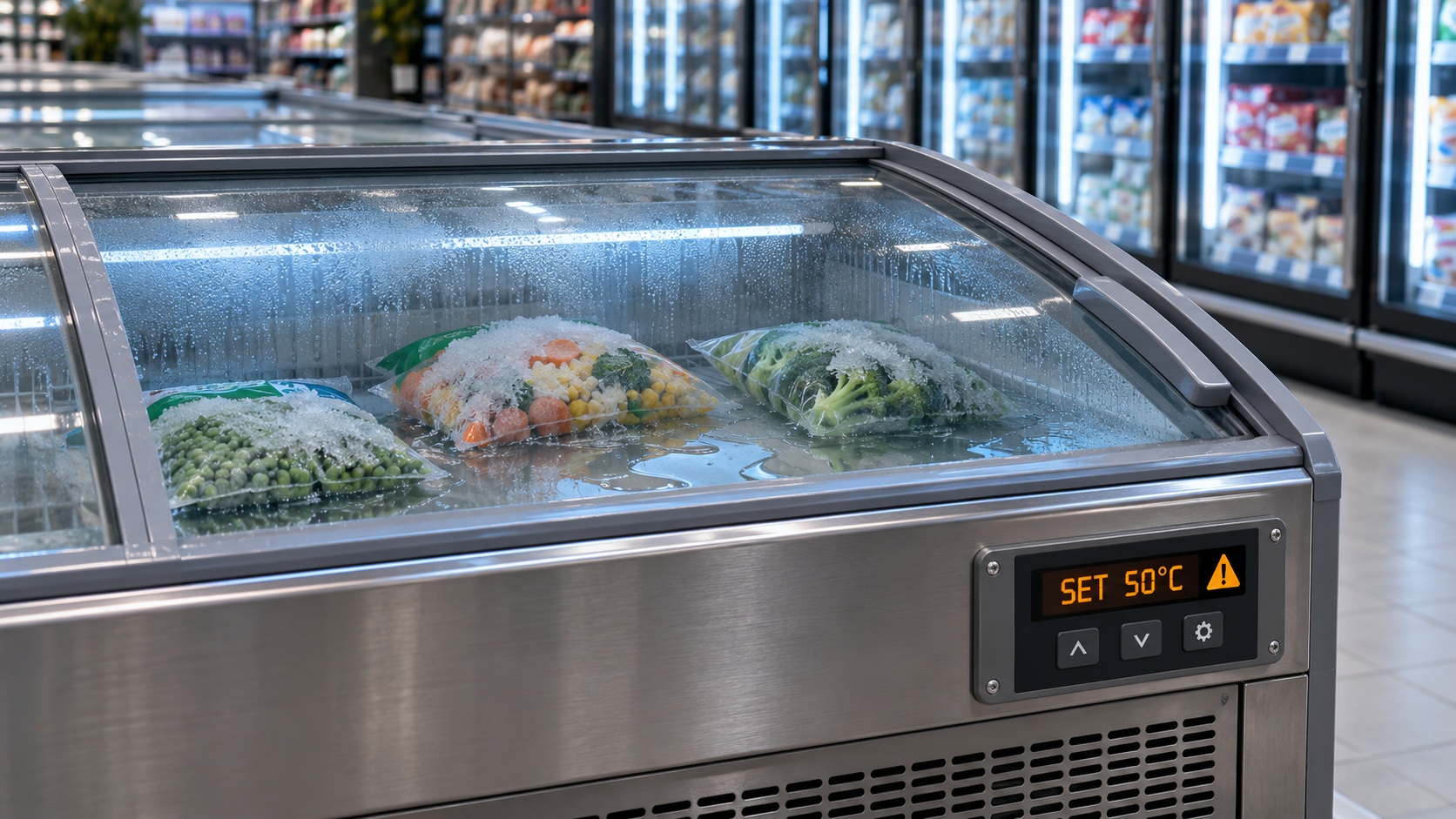
A wave of suspected hacks against supermarket refrigeration has spread across Europe, forcing retailers to throw away food and investigate systems that should have been keeping it cold. By November 3, reports covered at least ten countries, up from the earlier nine-country tally, with Germany among the locations identified in the latest reporting.
The 122°F figure needs a distinction: some attackers reportedly changed controllers to a setting of 50°C, equivalent to 122°F. That doesn't establish that every affected freezer, or the food inside it, reached that temperature. One Estonian retailer says a quick response prevented any stock damage.
Where are stores being hit?
The BBC's November 3 report lists refrigeration problems in Belgium, Estonia, Finland, Ireland, Italy, Luxembourg, the Netherlands, Portugal, Germany and Sweden. The incidents were reported after overnight disruption on November 2, although investigations into individual failures remain at different stages.
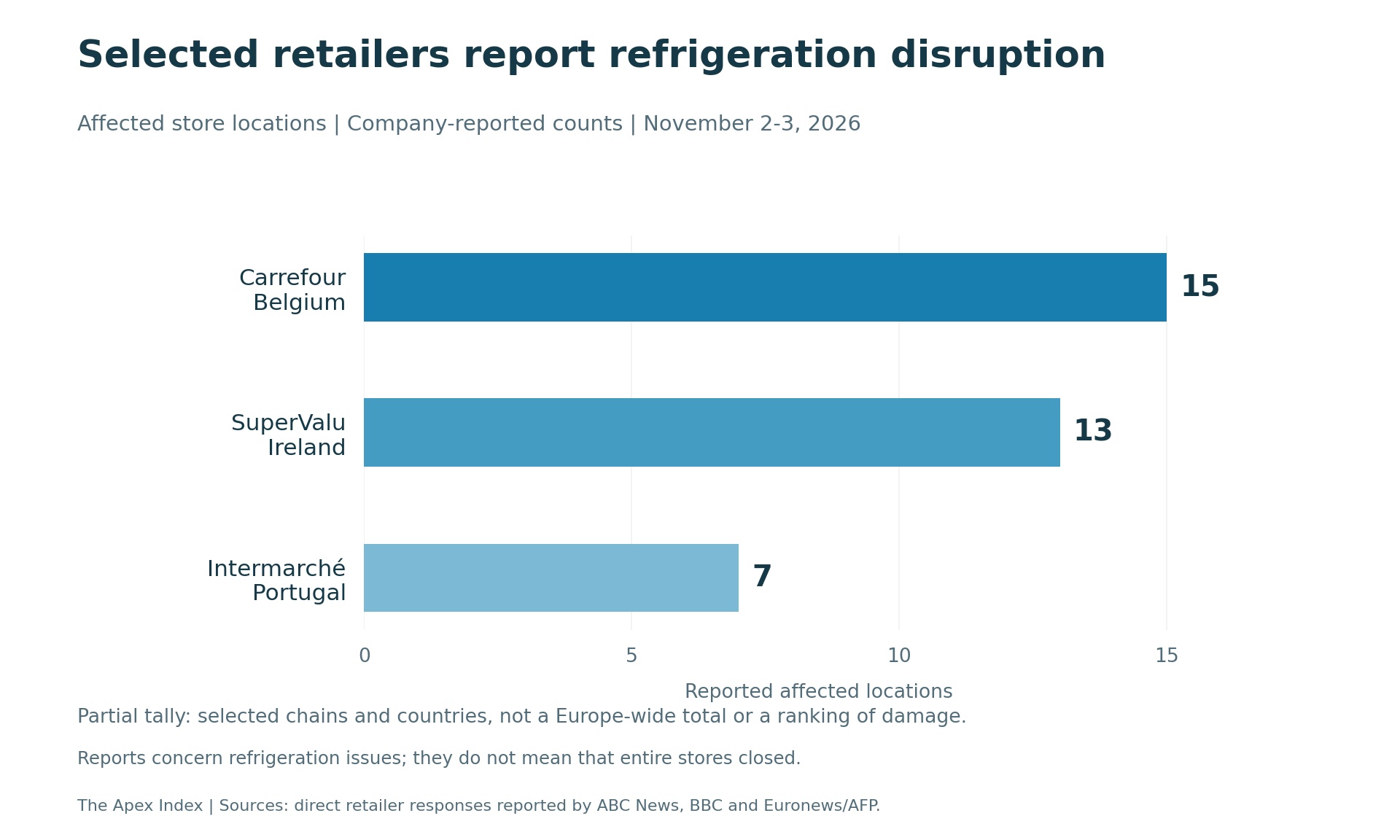
The damage has varied between chains and locations. Carrefour told ABC News that 15 of its 700 Belgian stores were affected, with stores remaining open because the problems involved only some refrigeration units, mainly freezers. Ireland's Musgrave Group reported disruption at 13 SuperValu stores. In Portugal, seven Intermarché stores were linked to an attack apparently targeting an external refrigeration service provider.
Italy's government said the impact there was currently limited and pointed to outdated security systems, internet-exposed interfaces and inadequate authentication at affected businesses. Finland's Kesko group was still investigating irregular temperatures at a few smaller stores and had not ruled out interference through the network.
How do hackers get into a freezer?
The target is the computer controlling the cooling equipment. Store operators use connected systems to monitor refrigeration and adjust it remotely. Attackers who gain access can interfere with those controls without being physically present in the aisle.
As Apex previously reported, France suffered a major refrigeration attack in October. The manufacturer's response identified unsupported controllers and newer equipment running outdated firmware among affected installations. Its proposed fixes included available software updates, stronger network protection and removing direct internet exposure where appropriate.
The distinction between an old device and an unpatched supported device matters. Some equipment can receive a software fix; products past the end of their support life no longer receive security updates. Restoring cooling addresses the immediate food problem, while securing or replacing the controller addresses the route used to interfere with it.
A 122°F setting doesn't tell the whole story
Estonian public broadcaster ERR obtained a detailed account from Selver and its refrigeration partner on November 2. Attackers accessed a control computer at one Selver store and changed a freezer setting to 50°C.
Jann Mutso, head of refrigeration technology supplier Kitman Coldtech, said the response began within ten minutes. The freezer temperature rose only about two to three degrees, and no products were damaged. Selver said the outlet was its last store where a replacement system had not yet been brought into use.
Mutso described the wider exposure:
"All the store chains have started fighting this and have updated their controllers, but there are also places where the controllers are old and not updated, and those are being targeted now."
That case explains why reports of a changed setting and reports of spoiled stock need to be kept separate. Other retailers have had to discard chilled or frozen goods, while Selver says it avoided that outcome.
The warning now extends beyond supermarkets
In Britain, National Cyber Security Centre chief Richard Horne told BBC Radio 4 that vulnerable technology had been exploited in a couple of instances. He said the concern extended through the food supply chain and that his agency had been alerting organizations with exposed systems overnight.
Authorities have not publicly identified who carried out the attacks. European Commission spokesman Thomas Regnier avoided attributing blame while warning:
"These incidents of course show once again how cyber-attacks can disrupt essential services and affect citizens' daily lives."
Paolo Falcioni, director general of the home-appliance industry association APPLiA, told Euronews that cyber resilience has a practical test: whether staff can still check temperatures and protect the cold chain when remote access fails. He said manufacturers and retailers both have a role, with security updates and a process for handling vulnerabilities needed throughout a connected product's life.