
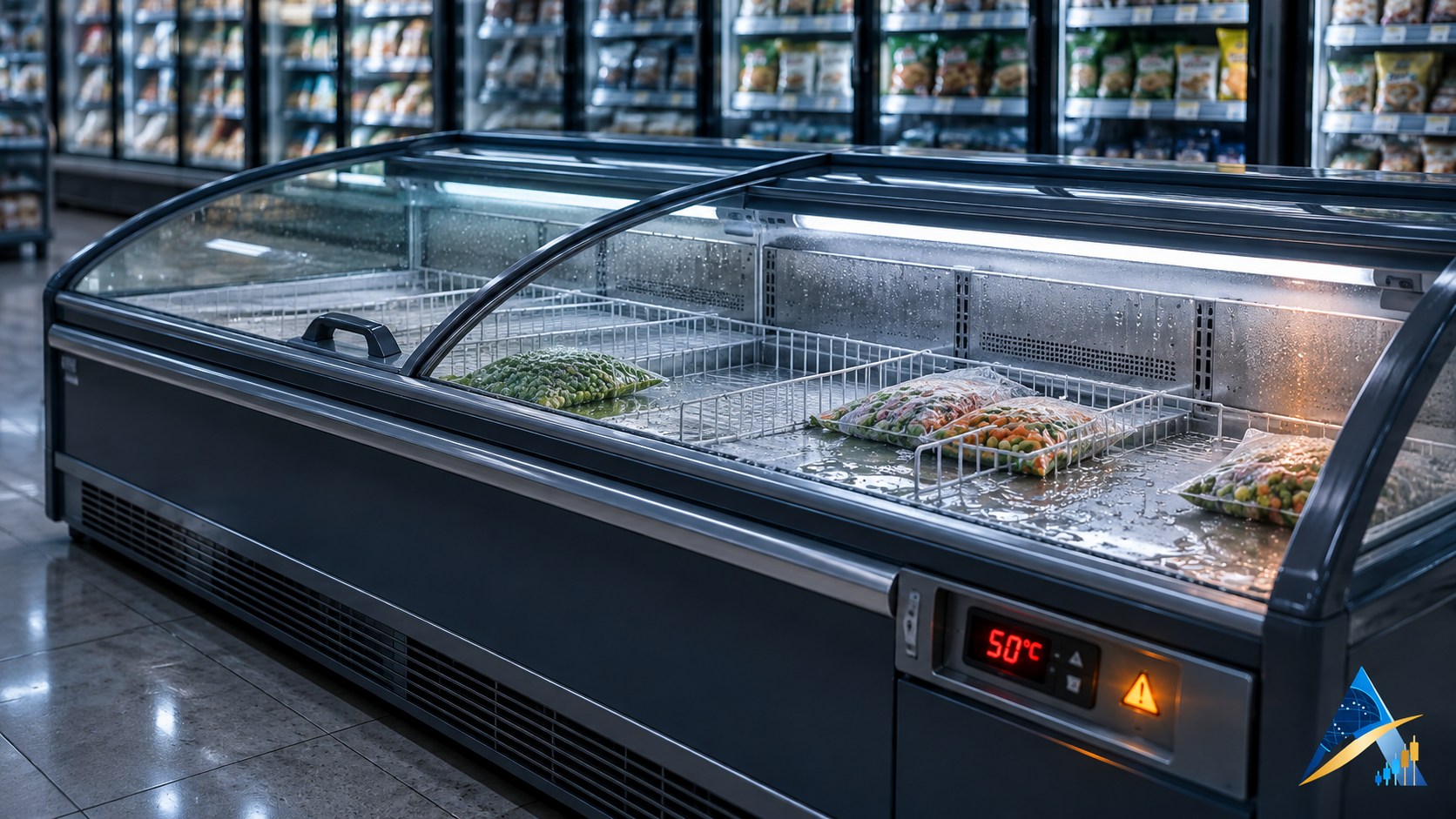
Hackers turned supermarket refrigeration systems into a food-safety emergency across France, remotely pushing temperatures as high as 50°C, or 122°F. Retailers discarded fresh and frozen products after the overnight attack on October 11 and 12, while authorities began investigating damage reported at hundreds of stores.
The attack reached beyond stolen customer records or an unavailable checkout. It interfered with equipment keeping food cold. Fires were also reported, but the prosecutors’ investigation is still examining the damage; the available statements do not establish how every reported fire started or provide a final national loss total.
Food discarded after hours of heat
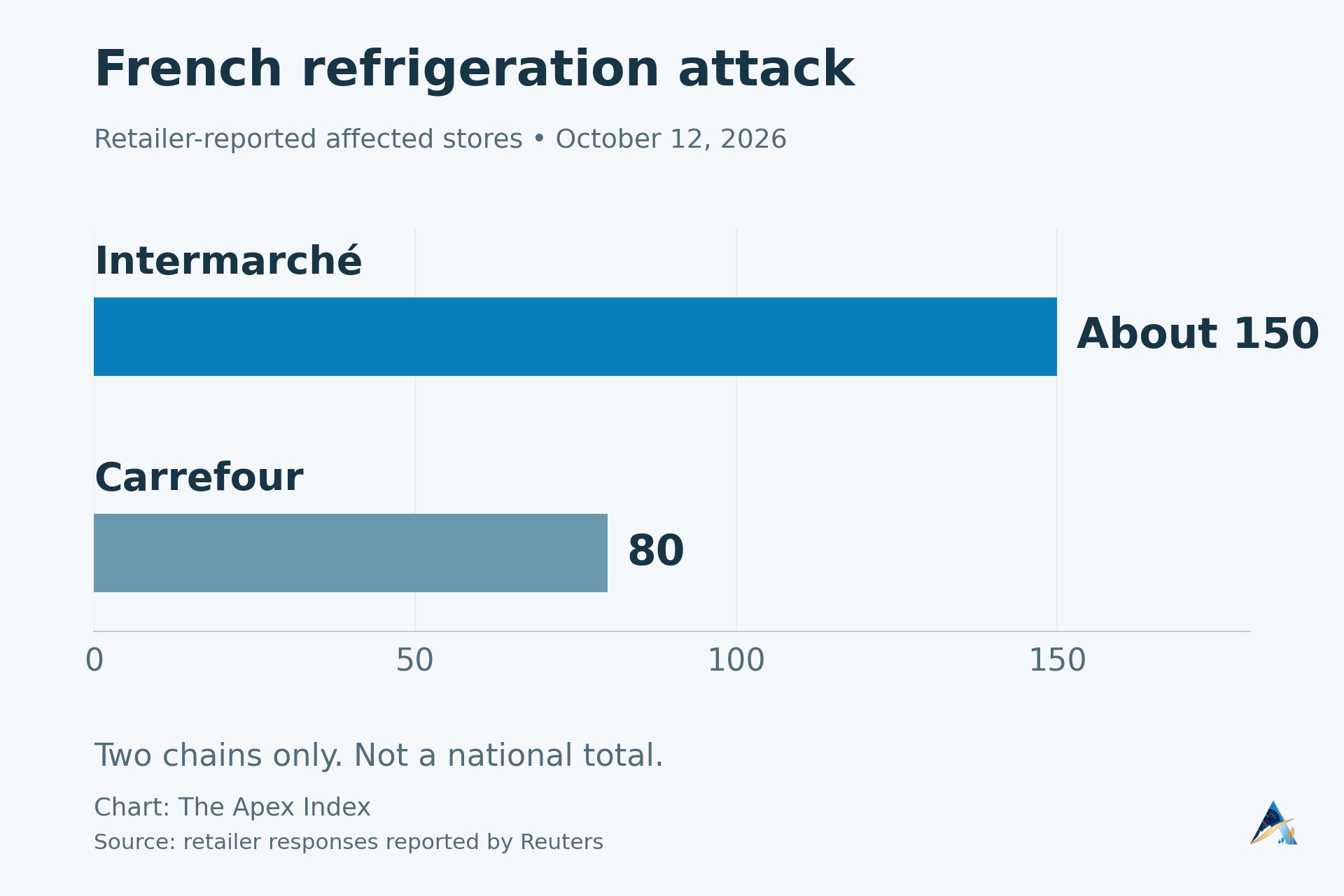
Retailer responses reported by Reuters put the scale into focus. Les Mousquetaires said around 150 Intermarché stores were affected, with refrigeration heated to 50°C for six hours. A spokesperson said the affected food was thrown away to avoid health risks.
Carrefour reported 80 affected supermarkets, while saying the vast majority of its stores were untouched. These are company-reported counts, not a complete nationwide tally. They should not be treated as proof that every shop in either chain lost refrigeration or experienced identical temperatures.
Coopérative U chief executive Dominique Schelcher confirmed the attack in an October 12 statement. His account described refrigeration installations at several stores and work with specialist contractors to restore service. He said, translated from French:
Our teams are fully mobilized, working with refrigeration specialists, to restore the situation as quickly as possible. An investigation must shed full light on this attack.
He called targeting equipment essential to preserving fresh food and supplying French consumers unprecedented and unacceptable.
Old controllers and outdated software
Danfoss provided a more specific explanation in a response to Cooling Post. The manufacturer said most affected units were obsolete products or current products running outdated firmware. The identified systems included the AK-SM800, declared end-of-life in 2021, and AK-SC355 controllers phased out in 2016.
Those legacy products no longer receive software or security updates. Affected current-generation AK-SM800A units were running outdated firmware, the company said. Its response points to two different problems: unsupported equipment needing replacement and supported equipment that had not received available updates.
The manufacturer described its response:
We are working with affected customers to implement appropriate mitigation measures, including firmware updates where available, stronger network protections and removing direct internet exposure where applicable.
That statement does not identify the attackers or demonstrate that every installation has been secured. Restoration of cooling and correction of the underlying security weaknesses are separate tasks. Neither the retailer’s statement nor the manufacturer’s response establishes who carried out the attack.
The investigation extends beyond one chain
The Paris prosecutor’s office described a large-scale attack affecting connected refrigeration at several major retailers. Prime Minister Sébastien Lecornu instructed the national cybersecurity agency, ANSSI, to investigate. His office said France was coordinating with European counterparts because other countries might also be affected. That possibility is not confirmation of the same attack abroad.
European Agriculture Commissioner Christophe Hansen condemned the incident on October 12 and warned that food security required more attention as food becomes a target. His comments underline the immediate issue: software interference can damage physical goods before a retailer finishes investigating the intrusion.
For store operators, restoring cooling does not automatically restore confidence in the system controlling it. The repair work also involves deciding which devices can still be supported, which need replacing and which should no longer be reachable directly over the internet. The manufacturer’s mitigation measures address those distinctions rather than offering a single fix for every affected installation. Food disposal, cooling repairs and security work are distinct parts of getting an affected store operating safely.