

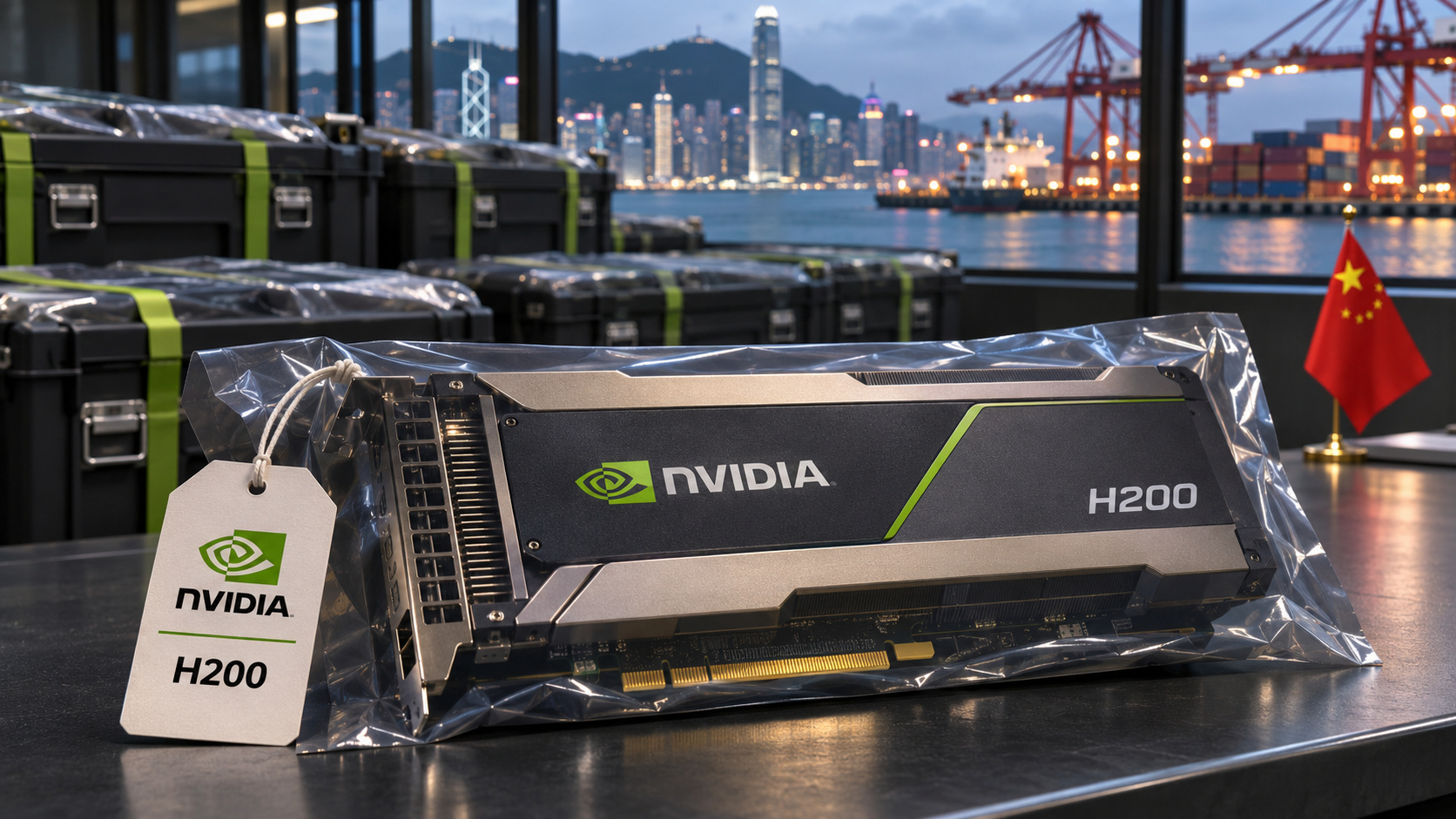
China is holding up large-scale imports of Nvidia's H200 processors even as an AI chip shortage sends mainland server prices soaring. About 600,000 chips are sitting in Hong Kong awaiting shipment, Reuters reported on November 5, citing two people familiar with the situation.
The report describes Beijing withholding import approval, rather than a publicly announced personal order from President Xi Jinping. Smaller shipments have entered China, so the restriction has not stopped every H200 from reaching buyers.
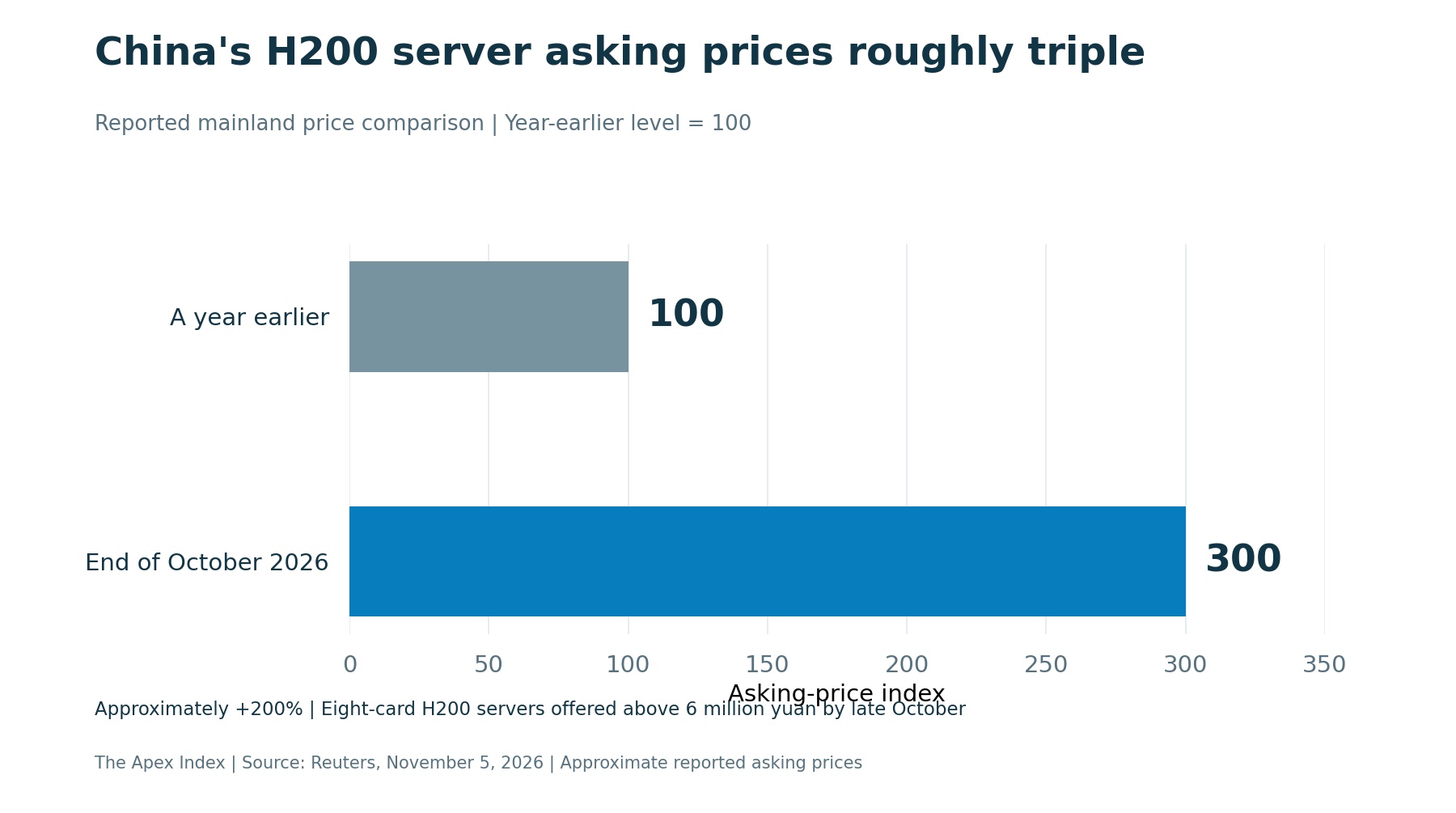
An eight-card H200 server was being offered for more than 6 million yuan, about $900,000, by late October, according to one person cited in the report. That was roughly three times its price a year earlier, equivalent to an increase of about 200%. Those are reported asking prices for servers, rather than Nvidia's official price for individual chips.
The chips are nearby, but permission is missing
The stockpile puts China's AI ambitions up against its push to reduce dependence on American technology. Companies want access to Nvidia's computing power, while Beijing is limiting how much of it can enter the mainland.
Several major Chinese internet companies have each received around 10,000 H200 chips in recent months, according to a person familiar with the shipments. Other sources described smaller deliveries through intermediaries and indirect routes.
Nvidia, Alibaba, ByteDance, DeepSeek and Tencent did not respond to the news agency's requests for comment. Neither did China's industry ministry or its National Development and Reform Commission.
Why companies still want the H200
H200 belongs to Nvidia's Hopper generation, predating Blackwell. Its appeal comes partly from memory, an important constraint when AI systems need to move large amounts of data quickly.
Nvidia's published specifications list 141 gigabytes of HBM3e memory and memory bandwidth of 4.8 terabytes per second. More memory lets a processor keep larger workloads close at hand; faster bandwidth helps feed the calculations without waiting as long for data.
Power requirements are substantial, too. Nvidia lists up to 700 watts for its SXM version and up to 600 watts for H200 NVL, making electricity and cooling part of the budget alongside the hardware itself.
The company offers H200 systems for both training models and inference, the process of running a trained model to produce answers. Its product lineup includes multi-GPU servers, making the eight-card systems quoted in the pricing report different from a single processor purchase.
That distinction matters to the cost of building an AI operation. A server purchase combines multiple accelerators with other hardware, while a company's eventual computing capacity also depends on how those machines are connected, powered and used. A steep increase in server asking prices raises the entry cost before a buyer starts paying to operate the equipment.
U.S. permission is only one part of the process
Washington already created a route for qualifying H200 exports. A Bureau of Industry and Security rule, effective January 15, moved certain chip applications for China and Macau from a presumption of denial to case-by-case review.
The change carried conditions. Exporters must certify sufficient U.S. supply and that production for China will not divert global foundry capacity from comparable or more advanced products intended for American customers. The rule also requires security procedures and independent testing in the United States to check performance specifications.
Military and military-intelligence uses remain excluded. Applicants must also address customer checks and remote access, including information about intended infrastructure-service users. In other words, the opening is a controlled licensing process, rather than unrestricted access to Nvidia's full range.
China's import approval is a separate hurdle. An American export license cannot give a Chinese buyer permission to bring equipment across the mainland border. The Hong Kong stockpile shows why that second decision matters commercially: chips can be available within shipping distance while access for their intended customers remains constrained.