

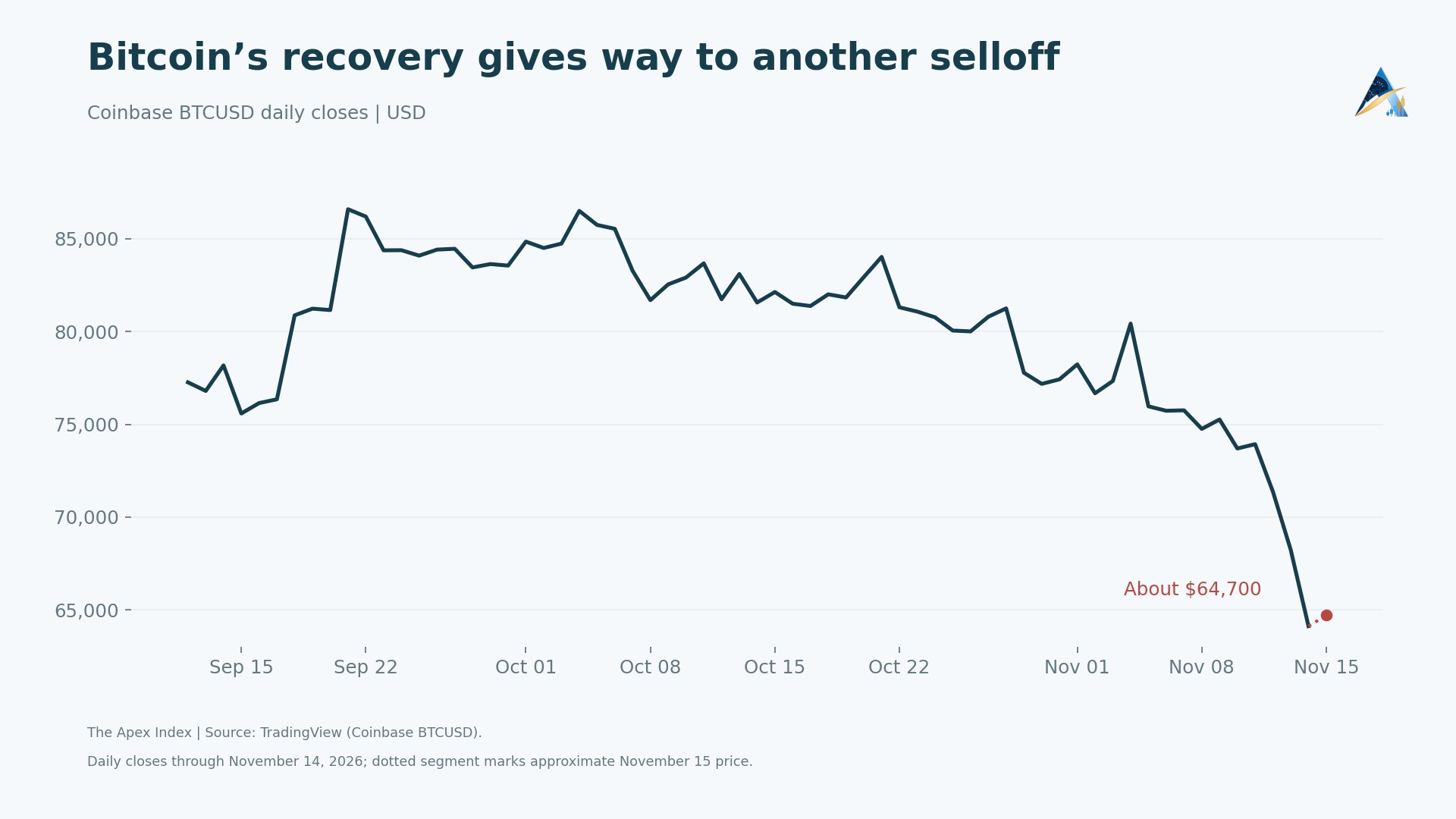
Bitcoin is heading for a sixth straight weekly loss, and the latest decline is much steeper than the five that came before it. A market that closed near $86,500 in early October is now trading around $64,700, leaving the recovery case with a lot more ground to make up.
As of the time this article was written, Bitcoin had bounced from a Sunday low near $61,946 but remained roughly 13.5% below the previous weekly close. The week was still open, so a sixth loss wasn't final. Buyers nevertheless faced a much larger deficit than in the preceding five weeks.
Coinbase prices supplied through TradingView show five completed weekly declines from October 5 through November 8. Those losses ranged from about 2% to 4.4%. The current slide has taken Bitcoin roughly 25.2% below its October 4 close.
Small weekly losses have turned into a sharper drop
The earlier pattern was a steady retreat. Bitcoin closed the week ending October 11 around $83,678, then fell to about $82,007, $80,053 and $78,231 in successive weeks. By November 8, the close was roughly $74,754.
Sunday's rebound has recovered some of the latest selling, but the weekly chart still shows how much the pace has changed. Bitcoin would need to recover above that previous $74,754 close before the weekly candle ends to break the run of losses.
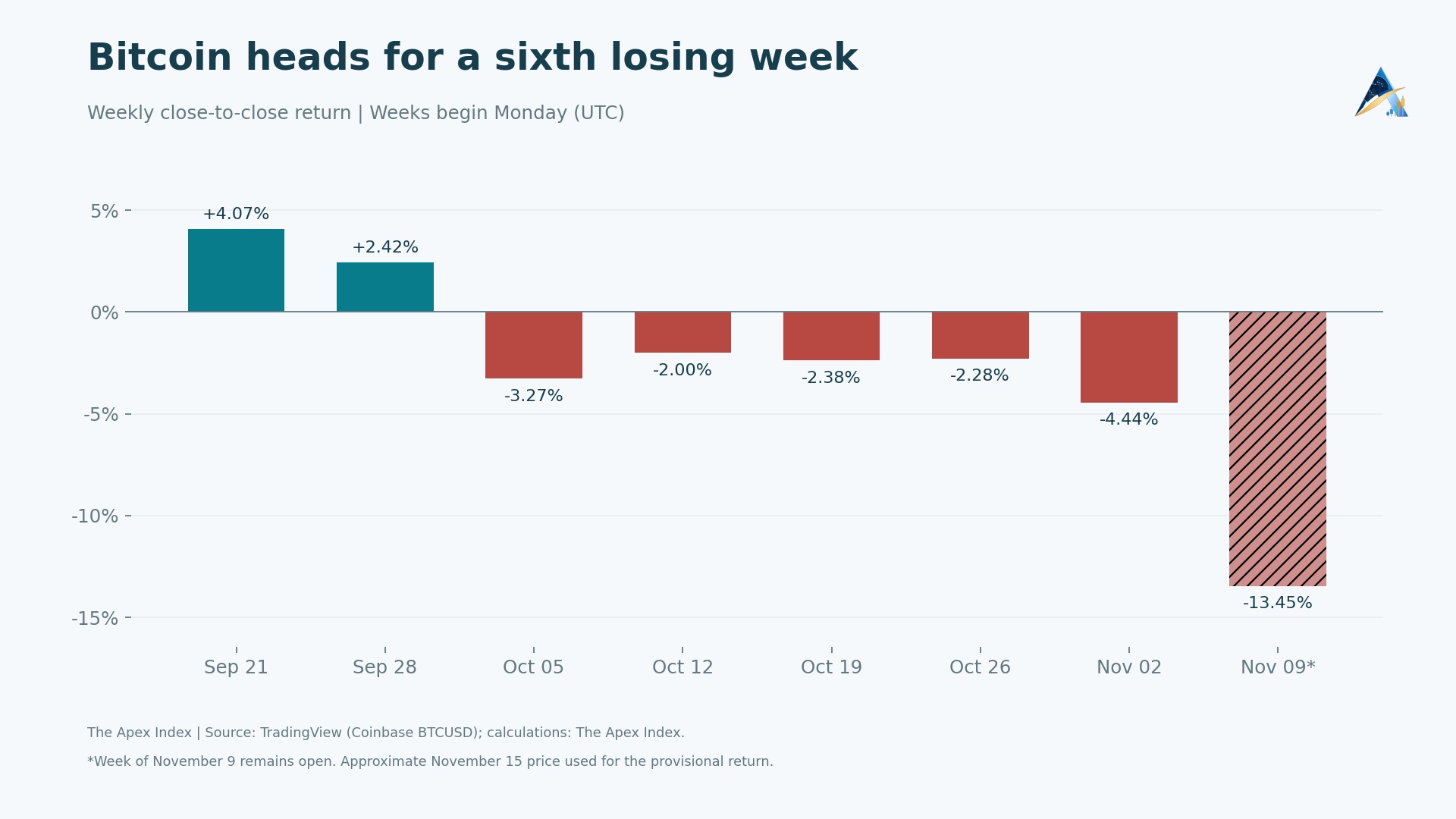
That gives the bull-market debate a concrete starting point. A rebound from the day's low can help short-term traders, while still leaving the longer run of lower weekly closes intact. So far, the move back toward $65,000 hasn't repaired that pattern.
ETF investors keep taking money out
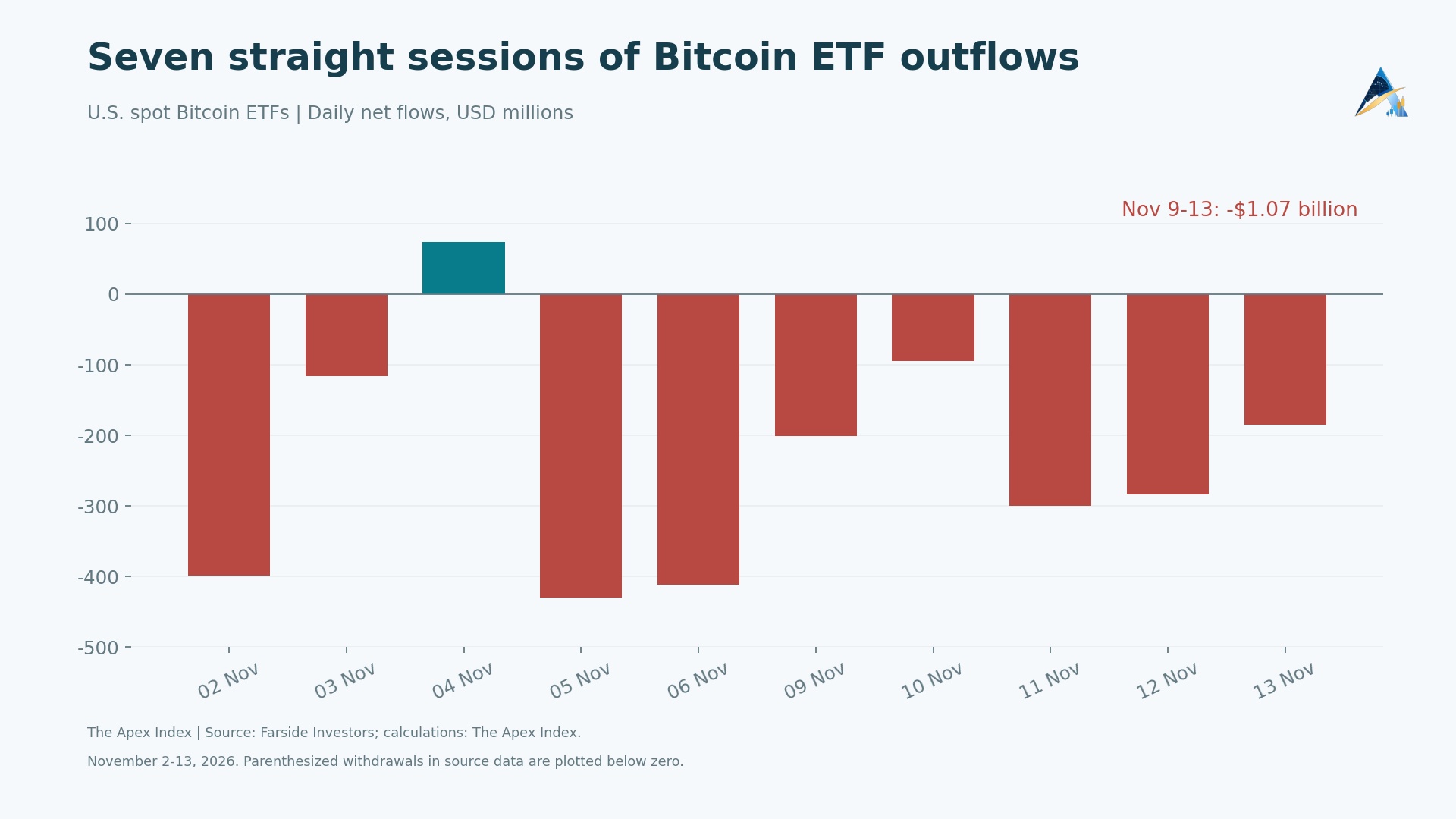
The fund flows offer another reason the recovery is struggling. U.S. spot Bitcoin ETFs recorded net withdrawals in each of the seven trading sessions through November 13, according to Farside.
The latest session brought $185.4 million in net outflows. Across November 9-13, the funds lost about $1.07 billion. Their net withdrawals for November reached roughly $2.35 billion, including the previous week's selling and a single positive session on November 4.
These are net fund flows, rather than changes in the value of ETF holdings caused by Bitcoin's price. They show money leaving a major investment route into the asset at the same time its price is falling.
The recovery argument still has buyers behind it
There have been signs of buying beneath the selloff. In its November 11 report, Glassnode identified accumulation by wallets holding 100-1,000 BTC and those holding 1,000-10,000 BTC. Both groups had spent much of October reducing their balances.
The wallet data ran through November 9, before the sharpest part of the latest decline. It helps explain why a recovery remained plausible to analysts earlier in the week, rather than showing that those buyers absorbed all the selling that followed.
The report was careful about how broad that demand really was:
This is early dip buying from a narrow group. Should the smaller cohorts join, it would show buyers returning across the market.
Other wallet groups were still reducing their holdings, including the largest holders above 10,000 BTC and those holding less than one bitcoin. The two accumulating groups had also turned to buying in late September, only for that move to fade.
A bull market needs demand to return
The same analysis described stablecoin redemptions, ETF selling and weak U.S. spot demand as obstacles to a sustained recovery:
Bitcoin is correcting with little new capital behind it: recent buyers sit at a loss, it trails stocks, and stablecoins, the ETFs and US buyers all show money leaving.
At that stage, the report placed the average purchase price of short-term holders near $75,600. Bitcoin has since fallen much further below that level. Investors who bought more recently therefore face a recovery that must work through a substantial gap before reaching that earlier cost benchmark.
The analysts identified a sustained return of the Coinbase premium as one sign that U.S. demand was improving. That premium measures whether buyers on Coinbase are paying more than the wider market. Broader wallet accumulation and renewed ETF inflows would provide other evidence that buying extends beyond a narrow group.
The next U.S. ETF trading session is Monday, November 16. It offers the first opportunity to see whether the seven-session withdrawal streak ends. Before then, Sunday's weekly close will determine whether Bitcoin records its sixth consecutive loss or produces the much larger rebound needed to avoid it.