

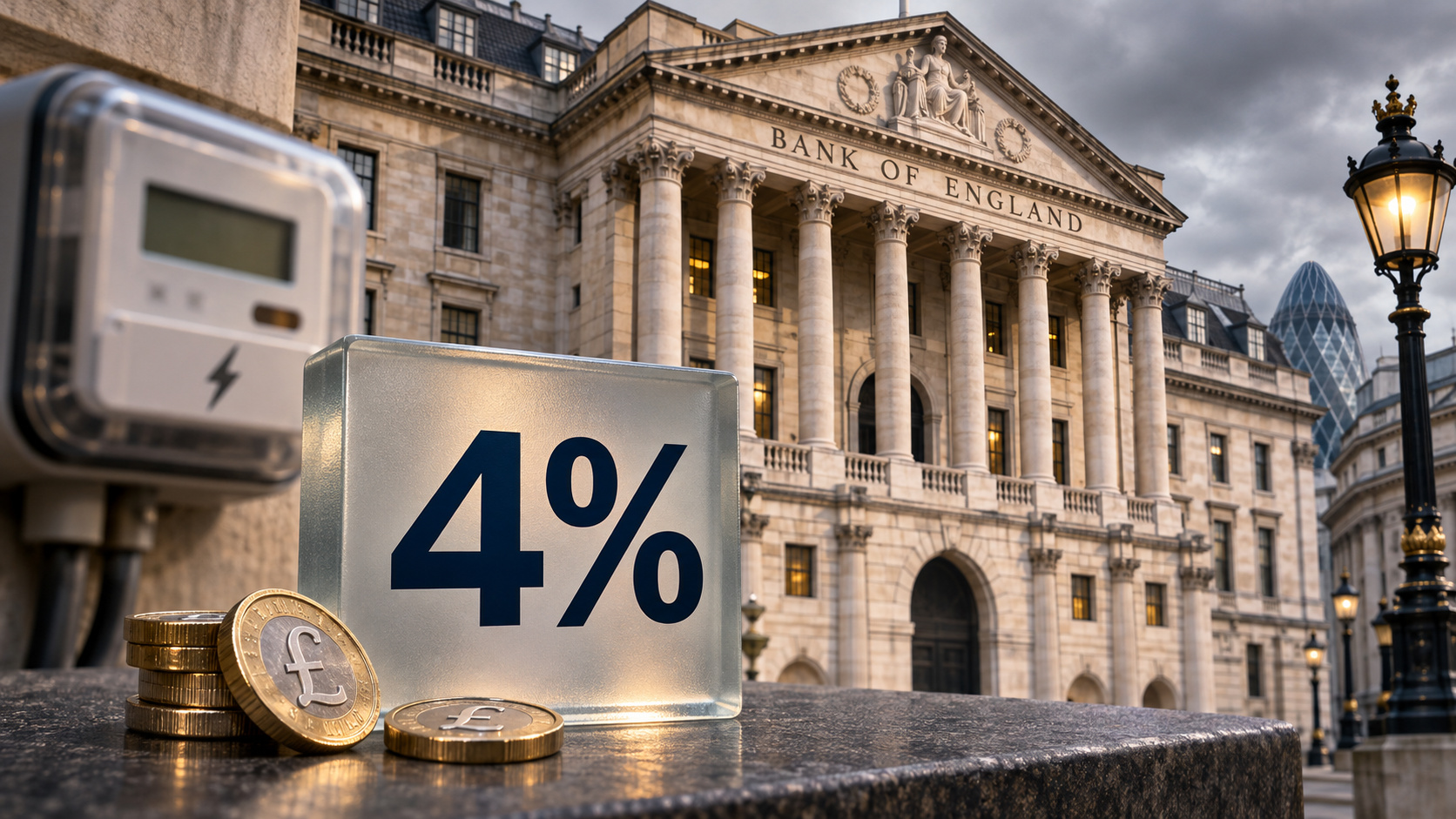
The Bank of England raised interest rates to 4% on November 5, its first increase since August 2023, as it warned that inflation could climb to around 5% by the middle of next year.
Eight members of the Monetary Policy Committee backed a quarter-point increase from 3.75%. The ninth, Catherine Mann, wanted a bigger half-point rise to 4.25%. Every member supported tightening policy; the disagreement was over how far to go.
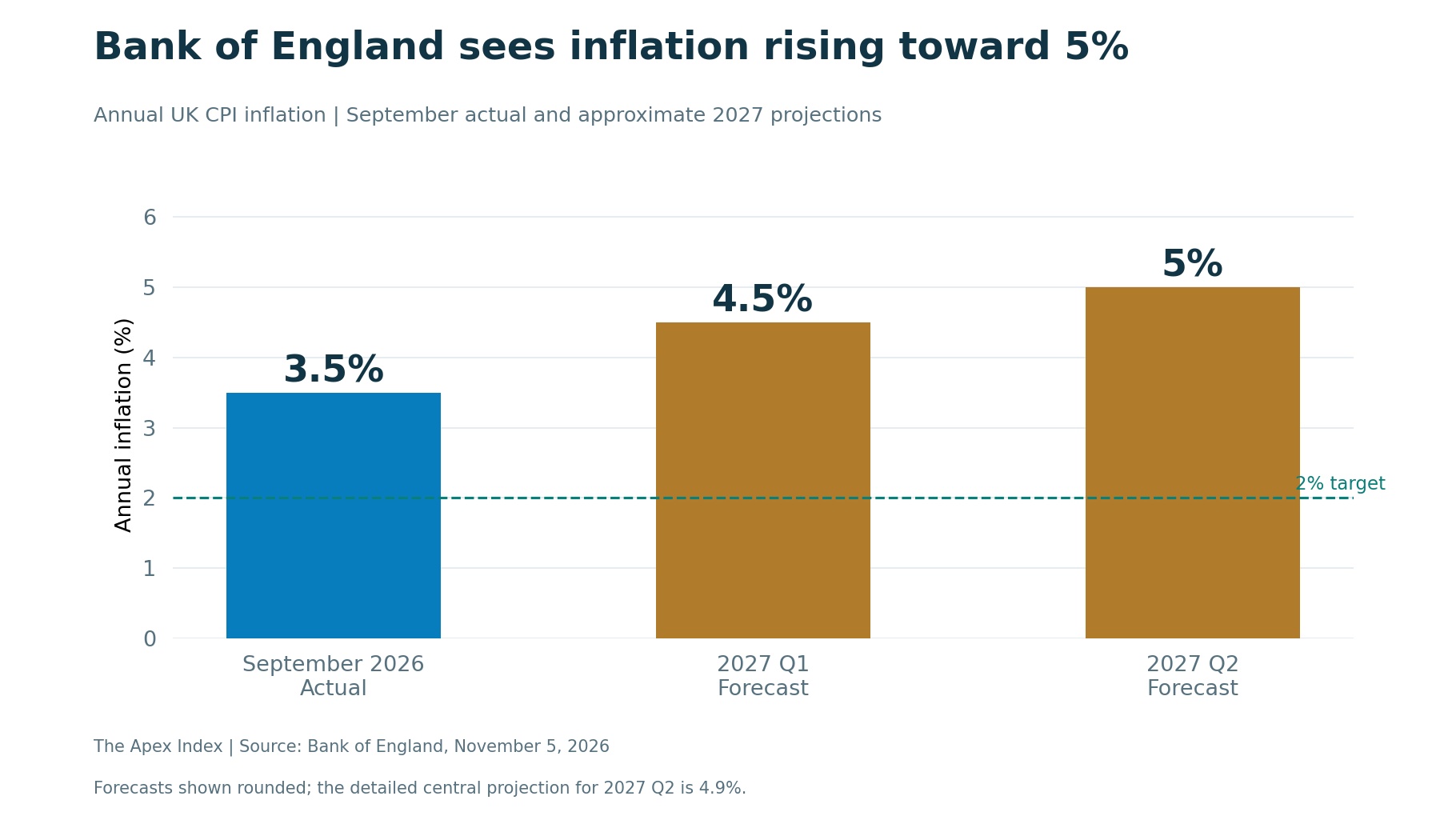
The decision turns up the pressure on borrowers just as higher energy costs are working their way through household and business budgets. Inflation reached 3.5% in September, already above the Bank's 2% target. Officials now expect it to rise further before easing.
Why the Bank moved now
The main concern is that a prolonged energy shock could spread beyond fuel and electricity bills into wages and the prices businesses charge. The Middle East conflict is in its ninth month, and the Bank said higher global energy prices have added to inflation pressures already building in the economy.
That hasn't fully happened yet. The minutes say there is still limited evidence of those knock-on effects. Some businesses have been protected by fixed-price energy contracts or hedging, while others have accepted smaller profit margins to absorb rising costs.
Those buffers cannot necessarily last. As contracts expire and margins get squeezed, more of the cost could reach customers. Stronger-than-expected economic activity also helped persuade policymakers that a modest increase was needed.
Governor Andrew Bailey explained his vote plainly:
In view of the news, the case is clear for a 25-basis point rise now.
The Bank's previous increase, in August 2023, took the benchmark to 5.25%. Thursday's move therefore marks a return to raising rates after more than three years, rather than a return to that earlier peak.
Inflation could reach 5% next year
The new outlook puts inflation at around 4.5% in the first quarter of 2027 and around 5% in the second. The detailed central projection gives a second-quarter average of 4.9%, rounding to the warning in the Bank's announcement.
Its November report expects food inflation to pick up to around 4.75% by mid-2027, largely because energy costs feed through food production and distribution. Services businesses, including airlines, hotels and restaurants, are also exposed to higher fuel, transport and other operating costs.
The October 28 Budget provides some relief. Measures announced by the government are expected to lower inflation by about a quarter of a percentage point in the second quarter of 2027. That effect is already included in the forecast, rather than offering another reduction on top.
More increases remain on the table
Bailey left open the possibility that Thursday's move will be followed by another:
Without news which softens the risks to inflationary pressures, I can see the argument for a further increase in rates and thereafter taking a more conditional approach, dependent on the evidence on energy prices and inflation dynamics.
Other committee members also pointed to the risk of further tightening. Mann argued that a more forceful move was needed to prevent persistent inflation from becoming embedded in wage and price decisions.
Borrowing costs were already rising before the announcement. The minutes say benchmark two-year mortgage rates had increased by nearly half a percentage point since the beginning of September, while new mortgage approvals had been falling. For households refinancing, Thursday's decision comes on top of an existing squeeze.
The next rate decision is due on December 17. Policymakers will be watching pay, business pricing and spare capacity in the economy, alongside energy costs. A lasting easing of the Middle East conflict could soften that outlook; continued high energy prices would keep the pressure on the Bank to act again.