

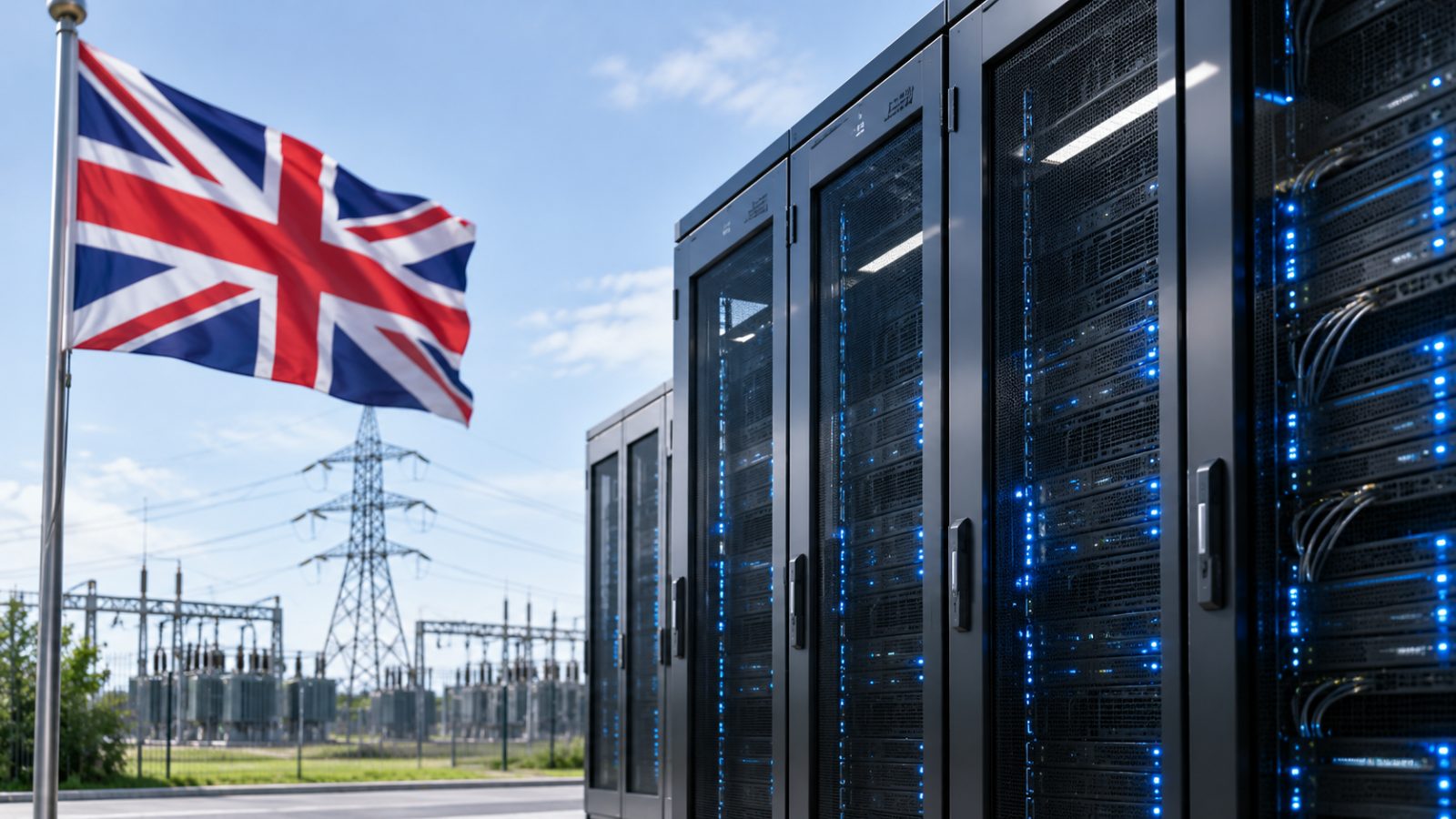
The UK has no plans to slow down its artificial intelligence expansion just because Americans are increasingly pushing back against the industry.
Britain's growth minister, Dan Tomlinson, says the government will continue supporting new data centers despite the political backlash that helped Democrats win the US midterm elections.
And unlike Washington, where the industry's rapid expansion has become a major political fight, London believes it can build more AI infrastructure without turning local communities against it.
The disagreement comes after American voters backed Democratic candidates promising tighter controls over data center construction.
As Apex covered previously, their victories triggered a massive selloff in US technology stocks, although markets recovered some ground on Friday.
Britain, however, sees a different problem. It doesn't have nearly enough computing capacity to support its AI ambitions, and officials believe slowing construction would make that shortage worse.
UK says America’s AI backlash does not have to happen in Britain
Speaking to the Financial Times, Tomlinson argued that Britain had studied America's approach and identified problems it wanted to avoid.
His point was simple: companies cannot expect communities to welcome enormous facilities that consume electricity and occupy land without offering anything meaningful in return.
The government has introduced a data center covenant, published alongside October's Budget, requiring developers seeking official support to make commitments involving local employment and community investment.
Tomlinson said these conditions should help prevent the disputes that have emerged across the United States.
And Britain isn't exactly drowning in new facilities.
The UK government estimates that domestic computing capacity could reach 6 gigawatts by 2030, while America's projected capacity is roughly 20 times larger.
That's an enormous difference for two economies competing to attract AI investment.
Tomlinson believes Britain's real challenge is getting enough projects built, not dealing with too many.
The government wants to reduce energy costs and give data centers better access to electricity grid connections, two problems that can make construction expensive and painfully slow.
However, Tomlinson acknowledged that improving those conditions would take time.
Britain sees an economic opportunity as US investors turn cautious
Prime Minister Andy Burnham also addressed the American backlash on Friday, arguing that Britain should recognize both the economic possibilities and the risks associated with AI.
Burnham said there was a case for using the technology to benefit society, but warned against ignoring its potential consequences.
The Treasury has another reason to keep the expansion moving: economic growth.
Officials believe wider AI adoption could improve productivity, raise living standards, and reduce pressure for spending cuts across public services.
There are already signs that technology investment is contributing to economic activity.
On Thursday, the Bank of England increased its growth forecast for 2026 to 1.6%, compared with the 1.1% projection issued in July.
The upgrade reflected stronger economic performance than policymakers had anticipated, particularly across industries connected to artificial intelligence.
Bank of England Governor Andrew Bailey said the improvement had surprised officials, with AI investment apparently responsible for part of the additional growth.
For investors, that puts Britain's infrastructure plans under closer scrutiny, especially as American technology companies face growing questions about electricity demand, construction costs, and regulatory approvals.