
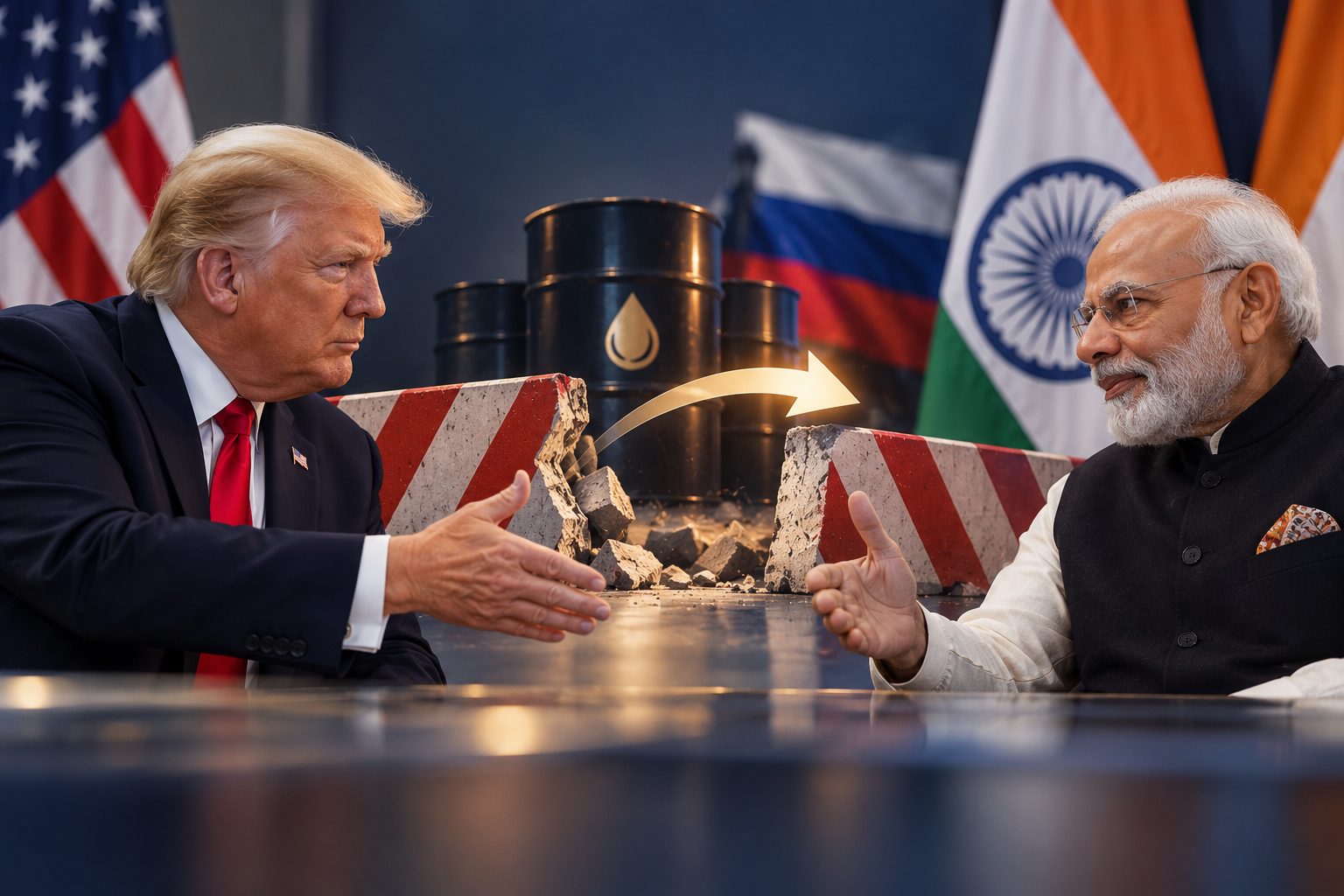
US president Donald Trump has stepped away from a tariff threat that could have slapped India with duties as high as 100% over its purchases of Russian oil. The move removes a major problem from trade negotiations with Washington, where both governments have spent months trying to reach an agreement.
A Friday executive order suspended planned Russia-related sanctions under the Graham Act, including restrictions on Russian goods and penalties tied to buying Russian oil and gas. Those measures were due to take effect this week. Trump justified the exemption as serving US national interests. For India, one of Russia's five biggest oil customers, the difference is enormous: its exports no longer face that particular tariff threat for now.
India gets breathing room on Russian oil
Energy security has become a serious obstacle between the two countries. Prime Minister Narendra Modi's government warned in September that the proposed penalties could damage relations with Washington. Businesses were also left guessing what new import taxes might mean for their costs and contracts.
India is the world's third-largest oil importer and consumer. Russian crude made up nearly half its imported supply earlier this year, although shipments dropped in August and have continued sliding. Replacing those barrels isn't as simple as calling another supplier and asking for a delivery.
Buying less Russian oil could mean paying more elsewhere. That would raise the risk of higher fuel prices before regional elections, or force the government to spend more cushioning consumers. Neither option is particularly comfortable for New Delhi.
US Secretary of State Marco Rubio acknowledged that some countries face genuine difficulties finding alternative energy sources. Speaking to reporters in Uzbekistan on Monday, he also linked Trump's waiver decision to the unfinished trade negotiations.
“We are trying to finalise a trade deal with India right now and we are very close to doing that.”
Trade talks still have another obstacle
Marco is scheduled to arrive in India on Tuesday for a two-day visit. He will meet Foreign Minister S. Jaishankar that day, with energy, trade, investment and defense among the subjects on their agenda.
The two governments have been negotiating a trade agreement for months. The threatened Russia penalties complicated an already difficult process, leaving neither side able to close the deal. The latest waiver gives diplomats room to negotiate without a possible 100% tariff hanging over everything.
Michael Kugelman, a senior fellow at Washington's Atlantic Council, sees the suspension as a possible way to rebuild confidence and help negotiators clear the remaining hurdles.
But there's another sticking point. Washington has not finished its Section 301 investigation into alleged excess production capacity across several countries, including India. The law lets the United States respond to trade practices it considers unfair. The Section 301 review could lead to separate US import restrictions.
India joined a US-led effort against structural overcapacity earlier this month, alongside several other countries. That step addressed Washington's manufacturing concerns, though it did not amount to a decision on the still-open Section 301 case.