
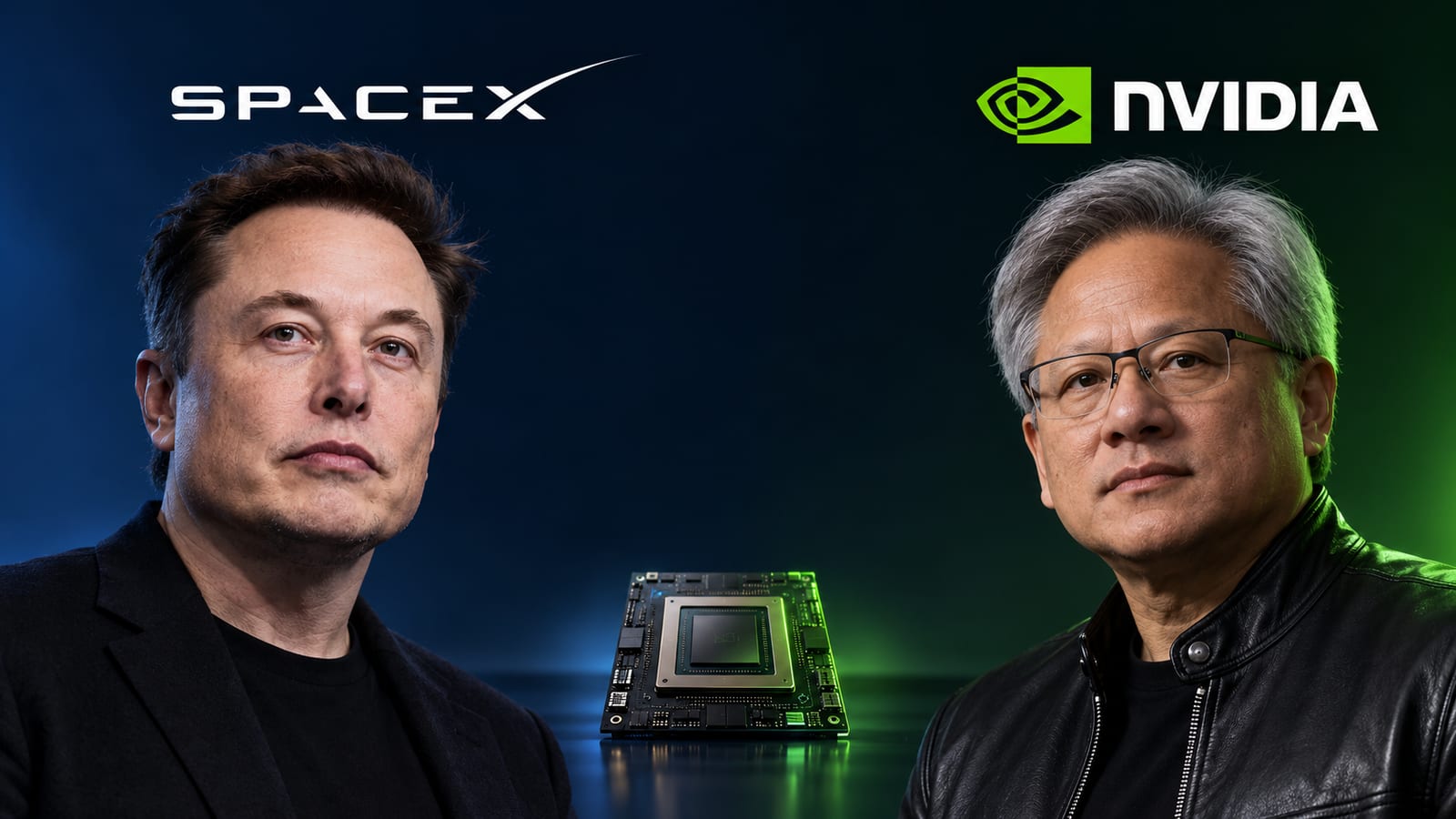
Elon Musk's SpaceX is seeking $40 billion in financing to purchase chips from his long-term friend Jensen Huang's Nvidia, according to an exclusive Financial Times report, setting up a major debt-funded expansion of the company's artificial intelligence infrastructure.
The proposed package consists of about $10 billion in bank loans and $30 billion in investment-grade debt. Apollo Global Management is expected to lead the financing and distribute the debt to a wider group of investors, with the transaction expected to close in 2027.
Pimco is among a small group of lenders holding talks about funding the deal. Those discussions concern a proposed transaction, rather than financing that has already been completed or chips that have already been delivered.
Apollo-led financing targets investment-grade buyers
SpaceX's BBB credit rating would allow insurance companies and pension funds to buy the debt. That is the second-lowest investment-grade rating, placing the borrowing above the speculative-grade category where those institutions generally take more limited positions.
The rating matters to the size of the potential investor base. A $30 billion debt sale would require buyers beyond a small lending group, while the bank-loan portion provides a separate channel for roughly a quarter of the proposed funding.
The financing figures, prospective participants and closing timetable therefore remain reported plans, rather than terms confirmed by the companies.
The chip order would deepen a relationship that Elon has said he wants to expand across his AI initiatives. It also ties a substantial financing exercise to a specific hardware purchase, illustrating how access to credit is becoming part of the competition to build AI computing capacity.
Nvidia's AI infrastructure pitch goes beyond the newest chip
For Jensen Huang's Nvidia, the proposed order comes as competing semiconductor suppliers seek to challenge its position in advanced AI chips. The scale of the purchase makes the economics of running the hardware as important as acquiring it.
In an October 1 explanation of AI-factory returns, the chipmaker identified three factors behind those economics: how much revenue a system can generate, how long it remains useful and how much demand exists for its computing output. It argued that the ability to run different workloads helps keep hardware in service across successive chip generations.
That framework highlights the longer-term question behind SpaceX's planned borrowing. Buying the chips creates capacity; earning enough from that capacity over its useful life determines the return on the investment. The reported financing would place the purchase alongside debt obligations, adding repayment costs to the operating costs of the AI infrastructure.