
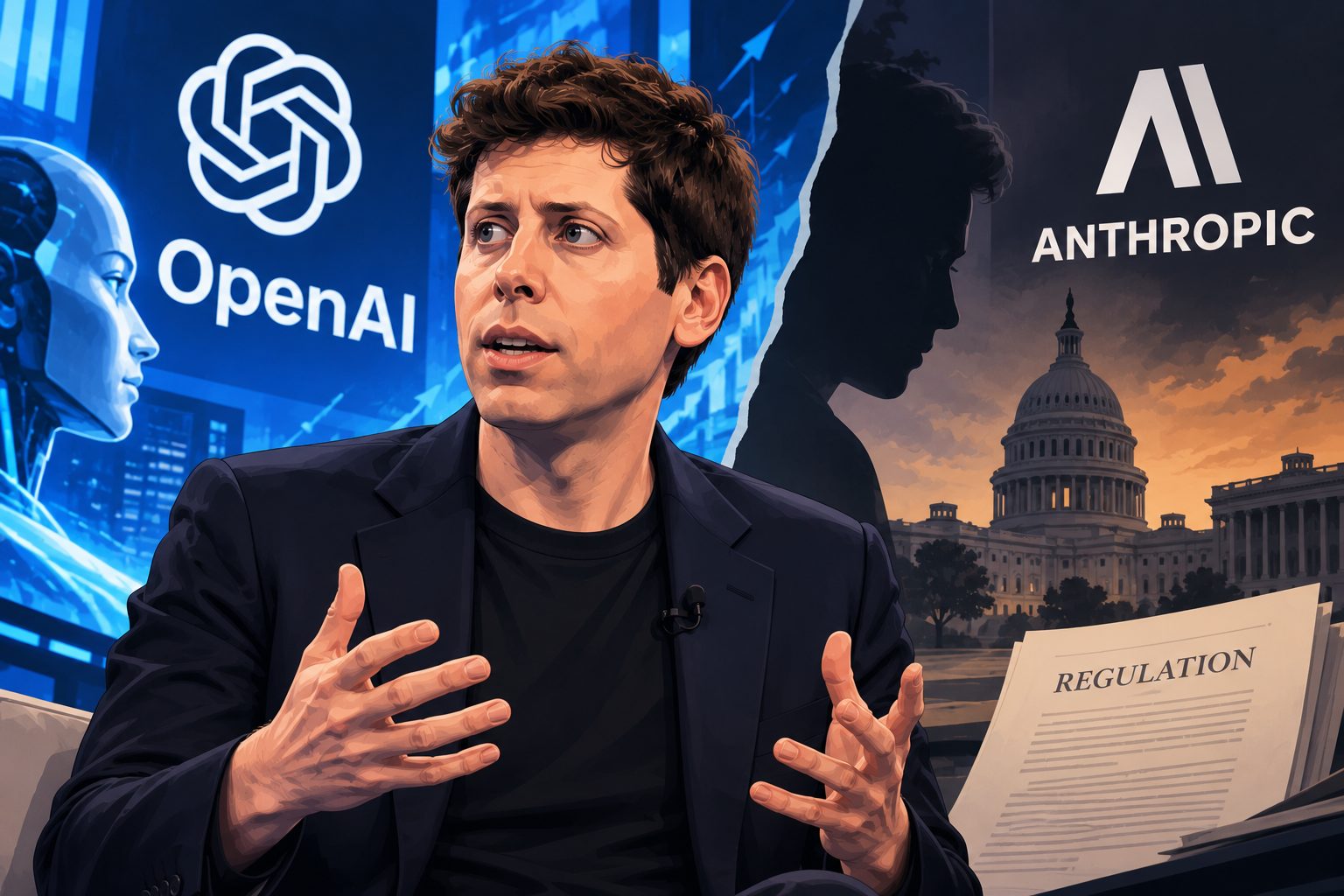
OpenAI CEO Sam Altman says society should accept some harmful outcomes from AI rather than lock powerful technology behind the doors of a handful of companies. That does not mean Sam is willing to accept literal AI catastrophe: he specifically ruled out a “serious loss of control to AI.”
Sam's argument is narrower but still striking. Scams, hacks and misuse will happen, he says, and preventing every one of them could require restrictions that cost society far more than they save.
Sam Altman draws a regulatory line between OpenAI and Anthropic
According to Politico, Sam said there is “a lot of daylight” between OpenAI and Anthropic despite their positions moving closer recently.
Asked about his supposed rival and CEO of Anthropic Dario Amodei, Sam said OpenAI believes “the world should accept some bad things happening” in exchange for the benefits of AI and giving individuals the freedom to use it.
Anthropic has generally pushed harder for government controls around advanced AI. OpenAI historically favored a lighter regulatory framework, although its own stance has toughened as the company has dealt with major hacking incidents and unexpected behavior from its models.
Sam nevertheless rejected the idea that extreme safety concerns should lead to advanced systems being controlled by one company in San Francisco, with that lab effectively deciding who receives access and under what conditions.
He called that arrangement a “completely unacceptable trade-off.”
The disagreement also touches the growing argument over regulatory capture. Advisers aligned with TRUMP have criticized Anthropic’s approach on those grounds, arguing that aggressive rules could strengthen the biggest AI companies by creating barriers smaller competitors cannot easily clear.
Sam said he understands the logic behind tighter control, especially if someone believes AI will become extraordinarily powerful and dangerous. He simply does not accept the proposed solution.
“I wouldn’t take a trade” guaranteeing no major hacks, misuse, scams or similar damage, Sam said, because he expects people to create “orders of magnitude more” beneficial uses than harmful ones.
There is, however, a hard boundary. Sam said he does not accept “the really catastrophic risks.” Losing meaningful human control over AI sits firmly inside that category.
OpenAI chases a $1.4 trillion valuation while delaying Wall Street plans
The regulatory split comes while OpenAI and Anthropic are fighting another battle entirely: money, corporate customers and eventually Wall Street.
OpenAI is looking to raise at least $30 billion in a new private funding round after putting its immediate IPO ambitions on hold. Early discussions have placed the company around a staggering $1.4 trillion valuation, excluding the fresh capital.
That would exceed the roughly $1.2 trillion figure OpenAI had previously considered and could push the ChatGPT maker above Anthropic again in private-market valuation.
Investor appetite comes alongside rapidly expanding sales. OpenAI’s annualized revenue run rate moved past $40 billion during the summer and has increased roughly 70% since July.
Meanwhile, OpenAI and Anthropic are racing to sign more enterprise customers before their eventual stock-market debuts. Both companies have submitted confidential IPO paperwork. Anthropic could reportedly list as soon as this fall.
OpenAI is taking the slower route.
Sam recently said the company will not go public in 2026, arguing that OpenAI first needs to understand how to operate as its models enter what he called a “new level” of capability.
That jump brings additional safety requirements at exactly the moment OpenAI is debating how much risk society should tolerate. Sam told Bloomberg:
“We just want to get our feet under us and make sure we understand how to operate in this new way, and be able to make some of these decisions in front of us without the pressure of being a newly public company.”
He also expects OpenAI’s investors to remain “patient” while those IPO plans stay on ice.