

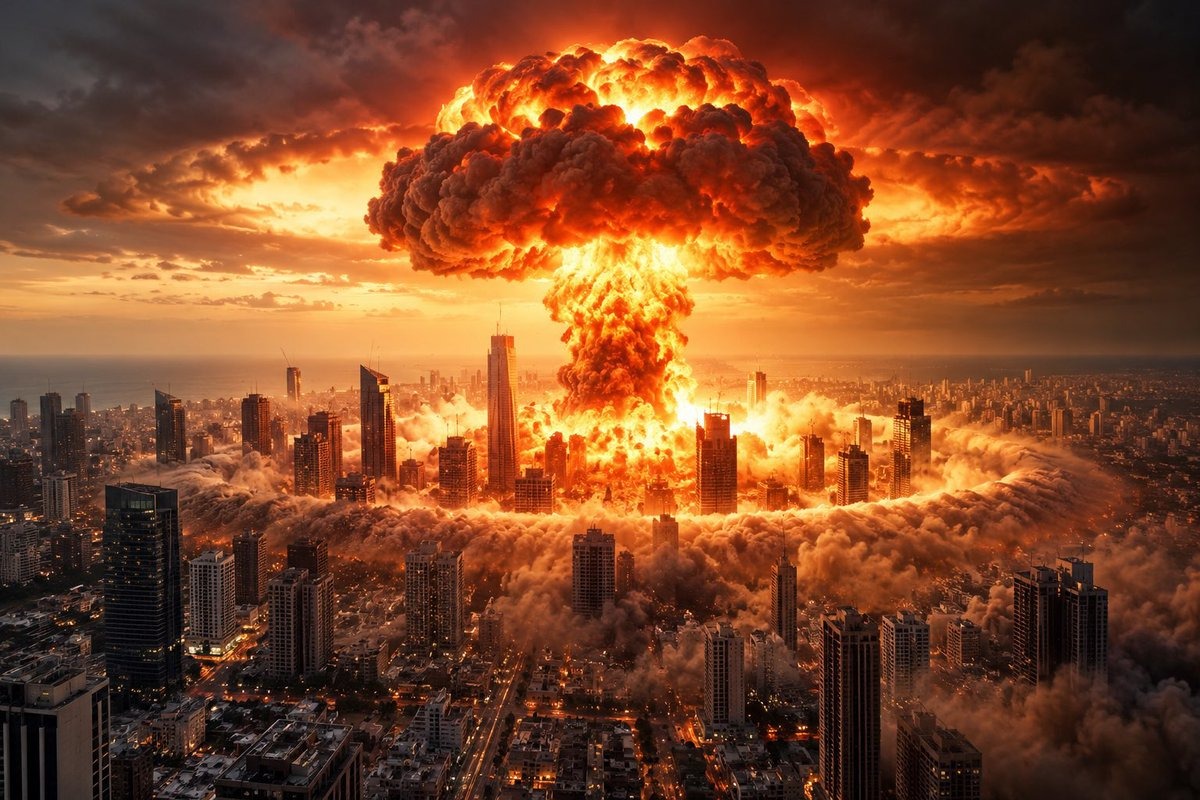
Israeli Prime Minister Benjamin Netanyahu shared an AI-generated image of a nuclear explosion over a city resembling Tel Aviv on October 25, alongside a warning about Iran and a plea to voters two days before Israel's election. The picture shows a mushroom cloud rising above buildings engulfed in flames.
His message credited right-wing commentator Yuval Bloomberg and warned that choosing a leader unable to confront Iran could expose Israelis to a second Holocaust. Opposition leaders accused Netanyahu of trying to scare people into voting for him.
The warning Netanyahu shared
Netanyahu's Hebrew post opened by asking readers to consider Bloomberg's words. It said, in translation:
"The State of Israel is in real and tangible existential danger. If the Iranians acquire nuclear weapons, nothing else will matter anymore."
The text urged Israel to concentrate its resources on completing what it called the work in Iran. It presented President Donald Trump's remaining time in office as an opportunity that Israel could not afford to waste, saying there were another two years to act and no certainty about who would follow him.
It also argued that Israel needed a prime minister capable of maintaining a close conversation with Trump and withstanding pressure. Voters were told to think about their own safety and their families before backing someone unable to complete that task.
Disputes over the government, including the Qatargate affair and military service exemptions for ultra-Orthodox men, were dismissed as distractions. The post asked who would care about those controversies if two atomic bombs fell on central Israel.
The accompanying image depicts a hypothetical nuclear attack. Israeli outlets including The Times of Israel and The Jerusalem Post identified it as AI-generated; the post did not name the city pictured.
Opposition leaders push back
Gadi Eisenkot, the former military chief who leads the Yashar party, responded on X by accusing Netanyahu of repeating an election tactic built on lies and fear.
"Netanyahu, you're hysterical."
Eisenkot said the prime minister was threatening Israelis with mass destruction after failing to achieve his objectives in the war against Iran. He said voters would deliver their answer at the ballot box.
Democrats leader Yair Golan also objected to the picture and asked that Netanyahu be kept away from social media. He accused the prime minister and those around him of losing control as the election approached.
The dispute also revived questions about Netanyahu's earlier claims. Israel Hayom's October 25 report recalled his declaration after the June 2025 war that Israel had removed the nuclear threat. It also cited an October 13 Channel 14 appearance in which he said the media were failing to tell people that Israel had eliminated Iran's nuclear program.
The Times of Israel reported that critics have accused Netanyahu of seeking renewed war to influence or delay the October 27 vote. He has denied that charge. The same report said military chief Eyal Zamir had told a recent private meeting that he saw no operational need to strike Iran before the election.
A separate warning about election-day attacks
Later Sunday, Netanyahu repeated his warning that Iran or its allies could attack to disrupt the vote. According to Associated Press reporting carried by CP24, he cited intelligence during a visit to a missile-defense battery and said Israel's military was ready to defend and strike. He threatened a disproportionate response if Israel were attacked.
Trump, meanwhile, told reporters there would be no U.S. strike against Iran that day. Iran's Foreign Ministry spokesman Esmail Baghaei said messages were still passing to Washington through intermediaries and that Tehran had not closed the door to diplomacy, according to the same AP report.
Inside Iran, the renewed threats were already affecting daily decisions. In a separate October 25 report, AP interviewed Tehran residents buying extra supplies or preparing to leave the capital. Fereshteh Hajipour, a 35-year-old mother of a toddler, said she was stocking up on medicines and food because she feared another war and bigger bombs.